
Many truck owners debate whether an aftermarket intake horn (elbow) actually adds power. Some claim the cylinder head is the bottleneck. We break down the physics with CFD analysis, expose the specific flaws of the 6.7L engine, and explain why this upgrade is essential.
Updated: December 25, 2025
If you browse diesel forums, you'll often see a heated debate. One side claims that upgrading the intake horn is a waste of money because the "cylinder head flow is limited to 250 CFM."
This logic sounds sound, but it ignores two critical factors specific to the 6.7L Cummins: Air Density (Physics) and Mechanical Reliability (The "Killer Bolt"). To solve this, many turn to an upgraded Intake Manifold designed to optimize flow dynamics.
1. The Physics: Why Flow Isn't Everything (Density Matters)
Unlike naturally aspirated gas engines, your 6.7L Cummins uses a turbocharger. A turbo is essentially a "Density Machine." The engine doesn't just consume "volume" (CFM); it consumes "mass" (lbs/min of air).
 Figure 1: Intake Manifold Port Installation Guide
🧪 Pressure Drop Explained
The factory intake horn has sharp 90-degree bends and internal restrictions. This creates friction and turbulence.
- The Result: Friction causes a Pressure Drop. Even if your turbo is pushing 30 PSI, a restrictive horn might drop that to 28 PSI before it hits the head.
- The Fix: A high-flow Intake Elbow reduces this resistance. This means denser, cooler air reaches the cylinder head, maximizing the efficiency of the boost you are already making.
2. Specific Design Flaws of the Stock 6.7 Cummins Horn
Beyond general airflow, the stock 6.7L component has specific design failures that hinder performance:
The "Flat" Design
To fit under the hood and clear emissions equipment, the factory horn is flattened and pinched. This shape causes air to bias towards the center cylinders (3 & 4), potentially starving cylinders 1 and 6. An aftermarket high-flow horn opens this up, ensuring equal air distribution to all cylinders.
The "Killer" Grid Heater Risk
This is the #1 reason owners upgrade. The stock intake horn sits on top of a grid heater plate. A specific bolt/nut inside this assembly is notorious for vibrating loose due to heat cycles and airflow.
3. Real-World Benefits: What Will You Feel?
So, is it worth the money? Yes. Here is what drivers actually report after installation:
- Lower EGTs (Exhaust Gas Temperatures): By smoothing out the airflow path, the engine breathes easier. Drivers often see a 50-150°F drop in EGTs while towing. This keeps your engine safe on long grades.
- Faster Turbo Spool: Turbulence kills velocity. A smooth radius bend maintains air velocity, helping the turbocharger dynamics work efficiently, reducing that annoying lag at stoplights.
- 0.5 - 1 MPG Increase: Less pumping loss means the engine runs more efficiently during highway cruising.
Visual Proof: Stock vs. SPELAB Flow Design
We designed the SPELAB intake manifold to optimize airflow geometry. The diagram and animation below show how the 45-degree sensor port and widened plenum allow for laminar (smooth) flow.
 Figure 2: Design features of the SPELAB Upgrade Intake Horn
 Figure 3: Dynamic airflow simulation showing turbulence reduction.
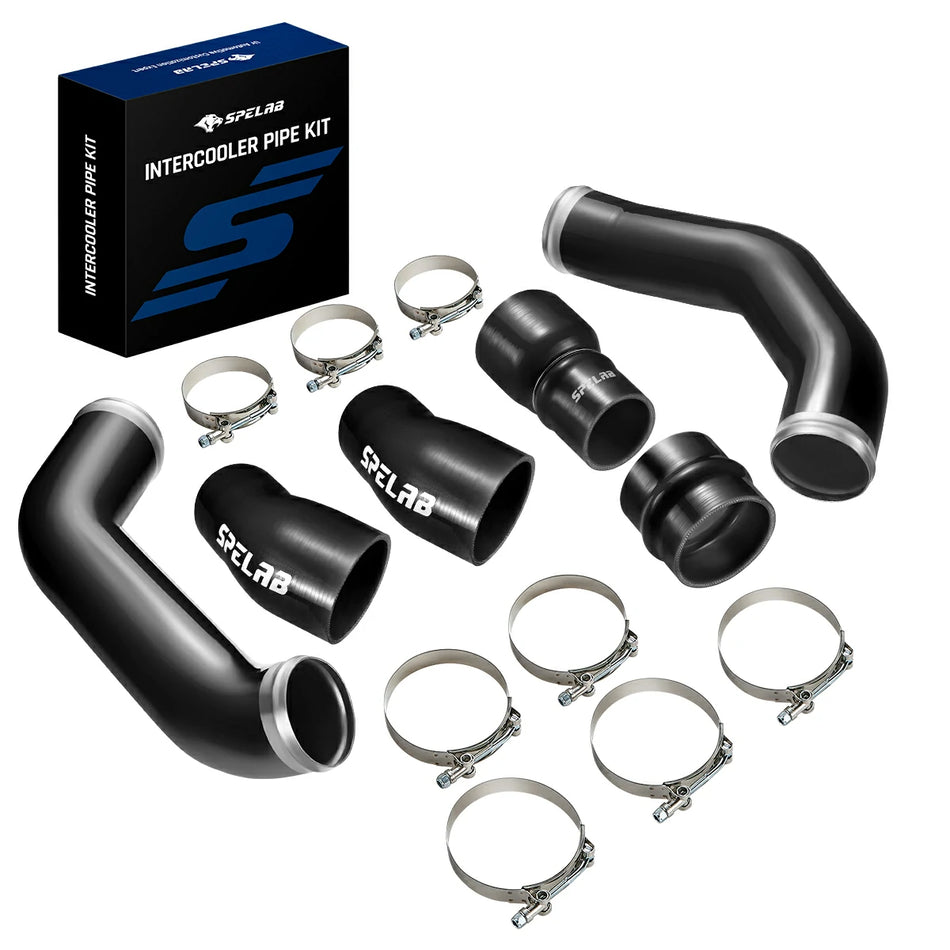
Don't Forget the "Weak Link": The Cold Side Pipe
If you are upgrading your intake elbow, you are ignoring the elephant in the room if you don't check your Intercooler Pipe (Cold Side).
On 2013+ Ram trucks, the factory cold side pipe is made of plastic. Under high boost (or just with age), this plastic pipe can burst, leaving you stranded on the side of the road.
Pro Tip: Most owners upgrade the Intercooler Pipe (Cold Side) and Intake Elbow at the same time. It saves labor (since you are already disassembling that area) and bulletproofs your boost system.
Frequently Asked Questions (FAQ)
Here are the top questions we get from 6.7 Cummins owners:
A: If you only replace the horn (elbow) and keep the grid heater/emissions intact, NO. However, if you use this upgrade to delete the grid heater, you will get a "Wait to Start" code or intake manifold fault codes unless you use a tuner.
A: Yes! The Upgrade 6.7 Cummins Intake Horn is specifically designed to clear the fuel rail and lines on newer 2019-2024 trucks, unlike many older designs.
A: If you are just upgrading the horn for airflow, no tuner is required. However, if you are removing the grid heater or EGR system during the install, you will need a Tuner to prevent check engine lights.
A: It's a moderate DIY job (2-3 hours). The hardest part is reaching the rear bolts near the firewall. Our kit includes a special 3D Concave Stud design to make tightening those difficult bolts much easier.
A: SPELAB kits typically come with the necessary gaskets and hardware. However, we always recommend inspecting your factory grid heater gasket. If you are deleting the heater, you will use the supplied gaskets with the delete plate.
A: Intake horns that retain emissions equipment are generally compliant. However, if you use this product to delete the Grid Heater or EGR system, it is for Off-Road Competition Use Only. Please check your local state regulations.
A: Yes, in most cases. Factory intake horns often feature internal baffles and restrictive geometry specifically designed to silence engine and turbo noise for the average consumer. By switching to a high-flow, open-radius manifold, you remove these acoustic restrictions. This allows the distinct turbo spool "whistle" to be heard more clearly inside and outside the cab, which is a desirable trait for many diesel enthusiasts.
A: No. Under the Magnuson-Moss Warranty Act, a dealership cannot void your entire vehicle warranty simply because you installed an aftermarket intake upgrade unless they can prove that specific part caused a failure. However, if the new manifold is used to delete emissions components (like the Grid Heater or EGR) rather than just improving airflow, that specific action can affect powertrain warranties. We always recommend checking with your service advisor regarding your specific warranty terms.
A: Yes. Most well-engineered aluminum intake manifolds are designed to be a direct bolt-on replacement that fits perfectly with both factory intercooler piping and aftermarket metal pipes. However, it is worth noting that the stock plastic cold side pipe is a known weak point that can burst under higher boost or with age. While the new manifold will fit, upgrading the cold side pipe simultaneously ensures your entire intake tract is reliable and leak-free.

The Upgrade You Need: SPELAB 6.7L Intake Manifold
Maximize air density and protect your engine from grid heater failure. Features a cast aluminum design, 897 CFM of flow, and fits 2007.5-2024 models.
Shop Now >Conclusion
Is it worth it? If you care about engine longevity, lower EGTs while towing, and preventing catastrophic grid heater failure, the answer is a resounding YES.
Don't let forum myths hold your truck back. Improving air density is the key to diesel performance, and a high-flow intake horn is one of the most cost-effective ways to achieve it.
Related Articles
- Why Delete the 6.7L Cummins Grid Heater?
- Troubleshooting Common Intake Manifold Codes
- Step-by-Step Installation Guide
- Intake Manifold Maintenance Schedule
- What is an Intake Manifold?

John Lee
Mechanical Engineer | 10+ Years Experience
John has spent the last decade engineering and testing high-performance automotive components. Specializing in drivetrain durability and thermal management across Powerstroke, Cummins, and Duramax applications, he bridges the gap between OEM limitations and aftermarket performance. His philosophy: "Factory parts are just a starting point."





1 comment
I need this for my 2008 dodge ram 3500 4×4 megacab dually 6.7 Cummins, do you have it available?