Updated: May 18, 2026
Considering an EGR delete for your Dodge Ram 6.7L diesel engine? Before buying parts or removing hardware, slow down and diagnose the real problem. The EGR system on a 6.7 Cummins is tied to emissions control, intake soot, combustion temperature, MAF/MAP logic, DPF regeneration behavior, and legal compliance. Deleting it may help certain off-road builds, but it can also create inspection, warranty, tuning, and emissions problems on street-driven trucks.
Quick answer: A Dodge Ram 6.7L Cummins EGR delete may reduce soot entering the intake and remove some EGR cooler or valve failure points in off-road or competition builds where legally permitted. But for street-driven trucks, EGR delete can violate emissions laws, increase NOx emissions, affect DPF/regen logic, void warranty coverage, and trigger drivability issues if tuning is wrong. Most daily-driven owners should diagnose the actual EGR, DPF, boost, or sensor problem before choosing delete.
This guide explains what EGR delete does, the real pros and cons, which fault codes matter, how intake restriction affects airflow, how EGR changes can affect the DPF, what to check before buying a kit, and safer options for Dodge Ram 2500/3500 6.7 Cummins owners.
What Is EGR Delete on a 6.7 Cummins?
EGR stands for Exhaust Gas Recirculation. On a Dodge Ram 6.7L diesel, the EGR system sends a controlled amount of exhaust gas back into the intake. This lowers combustion temperature and helps reduce NOx emissions.
An EGR delete means removing, blocking, or disabling that recirculation path. Depending on year and configuration, this may involve the EGR valve, EGR cooler, coolant rerouting, block-off plates, sensors, and ECU calibration.
For the basic concept, read what EGR delete means.

Legal Reality Before Modifying EGR Hardware
For public-road vehicles in the United States, removing, disabling, bypassing, or tuning out emissions-related hardware can violate the Clean Air Act.[1] That can include EGR valves, EGR coolers, DPF, SCR/DEF systems, sensors, and calibrations that prevent the vehicle from operating as certified.
For a street-driven Dodge Ram 6.7L diesel, EGR delete may create:
- Failed emissions inspection
- Failed visual inspection
- Failed OBD readiness check
- Check engine light or limp mode
- Warranty denial
- Resale difficulty
- Potential fines or compliance risk
This article is for technical education and buyer decision support. Always confirm federal, state, provincial, and local laws before modifying emissions-related parts.
Why Dodge Ram 6.7 Cummins Owners Consider EGR Delete
Most owners do not start with the goal of deleting emissions hardware. They start with real frustrations:
- EGR valve sticking or clogging
- EGR cooler leaks or coolant loss
- Heavy soot buildup in the intake
- P0401 or other EGR flow-related codes
- Reduced throttle response
- High repair quotes
- Frequent DPF regeneration
- Oil sludge from CCV vapor mixing with EGR soot
Those problems are real, but delete is not always the right first step. A truck with a dirty MAP sensor, boost leak, failing EGR cooler, plugged EGR passage, clogged DPF, or bad differential pressure sensor needs diagnosis before parts are removed.
Pros of EGR Delete on a Dodge Ram 6.7L Diesel
1. Less Soot Entering the Intake in Off-Road Builds
The EGR system recirculates exhaust gas, and that exhaust contains soot. Over time, soot can mix with crankcase oil vapor and form sticky sludge inside the intake horn, throttle valve area, MAP sensor passage, and manifold path.
In an off-road or competition build where EGR delete is legally permitted, removing EGR flow can reduce one major soot source. That can help keep the intake path cleaner over time.
For related Dodge/Ram hardware research, compare the Cummins EGR delete kit collection.
2. Fewer EGR Cooler and Valve Failure Points
The EGR valve and cooler are common failure points on many diesel platforms. A sticking valve can create airflow and drivability issues. A leaking cooler can cause coolant loss, white smoke, or internal contamination concerns.
In a non-road setup, deleting the EGR system may remove some of these failure points. But on a street truck, the legal and inspection risks must be considered first.
3. Potentially Better Throttle Response When Paired With Correct Calibration
Some owners report sharper response after EGR delete. But the improvement is rarely from the block-off plates alone. It usually comes from a combination of reduced intake contamination, corrected airflow behavior, and calibration changes.
A poorly tuned truck can run worse after delete than it did before. Calibration quality matters.
4. Cleaner Long-Term Intake Path
One of the biggest mechanical benefits is intake cleanliness. EGR soot by itself is dry; CCV oil vapor is the “glue” that turns it into sludge. Reducing EGR soot can help, but controlling oil vapor is also important.
For a street-friendly oil-vapor solution, review the diesel oil catch can collection.
The Intake Restriction Problem: Why Soot Sludge Hurts Response
On the 6.7 Cummins, intake performance depends on how efficiently compressed air moves from the turbo and charge-air system into the intake horn, plenum, and cylinder head. When EGR soot mixes with CCV oil vapor, sticky sludge can narrow the effective airflow path and coat sensor passages.
A simple way to think about intake-side pressure loss is:
ΔP = Pboost - Pplenum
Here, Pboost is the pressure the turbo and charge-air system are trying to deliver, while Pplenum is the pressure actually available inside the intake plenum. As the intake path becomes restricted by sludge or carbon buildup, pressure drop can increase. The VGT may work harder to maintain boost targets, response can feel slower, and EGTs may rise under load.
This is also why a truck with a dirty MAP sensor, oil-soaked boots, or intake restriction can feel like it has an EGR problem even when the root cause is broader airflow contamination.
Rear Cylinder Airflow and Cylinder #6 Concerns
Because the 6.7 Cummins is a longitudinal inline-six engine, the rear cylinders sit closest to the firewall and are harder to inspect or service. Owners often pay special attention to rear-cylinder airflow, heat load, and any loose hardware or debris in the intake path.
It is too aggressive to claim every 6.7 Cummins suffers from a fixed “Cylinder #6 starvation” problem in normal use. A more accurate concern is that intake restriction, carbon sludge, uneven airflow distribution, or hardware failure in the intake path can create high-consequence problems near the rear of the engine. For towing trucks and high-load builds, keeping the intake path clean and sealed matters.
If you are already opening the intake side for diagnosis, it is also smart to inspect the Cummins intake manifold and intake horn area for sludge, gasket leaks, and sensor contamination.
Cons and Risks of EGR Delete
1. Legal and Inspection Risk
This is the largest downside for street-driven trucks. If the vehicle is registered and driven on public roads, deleting EGR can create emissions compliance problems.[1]
Possible consequences include failed inspection, failed readiness monitors, fines, warranty denial, and resale difficulty. For a daily driver or work truck, this risk often outweighs the performance claims.
2. Increased NOx Emissions
EGR exists primarily to reduce NOx. When EGR is removed or disabled, combustion temperature can rise under certain operating conditions, and NOx emissions can increase. That is one reason emissions tampering is regulated.
3. DPF and ECU Logic Can Be Affected
On a modern 6.7 Cummins, EGR, MAF, MAP, exhaust temperature, DPF pressure, and regeneration strategy are connected. If you delete EGR but leave DPF hardware in place, the ECU may see airflow behavior that no longer matches factory expectations.
This can contribute to fault codes, failed regeneration, limp mode, or soot-load calculation problems if calibration is not handled correctly.
For a deeper explanation, read what happens if EGR is deleted without deleting DPF.
4. Warranty and Resale Problems
Emissions-system modification can make warranty claims difficult if a dealer or manufacturer links the failure to the modification. It can also make resale harder in inspection states or provinces.
5. Poor Installation Can Cause Real Problems
Bad delete work can create coolant leaks, exhaust leaks, boost leaks, wiring issues, sensor faults, high EGTs, and check engine lights. A kit is only as good as the installation and calibration behind it.
Common Codes That Lead Owners to Consider EGR Delete
Fault codes should start a diagnostic process, not automatically trigger a delete purchase.
| DTC / Symptom | Common Meaning | What to Check First |
|---|---|---|
| P0401 | EGR flow insufficient | EGR valve movement, plugged passages, MAP/MAF data, wiring, EGR cooler restriction |
| P0402 | EGR flow excessive | EGR valve stuck open, sensor feedback, intake restriction, calibration issue |
| P0106 | MAP sensor performance issue | Dirty MAP sensor, boost leak, intake sludge, sensor wiring |
| P0299 | Turbo underboost | Boost leaks, turbo control, intake restriction, exhaust restriction |
| P242F | DPF restriction or ash accumulation | DPF ash load, soot load, differential pressure, regen history, EGT sensors |
| Frequent regen | DPF strategy struggling | DPF soot/ash load, differential pressure, EGT sensors, boost leaks, injectors |
If the real problem is DPF-related rather than EGR-related, read whether DPF removal is worth it.
Does EGR Delete Improve Fuel Economy?
Sometimes owners report better fuel economy after EGR delete, but MPG claims should be treated carefully. Results depend on the tune, driving style, tire size, load, gearing, turbo condition, fuel system health, and whether the truck had a real EGR fault before modification.
Fuel economy may improve in some off-road builds if the truck was previously dealing with EGR-related restriction, limp mode, or poor calibration. But a healthy street-driven truck should not be expected to gain guaranteed MPG simply because EGR hardware is removed.
Does EGR Delete Increase Horsepower?
EGR delete by itself is not a big horsepower switch. Most direct power gains come from tuning, airflow, fueling, and fixing existing restrictions or faults.
On a 6.7 Cummins, EGR delete may improve response in some off-road builds if the original EGR system was stuck, leaking, or heavily contaminating the intake. But if the system was healthy, the gain may be small or difficult to feel.
Can You Delete EGR Without Deleting DPF?
Technically, some owners try to delete EGR while keeping the DPF. Mechanically and electronically, this can be risky. The ECU expects EGR flow behavior, MAF/MAP changes, exhaust temperature behavior, and DPF regeneration strategy to match the original emissions design.
If the EGR system is removed but the DPF remains, possible issues include:
- EGR flow codes
- MAF/MAP plausibility faults
- Failed or delayed regeneration
- More frequent DPF warnings
- Limp mode
- Inspection or readiness monitor failure
The safest path for a street-driven truck is diagnosis and repair, not partial deletion.
When EGR Delete Might Make Sense
An EGR delete is most defensible when the truck is not used on public roads and the owner fully understands the legal, tuning, emissions, and warranty consequences.
Possible use cases include:
- Competition-only diesel builds
- Dedicated off-road trucks
- Private-property or non-road applications where legally permitted
- Performance builds already requiring matched calibration
For broader off-road category research, compare the EGR delete kit collection. Always confirm fitment, tuning requirements, and legal use case before buying or installing emissions-related parts.[2]
When EGR Delete Is Not Worth It
For many Dodge Ram 6.7L owners, especially daily drivers, EGR delete is not worth the risk. It is usually the wrong first step if:
- The truck is driven on public roads.
- You live in an emissions inspection area.
- The truck is still under warranty.
- You use the truck commercially.
- You plan to sell or trade the truck later.
- You have not diagnosed the actual failure.
- You are trying to solve a sensor, boost leak, injector, or DPF issue with EGR delete.
Safer Alternatives Before Deleting EGR
Before deleting the EGR system, work through the failure logically.
| Problem | Possible Cause | Safer First Step |
|---|---|---|
| EGR flow code | Stuck valve, plugged passage, wiring issue, sensor issue | Inspect, clean, test, and verify sensor data |
| Coolant loss | EGR cooler leak, hose leak, coolant fitting issue | Pressure test the cooling system |
| Low boost | Boost leak, dirty MAP sensor, turbo issue | Run a boost leak test and scan boost data |
| Intake sludge | CCV oil vapor mixing with EGR soot | Clean intake parts and reduce oil vapor |
| Frequent regen | DPF soot/ash load, failed sensor, injector issue, short trips | Check DPF pressure, soot load, ash load, EGT sensors, and regen history |
If your region requires emissions inspection, physical delete may not be a legal option. In that case, the best first move is not to remove EGR hardware, but to reduce the “glue” that turns dry soot into sticky sludge. EGR soot is mostly dry carbon; crankcase ventilation oil mist is what makes it adhere to the intake horn, MAP sensor path, intercooler boots, and manifold surfaces.
For a daily-driven truck, oil-vapor control is often a smarter first move than emissions delete. A sealed SPELAB oil catch can for Cummins can help reduce the oil mist that turns dry EGR soot into sticky intake sludge without removing EGR, DPF, DEF, or SCR hardware.
Product Reference: Dodge Ram 6.7L EGT Relocation Kit
The original article referenced an EGT relocation product. That product may be relevant for specific sensor-placement situations in certain off-road configurations, but it should not be treated as a universal fix for EGR problems. Sensor location, calibration, and legal use case must match the truck setup.
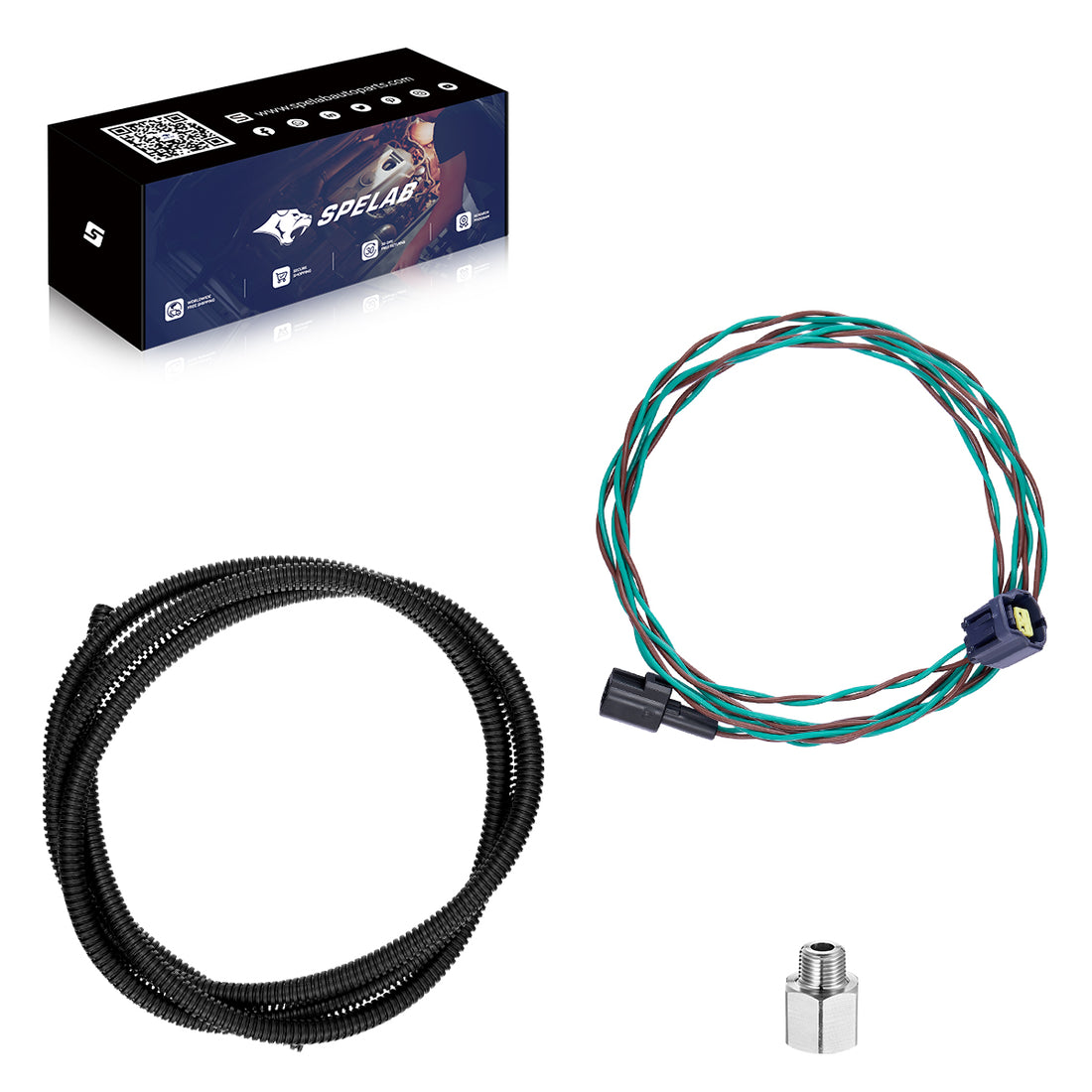
EGT Relocation Kit for 2013–2024 Dodge Ram 6.7L Diesel
This product is commonly researched by owners working around EGT sensor placement in specific 6.7 Cummins configurations. Confirm fitment, sensor requirements, and legal use case before installation.
View EGT Relocation KitDodge Ram 6.7L EGR Delete: Final Verdict
For street-driven Dodge Ram 6.7 Cummins trucks, EGR delete is usually not the right first solution. The legal, inspection, warranty, resale, and tuning risks are significant. Diagnosis and repair should come first.
For dedicated off-road or competition trucks, EGR delete may be part of a broader performance strategy. But it must be matched with proper hardware, calibration, sensor strategy, and a clear legal use case.
The smartest approach is not “delete it because the internet says so.” The smarter approach is to identify the failure, understand the emissions system, check the law, and choose the lowest-risk solution for how the truck is actually used.

FAQ
Q:What does an EGR delete do on a Dodge Ram 6.7L diesel?
A:It removes, blocks, or disables the EGR system so exhaust gas is no longer recirculated into the intake. On off-road builds, this may reduce intake soot. On street trucks, it can create emissions compliance and inspection risks.
Q:What are the benefits of EGR delete on a 6.7 Cummins?
A:Potential benefits in off-road builds include less soot entering the intake, fewer EGR valve or cooler issues, and better response when paired with proper calibration. Benefits are not guaranteed on a healthy stock truck.
Q:What are the disadvantages of EGR delete?
A:Disadvantages include legal risk, increased NOx emissions, inspection failure, warranty issues, tuning dependency, possible DPF/regen problems, and resale difficulty.
Q:Is EGR delete legal on a Dodge Ram diesel?
A:For public-road vehicles in the United States, removing or disabling emissions equipment can violate the Clean Air Act.[1] Always check federal, state, provincial, and local rules before modifying emissions hardware.
Q:Can EGR delete improve fuel economy?
A:It may improve MPG in some off-road builds if the truck had a real EGR restriction or related fault, but results vary. Tune quality, driving style, tire size, load, and engine condition matter.
Q:Does EGR delete add horsepower?
A:Usually not by itself. Most power changes come from tuning, airflow, fueling, and fixing existing restrictions. EGR delete alone should not be treated as a guaranteed horsepower upgrade.
Q:What happens if I delete EGR without deleting DPF?
A:It can create airflow and emissions-strategy mismatch. The ECU may see MAF/MAP behavior that does not match expected EGR flow, which can affect DPF regeneration, fault codes, and drivability.
Q:What codes make owners consider EGR delete?
A:Common examples include P0401 for insufficient EGR flow, P0402 for excessive EGR flow, P0106 for MAP sensor performance issues, P0299 for underboost, and P242F for DPF restriction or ash accumulation.
Q:Can I install an EGR delete kit myself?
A:Some owners have the mechanical skill to install hardware, but the job involves coolant, exhaust, sensors, and calibration. Incorrect installation can cause leaks, codes, and drivability problems. Legal use case must also be confirmed first.
Q:Will EGR delete affect emissions testing?
A:Yes. EGR delete can cause a vehicle to fail visual, OBD readiness, or emissions inspection in areas where emissions compliance is required.
Q:What should I check before deleting EGR?
A:Check EGR valve movement, EGR cooler leaks, MAP/MAF data, boost leaks, DPF soot and ash load, differential pressure, EGT sensors, injector health, and whether the truck can legally be modified for its use case.
Legal Notes
[1] In the United States, tampering with a vehicle emissions control system can violate the Clean Air Act. EPA identifies examples including removing emissions hardware and altering software or calibrations that allow the vehicle to operate differently from its certified configuration. Reference: EPA Clean Air Northeast: Tampering and Aftermarket Defeat Devices.
[2] The Clean Air Act also prohibits manufacturing, selling, offering for sale, or installing aftermarket parts or devices that bypass, defeat, or render emissions controls inoperative. Always confirm federal, state, provincial, and local regulations before modifying emissions-related hardware. Reference: EPA Enforcement Alert: Aftermarket Defeat Devices and Tampering.

John Lee
Mechanical Engineer | 10+ Years Experience
John has spent the last decade engineering and testing high-performance automotive components. Specializing in drivetrain durability and thermal management across Powerstroke, Cummins, and Duramax applications, he bridges the gap between OEM limitations and aftermarket performance. His philosophy: "Factory parts are just a starting point."