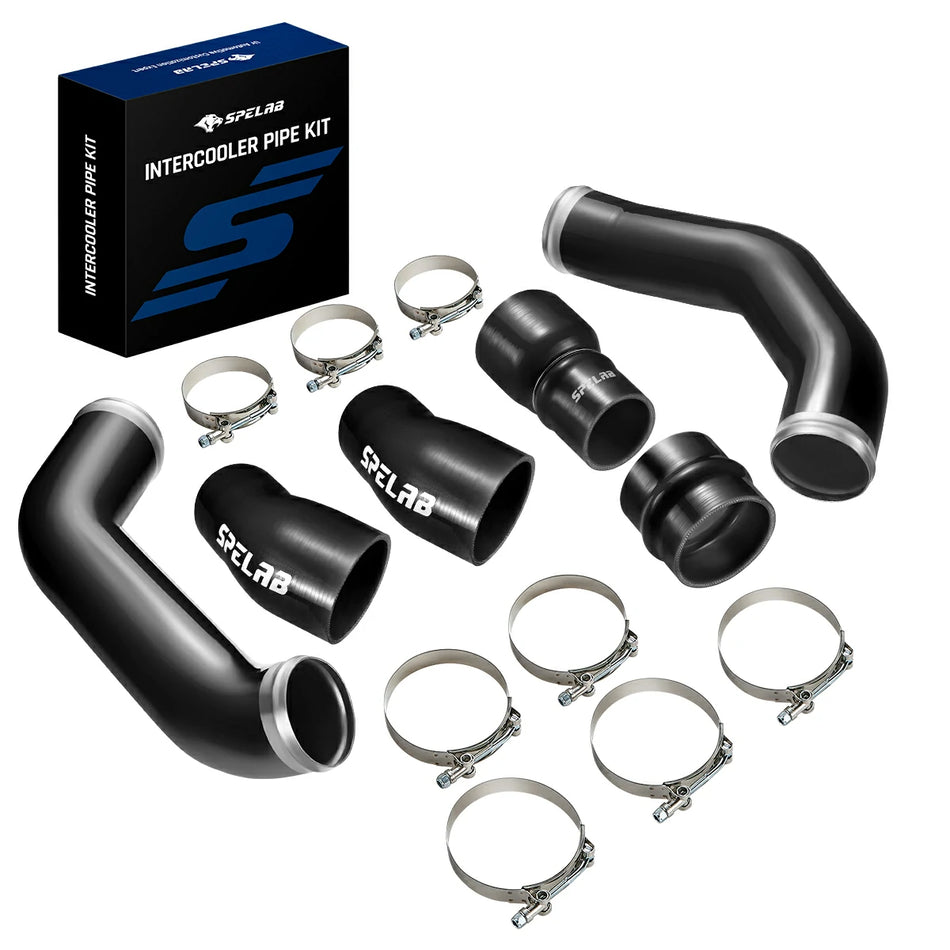
Choose a 4 inch DPF delete pipe if your diesel truck is a daily driver, tow rig, work truck, or long-highway hauler where fitment, lower drone, and clean underbody clearance matter. Choose a 5 inch pipe if you want deeper sound, bigger exhaust presence, and a more aggressive off-road build, and you accept tighter clearance and more cabin noise. Use this comparison only for off-road, race, competition, or legally permitted applications; public-road emissions equipment removal can create legal, inspection, registration, resale, and dealer-service risk.
Key Takeaways
Pick pipe size around the truck’s job, not around the biggest number on the product page.
- A 4 inch DPF delete pipe is usually the cleaner choice for towing, daily driving, work use, and lower highway drone.
- A 5 inch pipe makes sense when sound, big exhaust look, and aggressive off-road style matter more than quiet highway manners.
- A 5 inch pipe has about 56% more cross-sectional area than a 4 inch pipe, but that does not guarantee more horsepower or lower EGT.
- Exhaust velocity drops when the same exhaust volume moves through a larger pipe, so bigger tubing is not automatically better on a stock-turbo mild-tune truck.
- Fitment beats diameter: cab length, bed length, pickup vs cab-chassis layout, hanger position, clamp size, sensor bungs, and spare tire clearance can make or break the install.
Street-Use and Compliance Boundary
DPF delete pipe sizing should be treated as an off-road, race, competition, or legally permitted-use topic, not as a public-road emissions workaround.
The U.S. EPA states that installing a defeat device or tampering with a motor vehicle can subject regulated entities to enforcement and penalties. Read EPA guidance here: EPA.gov.
4 Inch vs 5 Inch DPF Delete Pipe: Final Decision Matrix
One good decision table beats a pile of repeat charts: 4 inch wins for most tow and daily trucks, while 5 inch fits sound-focused off-road builds with enough room underneath.
| Truck / Owner Scenario | Better Size | Sound / Drone | Fitment Risk | Mechanic’s Take |
|---|---|---|---|---|
| Daily driver | 4 inch | Cleaner tone, less cab resonance | Lower | Use 4 inch if the truck has to stay comfortable Monday through Friday. |
| Crew cab long-bed tow rig | 4 inch | Lower drone risk on highway pulls | Lower | Long cab and bed layouts can carry resonance. Keep it livable. |
| Work truck / jobsite truck | 4 inch | Less obnoxious around crews and neighborhoods | Lower | Clearance, clamp seal, and hanger alignment matter more than big-pipe attitude. |
| Stock turbo with mild tune | 4 inch | Enough sound without overdoing it | Lower | Extra 5 inch volume usually changes sound before it changes usable power. |
| Lifted weekend off-road build | 5 inch | Deeper, louder, more aggressive | Medium | Works when sound and visual presence are part of the build goal. |
| Sound-focused owner | 5 inch | Strongest exhaust presence | Medium | Choose it for tone and look, not because it is magic horsepower. |
| Aggressive tune / bigger turbo setup | Depends | Setup-dependent | Medium to high | Confirm fueling, turbo, EGT, transmission, and tune before choosing diameter. |
| Unknown cab/bed or kit type | Neither yet | Unknown | High | Verify fitment before ordering. Wrong length and hanger layout kill installs. |
Pipe Area, Exhaust Velocity and Backpressure
A 5 inch pipe gives more area, but the same exhaust mass moving through a larger tube travels at lower velocity in that section.
A 4 inch pipe has about 12.6 square inches of cross-sectional area. A 5 inch pipe has about 19.6 square inches. That is roughly 56% more area. Big number, sure. The mistake is treating that area increase like guaranteed power.
A turbo diesel does not behave like an old small-block with header tubes. Most DPF delete pipes sit post-turbo, so turbine drive pressure, tune quality, boost control, fueling, post-turbo backpressure, and load all matter. On a stock-turbo mild-tune truck, the extra 5 inch volume often shows up as deeper sound, more drone risk, slower heat retention in the pipe, and tighter packaging before it shows up as measurable horsepower.
Use the velocity point as a reality check. Bigger pipe can support more flow when the full build needs it. Bigger pipe can also be wasted space on a mild tow rig that only needed a clean 4 inch path. If the truck is still early in the buying stage, start with broad DPF Delete Kits by platform before choosing a final diameter.
| Pipe Size | Approx. Area | Velocity / Flow Behavior | Best Match |
|---|---|---|---|
| 4 inch | About 12.6 sq in | Higher gas velocity than 5 inch at the same flow rate | Daily driver, tow rig, work truck, stock turbo, mild tune |
| 5 inch | About 19.6 sq in | Lower gas velocity but more total flow capacity | Loud off-road build, bigger visual goal, more aggressive airflow setup |

When a 4 Inch Pipe Is the Better Choice
A 4 inch pipe is the better choice when the truck still has to tow, commute, haul payload, work around jobsites, and keep the cab quiet enough for long drives.
Run 4 inch on a camper tow rig, equipment hauler, farm truck, contractor truck, or stock-turbo daily that needs clean bolt-on fitment. The smaller diameter leaves more room around the frame, spare tire, axle, shocks, heat shields, brake lines, fuel lines, and hangers.
Use 4 inch when you want the truck to sound like a diesel without turning every highway pull into a drone chamber. That matters on crew cab trucks, long-bed trucks, and rigs that spend hours at steady cruise speed.
When a 5 Inch Pipe Makes Sense
A 5 inch pipe makes sense when the owner wants deeper sound, a bigger exhaust look, and an aggressive off-road personality more than quiet daily manners.
Run 5 inch on a lifted weekend truck, sound-focused off-road build, show-style diesel, or more aggressive airflow setup where the owner has already accepted more drone risk and tighter packaging. The pipe looks bigger, sounds deeper, and gives the build more presence.
Check clearance before chasing the look. A 5 inch pipe that rubs the frame, rattles near a hanger, cooks a nearby line, or hits near the spare tire is not a mod. It is a problem you paid to install. Owners chasing sound can also compare a Muffler Delete Pipe setup, but the same drone and clearance checks still apply.
When You Should Not Choose a 5 Inch Pipe
Skip the 5 inch pipe when the truck tows often, has tight underbody clearance, runs a stock turbo, needs quiet highway manners, or has unknown cab and bed fitment.
Do not choose 5 inch just because it looks mean. A crew cab long-bed truck that pulls a fifth-wheel does not need extra drone. A jobsite truck does not need a tailpipe rubbing the spare tire. A stock-turbo mild-tune truck does not need extra volume if the only real gain is more noise.
Choose the pipe that matches the truck’s job. A quiet, leak-free, well-aligned 4 inch pipe beats a crooked 5 inch pipe every day in the shop.
Fitment Checklist: Cab, Bed, Hangers, Sensor Bungs and Install Mistakes
Most DPF delete pipe problems come from wrong fitment data, not from the pipe being 4 inch or 5 inch.
Check the whole truck before ordering. Year and engine are not enough. Cab length, bed length, pickup vs cab-chassis layout, hanger position, sensor bung layout, clamp size, and kit type decide whether the pipe actually fits. Larger 5 inch tubing gives you less forgiveness when alignment is sloppy. For a Ford Super Duty owner, that means checking the exact Powerstroke DPF Delete Pipe fitment instead of shopping by engine size only.
| Check Point | What Can Go Wrong | Shop-Floor Advice |
|---|---|---|
| Cab and bed length | Pipe too short, too long, or hangers do not line up. | Confirm regular cab, extended cab, crew cab, short bed, or long bed before buying. |
| Pickup vs cab-chassis | Frame and exhaust routing may differ. | Do not assume a pickup kit fits a cab-and-chassis truck. |
| Kit type | Downpipe-back, filter-back, and race pipe sections may replace different exhaust areas. | Match the kit to the section being removed, not just the engine size. |
| Sensor bung layout | Unused ports, missing ports, or tuning confusion. | Confirm sensor locations and plugs before the truck is on jack stands. |
| Hanger alignment | Pipe sag, rattle, crooked tailpipe, or frame contact. | Hang the pipe without forcing it into position. |
| Clamp seal | Exhaust leak smell, soot mark, ticking noise, loose joint. | Retorque after heat cycles, especially on fresh installs. |
| Spare tire and frame clearance | Heat risk, rubbing, vibration, or metallic knock. | Cycle suspension movement in your head, not just static clearance in the driveway. |

Downpipe-Back vs Filter-Back vs Race Pipe
Kit type matters because downpipe-back, filter-back, and race-pipe parts do not always replace the same exhaust section.
A downpipe-back kit usually starts farther forward and replaces more of the exhaust path. A filter-back kit may start behind the factory filter area on some layouts. A race pipe often replaces a specific DPF or mid-pipe section. The names are not decorations; they tell you where the pipe starts and what factory parts are expected to stay or leave. For a deeper layout explanation, read our turbo-back exhaust guide.
Match the kit type before choosing 4 inch or 5 inch. Diameter does not save you when the pipe section itself is wrong.
Platform Notes: Powerstroke vs Cummins vs Duramax
Ford, Ram, and GM diesel trucks package exhaust hardware differently, so platform fitment should be checked before diameter.
Ford 6.7L Powerstroke owners need to verify Super Duty year, cab, bed, and downpipe-back layout. The 6.7 Powerstroke fitment guide is a better next stop when the question is year split and cab/bed fitment, not just 4 inch vs 5 inch sound.
Ram 6.7L Cummins owners need to watch the 2007.5+ emissions split, 68RFE tow behavior, and underbody routing. Start with the exact Dodge Ram Diesel DPF Delete Pipe category, then confirm year, chassis style, and pipe section. For year-by-year Ram details, use the 6.7 Cummins fitment guide.
Duramax owners need to separate LMM, LML, and L5P layouts before ordering because DPF, DEF/SCR, NOx sensor, and calibration needs changed across generations. A Duramax DPF Delete Pipe should be matched by exact generation, not just by “6.6 Duramax.”

From Our Fitment Desk: The Wrong Orders We See Most
Most wrong-order complaints we see are not about flow; they are about incomplete truck details.
Owners often know the engine but forget the cab and bed. They know the year but miss pickup vs cab-chassis. They pick 5 inch for the look but never check spare tire clearance. They order a pipe by diameter and only later realize the kit type does not match the factory section they are removing.
Send the boring details before buying: year, make, model, engine, cab, bed, pickup or cab-chassis, current exhaust layout, desired pipe diameter, and whether the truck is used for towing or sound. That short list prevents most fitment drama.
Horsepower and EGT: What Pipe Size Can and Cannot Do
A 5 inch pipe does not automatically add horsepower or lower EGT more than a 4 inch pipe because power and heat depend on the full truck setup.
Horsepower depends on tune quality, turbo health, fueling, boost control, intercooler efficiency, intake air temperature, torque management, and transmission condition. EGT depends on fuel, air, load, grade, gear, ambient temperature, boost leaks, cooling stack condition, and how hard the truck is working.
Use a 5 inch pipe when the full build supports more exhaust volume. Do not use it as a band-aid for a weak turbo, dirty intercooler, slipping transmission, hot tune, or no gauges. A bigger pipe cannot diagnose the truck for you.
Do You Need a Muffler or Resonator with a 5 Inch Pipe?
A muffler or resonator can make a 5 inch setup easier to live with when the truck drones at highway speed, tows often, or has a cab and bed layout that carries resonance.
Use sound control when the truck has to travel. A weekend off-road toy can live loud. A crew cab tow rig with a camper behind it needs a different setup. A resonator can calm certain frequencies, while a muffler can reduce overall volume and harshness.
Fix hard-part fitment before chasing sound control. A muffler will not stop a pipe from touching the frame, leaking at a clamp, or rattling near a hanger.
Final Recommendation
Choose 4 inch if you want the safer all-around fit for towing, daily driving, work use, mild tuning, and long highway miles; choose 5 inch if you want a louder off-road build and have verified clearance.
Buy the pipe around the truck, not the other way around. Check year, emissions layout, cab, bed, pickup vs cab-chassis routing, kit type, hanger location, clamp size, sensor bung layout, spare tire clearance, tune, EGT monitoring, and legal-use status before ordering.
Use this guide for legal-use applications only. A well-fitted 4 inch pipe that clears everything, seals tight, and does not drone is better than a 5 inch pipe that rattles, rubs, leaks, or wears you out on every long pull. If budget is part of the decision, compare hardware, tuning, and labor expectations in our DPF delete cost breakdown before buying.
FAQ
Q: Is 4 inch enough for a deleted diesel truck?
A: Yes, 4 inch is enough for most stock-turbo, mild-tune, daily, towing, and work-truck diesel setups. Bigger pipe size does not fix poor tuning, weak boost, bad fueling, or transmission problems.
Q: Does a 5 inch pipe lower EGT more than 4 inch?
A: Not automatically. EGT depends on tune quality, fuel delivery, boost control, trailer load, gearing, intercooler efficiency, and cooling-system health. A 5 inch pipe alone is not an EGT cure.
Q: Is 5 inch worth it on a stock turbo diesel?
A: Usually not for power alone. On a stock-turbo mild setup, 5 inch often changes sound and appearance more than measurable horsepower. Choose it because you want the tone and look.
Q: Do I need a muffler or resonator with a 5 inch pipe?
A: You may want one if the truck drones at highway speed, tows often, or has a cab and bed layout that carries resonance. A muffler or resonator can make a 5 inch setup easier to live with.
Q: What size is better for a crew cab long-bed tow rig?
A: 4 inch is usually the safer choice because long cab and bed layouts can carry more resonance, and tow rigs need comfort, clearance, and predictable fitment more than max sound.
Q: What is the difference between downpipe-back, filter-back, and race pipe?
A: Downpipe-back usually replaces a larger exhaust path starting farther forward, filter-back may start behind the filter area, and a race pipe often replaces a specific DPF or mid-pipe section. Match the kit type before choosing diameter.
Q: Is a DPF delete pipe legal for street use?
A: DPF delete pipes are not legal for many emissions-controlled public-road vehicles. Check federal, state, county, inspection, and registration rules before removing any emissions equipment.

About the Author
John Lee
Mechanical Engineer | 10+ Years Experience
John has spent the last decade engineering and testing high-performance automotive components. Specializing in drivetrain durability and thermal management across Powerstroke, Cummins, and Duramax applications, he bridges the gap between OEM limitations and aftermarket performance. His philosophy: "Factory parts are just a starting point."