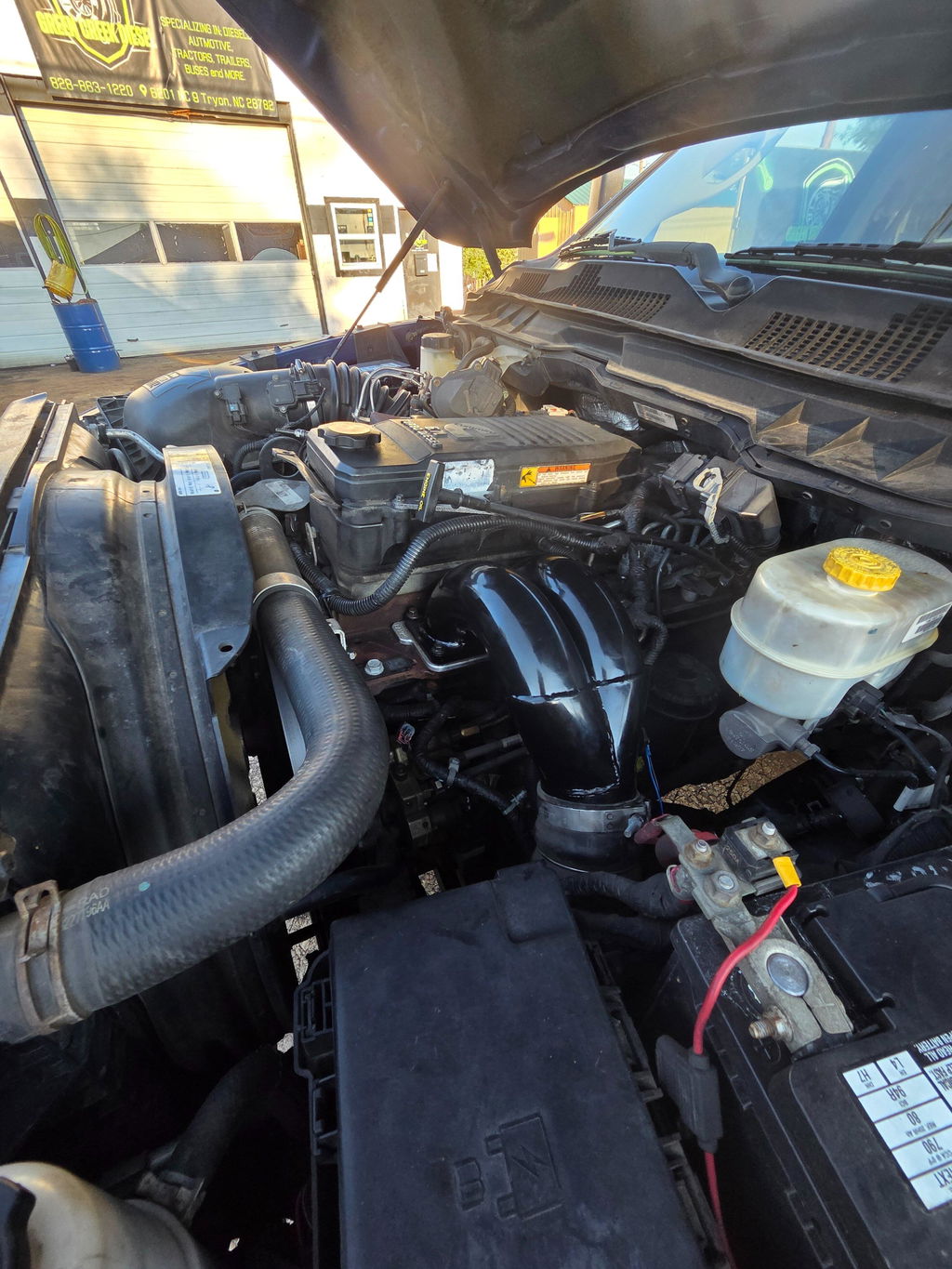
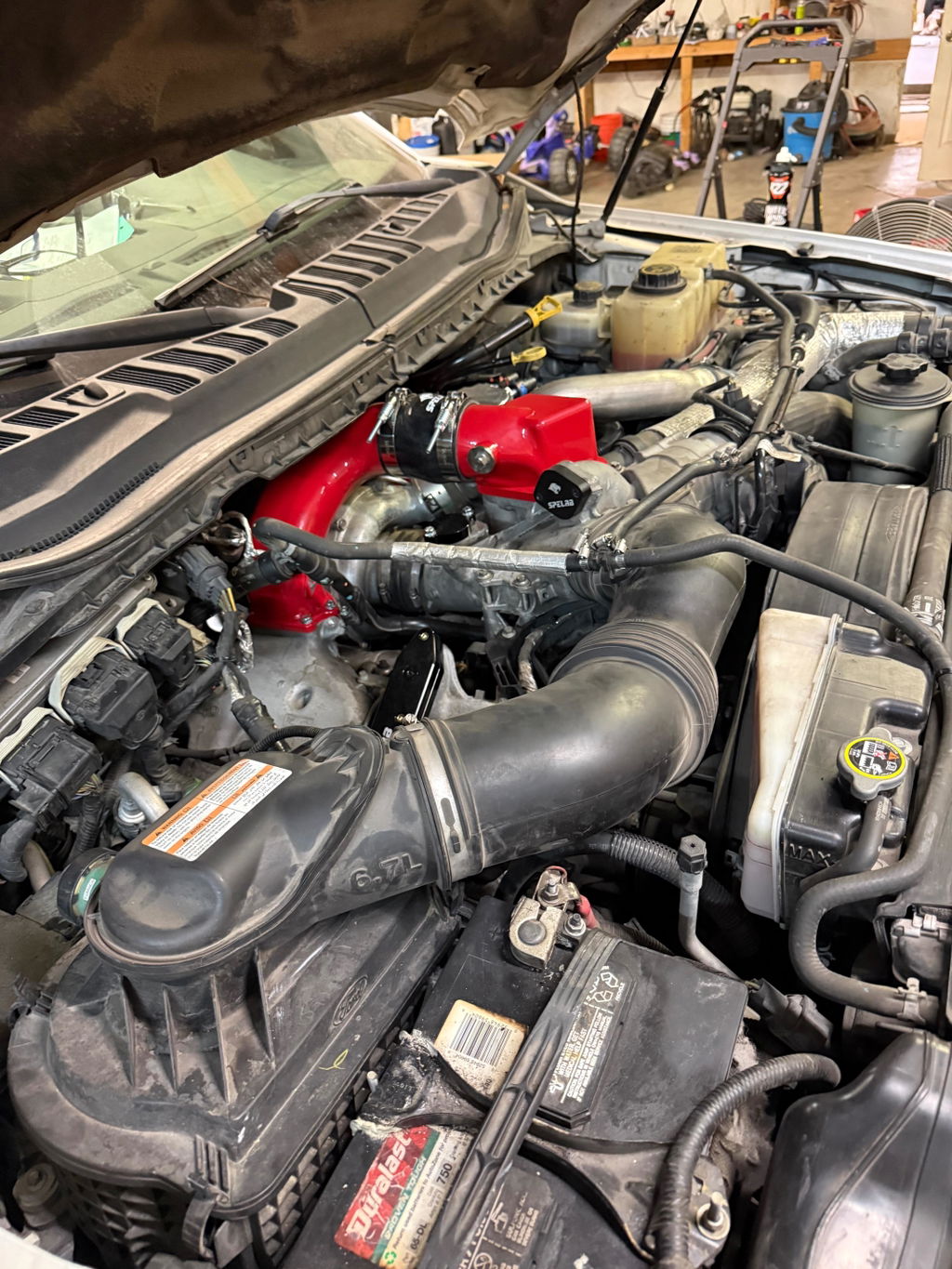
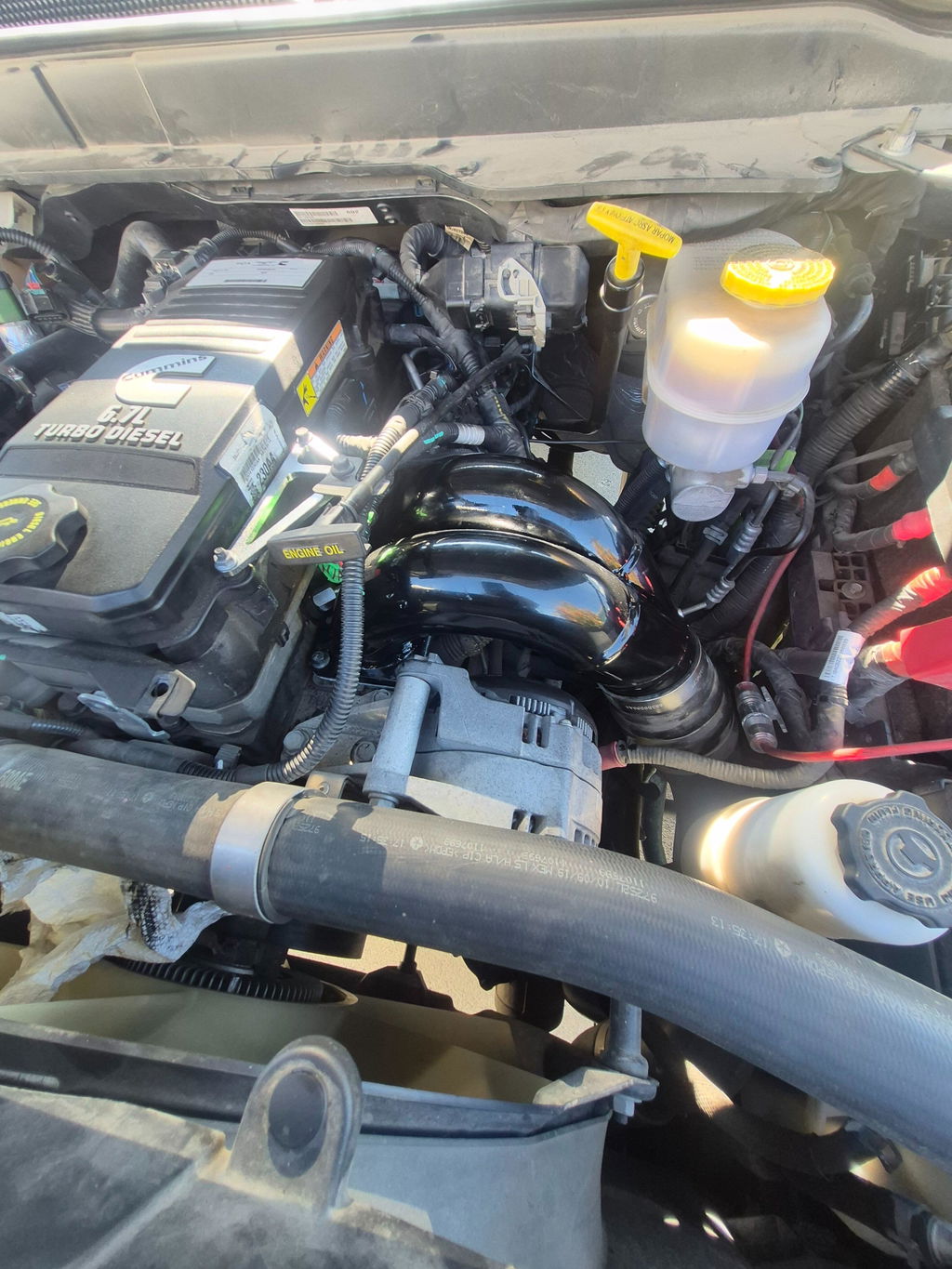
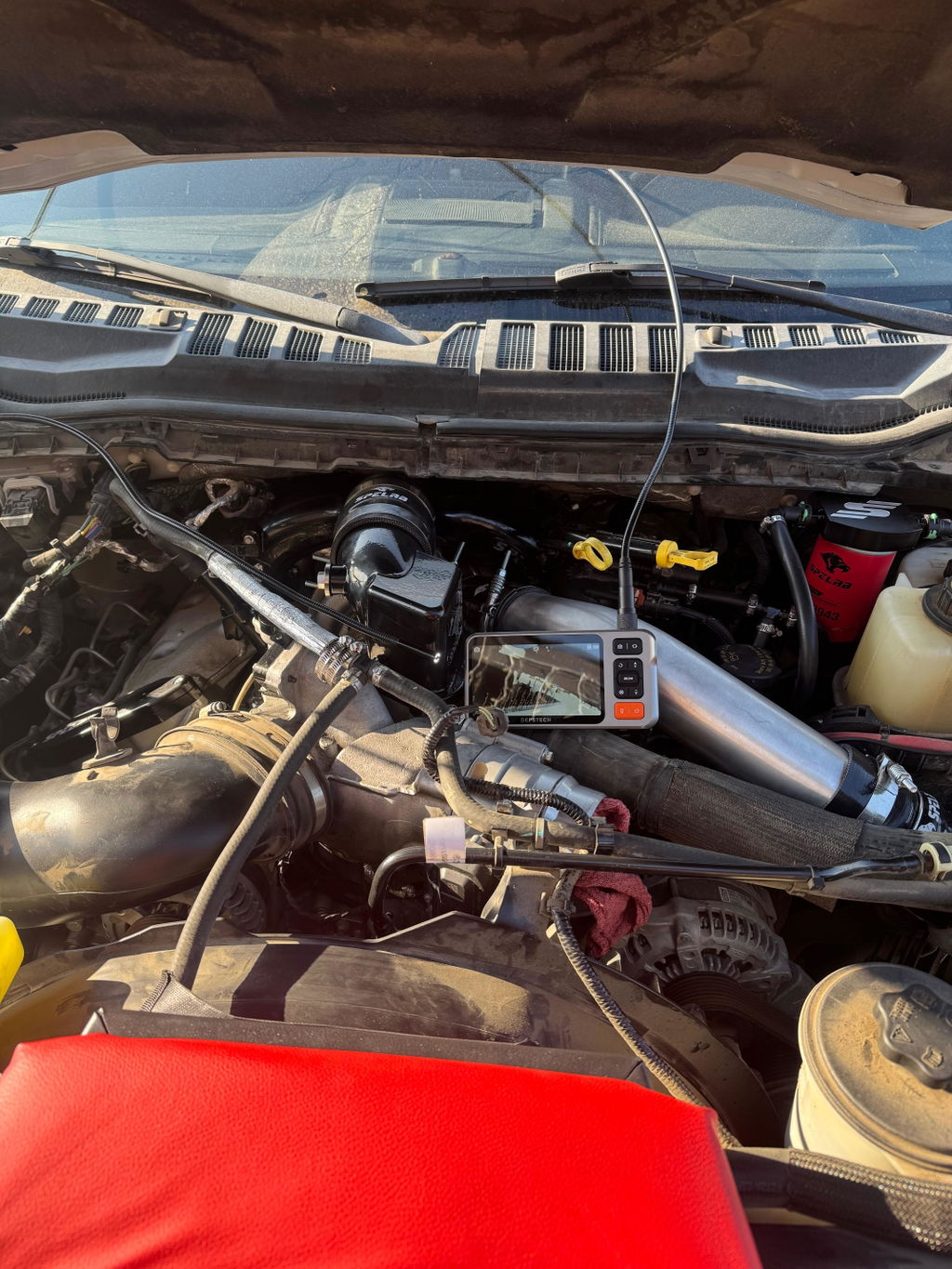
What a Dodge Ram Cummins CCV Delete Kit Is Really For
A Dodge Ram Cummins CCV delete kit exists because of one unavoidable fact about a diesel engine: it makes oil vapour internally, and something has to be done with that vapour. Piston rings do not seal perfectly - they are not supposed to. A small, designed amount of combustion gas leaks past them into the crankcase on every power stroke, picks up oil mist on the way, and leaves the crankcase pressurised. That flow is called blow-by, and it is normal. The question has never been whether it happens. The question is where it goes.
Decades ago the answer was simple: a road draft tube pointed at the ground. Today it cannot be. Modern engines route crankcase vapour back into the intake so it is burned instead of released, and that closed loop is part of the emissions control strategy rather than a convenience feature. The crankcase ventilation system - CCV, sometimes called the breather or the crankcase filter - is the hardware that does it.
The trade-off is baked in. The vapour going back into the intake carries oil mist with it, and that mist coats everything it passes. So the hardware in this category is not fixing a broken part. It is addressing the cost of a design decision that every modern diesel lives with, and there are three genuinely different ways to do that.
What the Oil Film Does Downstream
Oil mist does not stay where it enters. Follow the air path and the consequences line up in order.
-
The intercooler loses efficiency. Oil coats the inside of the charge air cooler, and a contaminated core does not transfer heat the way a clean one does. The result is higher intake temperature for the same boost - the opposite of what the intercooler is there to do.
-
Rubber and silicone age faster. Couplers and hoses that carry oil-laden air soften and swell over time, which is why boost pipes on high-mileage trucks sometimes fail at the joint rather than in the middle.
-
The intake tract accumulates deposits. Oil film catches soot, and on an engine with exhaust gas recirculation there is plenty of soot available. What starts as a thin film becomes a sticky layer in the manifold and around the intake ports.
-
The compressor wheel gets coated. Anything that changes the shape or balance of a wheel spinning that fast matters, and a film of coked oil on the blades is not something that washes off in service.
None of this happens in a week. It accumulates over years, and by the time a joint is seeping or a coupler has swollen, the deposits upstream are already established. That is why a Cummins CCV delete kit is usually approached as prevention rather than as a repair.
Three CCV Approaches, Three Different Outcomes
"CCV" gets attached to hardware that does quite different things, and this is the single most useful distinction to understand before buying a CCV delete kit.
| Approach |
Where the vapour goes |
What happens to the oil |
Effect on the closed system |
| Maintain the factory system |
Back into the intake, as designed |
Passes through, caught by the factory filter element |
Unchanged - the loop stays intact |
| Add an oil separator (catch can) |
Still back into the intake |
Separated in the can and drained back or emptied |
Unchanged - separation happens inside the loop |
| Reroute the vent |
Diverted away from the intake, through an external filter or to atmosphere |
Caught by the external element, or released |
The loop is opened - the intake no longer receives it |
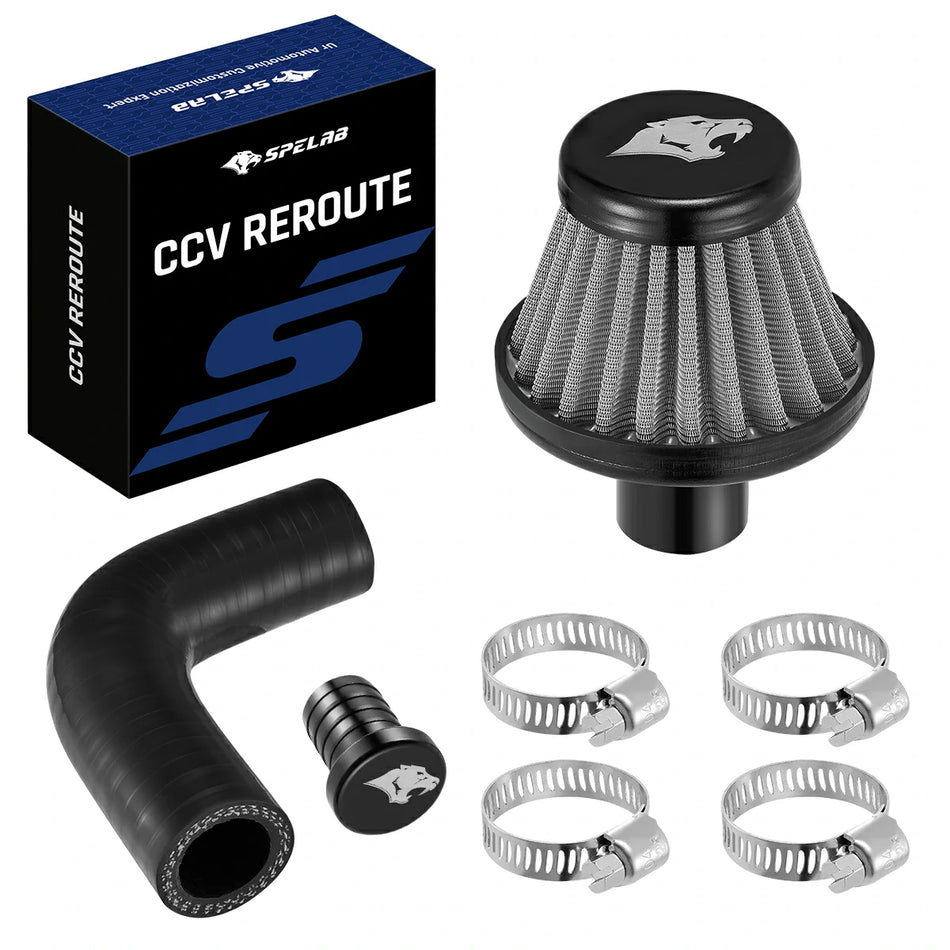
The first two keep the crankcase ventilation path closed and simply manage the oil within it. The third changes the path itself, and it is what people usually mean by a CCV delete kit. That difference is the whole reason these products are discussed separately, and it is the difference that decides whether a truck remains as it was certified.
Why Capping the Vent Is Never the Answer
Worth stating plainly, because it is the most common wrong turn: the crankcase must have somewhere to vent to. Blow-by does not stop because the outlet is blocked. Pressure builds instead, and pressure looks for the next weakest exit - which is usually a seal.
Rear main seals, front crank seals, valve cover gaskets and oil pan gaskets all see crankcase pressure from the inside. A blocked breather does not delete the problem, it relocates it to the most expensive gasket on the engine. A CCV delete kit has to leave the crankcase a genuine path out, and that path cannot be kinked, flattened or routed in a way that lets condensate pool in a low spot.
What the Engine Management Watches After a CCV Delete
On later engines the ventilation system is not unmonitored. The engine management checks that the crankcase ventilation circuit is connected and behaving, and a system it expects to see that is no longer there gets flagged. Diagnostics of that kind commonly surface as a fault code, and on a truck that continues to be driven, as a reduced-power strategy.
That behaviour is the monitoring working as intended, not a defect in the part. It is also the reason the question "will this need supporting calibration" cannot be answered generically - it depends on what that specific truck monitors and how it is used. If you are considering a Cummins CCV delete of that kind, establish the answer before ordering rather than after the warning light. We do not provide guidance on defeating monitors.
Valve Cover, Separator and Reroute Are Three Different Jobs
These get confused because they live in the same corner of the engine.
-
The valve cover is a structural part. It is replaced because the original is warped or seeping, or because an aftermarket cover is wanted. On many engines the factory ventilation element sits in or on that cover, so the two are handled together - but the reason for replacing a cover is the cover.
-
A separator or catch can is added into the existing line. It intercepts oil in a vapour stream that is still travelling to the intake.
-
A CCV delete or reroute kit changes where the vapour goes instead of how clean it is.
They can be combined, and on a modified engine they often are. But buying one expecting the effect of another is the most common source of disappointment in this category.
Choosing the Right Cummins CCV Setup for Your Truck
The right answer is mostly determined by the truck's job, not by the parts list. A CCV delete kit is not automatically the correct one.
-
A truck that tows, commutes and gets inspected wants the closed system intact. Keeping the factory circuit healthy and adding separation inside it addresses the oil without changing what the engine was certified with.
-
A dedicated off-road or competition vehicle is the context in which opening the loop is even a question.
-
A truck with visible oil consumption or heavy blow-by needs a diagnosis before it needs a part. Excessive blow-by points at ring wear, a turbocharger seal or a pressurisation problem, and no ventilation component fixes the cause. Fitting one first hides the symptom and buys time you did not actually gain.
One honest note on expectations: keeping oil out of the intake preserves what the engine already has. It is maintenance, not a modification that adds output, and it should be judged that way.
Before You Order
Fitment for a Cummins CCV delete kit is less forgiving than it looks, because the ventilation path and the space around it change between revisions.
-
Confirm the engine and its generation. The breather path, the connection points and what is monitored are not identical across revisions of the same engine family.
-
Confirm the chassis and cab configuration. Under-hood packaging differs, and an add-on component that fits one configuration may have nowhere to live in another.
-
Check what is already fitted. An aftermarket valve cover, a turbocharger change or existing plumbing changes what will connect to what.
-
Check whether the factory circuit carries a sensor. If it does, whatever replaces that section has to account for it rather than leave it unplugged.
-
Look at the service requirement. Any element that captures oil has to be emptied or cleaned. Choose one you can actually reach.
Living With It
A separator or external filter is not fit-and-forget. The element loads with oil over time, and an element that is left to load fully does what a blocked vent does - it pressurises the crankcase. Put cleaning or draining on the same mental schedule as an oil change and check it sooner if the truck does short trips, because short trips produce condensate that mixes with the oil into an emulsion and loads a filter faster than highway miles do.
The rest is routine inspection: look at the hose runs for chafing and kinks, check that couplers are seated and that nothing is weeping at a joint, and confirm the path has no low point where condensate can collect. Where vapour is routed externally, expect some dripping and some smell - that is inherent to routing it externally, not a fault to chase. Keep the element on a schedule and a Cummins CCV delete kit stays what it should be: a way to keep oil out of the intake rather than a way to create a new leak.
Intended Use
Crankcase ventilation is emissions control equipment. Removing or defeating it on a road-registered vehicle is prohibited under federal law, and kits that open the ventilation loop are sold for off-road and competition use. A Dodge Ram Cummins CCV delete kit belongs on a vehicle that does not see public roads; a truck that does should keep its crankcase ventilation system intact and address oil carryover inside the closed system instead.