
Upgrade your diesel or high-performance engine with an aluminum intake manifold. This article dives into the mechanical and thermal advantages of aluminum, explaining why it outperforms plastic and cast iron in real-world applications.
1. What Makes Aluminum Intake Manifolds Special
Aluminum intake manifolds leverage the material's high thermal conductivity and structural stability to deliver measurable performance gains. Compared to plastic, aluminum dissipates heat rapidly, stabilizing intake air temperature and improving cylinder filling efficiency. Compared to cast iron, it maintains strength while significantly reducing weight.
From an engineering perspective:
- Heat Management: Cooler intake air improves combustion efficiency and torque.
- Structural Integrity: Aluminum resists warping and deformation under turbo boost and high-load conditions.
- Performance Integration: Works reliably with modifications such as diesel delete kits.

2. Heat Dissipation: Why Aluminum Intake Manifolds Keep Engines Cooler
Aluminum alloys have thermal conductivity of 150–220 W/m·K, far higher than plastic (~0.2 W/m·K) or cast iron (~50 W/m·K). This allows aluminum manifolds to absorb and dissipate heat quickly, keeping intake air cooler under load.
Practical Data & Case Example
- Plastic manifold intake temperature: 65°C at full load, 35°C ambient
- Aluminum manifold intake temperature: ~52°C under same conditions (~13°C reduction)
- Low-RPM torque increased ~5 lb-ft due to denser intake air
- After 30 minutes of highway towing, aluminum manifold stabilized intake temperature within ±3°C; plastic reached 70°C+
Engineering Insights
- Impact on Air Density: Cooler air contains more oxygen, improving combustion efficiency.
- Thermal Stability: Aluminum’s low thermal expansion (~23 µm/m·K) maintains geometry under repeated heating cycles.
Integration with Performance Modifications
Aluminum manifolds reduce heat soak and stabilize turbo boost, especially when paired with EGR/diesel delete kits, ensuring consistent performance.
3. How Aluminum Intake Manifolds Affect Engine Performance and Efficiency
Optimized Airflow
Aluminum allows precise machining of runner lengths and plenum shapes, reducing turbulence and pressure drop. Optimizing boost pressure is key to maximizing these gains. This results in smoother airflow and consistent cylinder filling.
Enhanced Combustion and Fuel Efficiency
Denser, cooler intake air improves combustion, increasing torque and horsepower while improving fuel efficiency by 2–3% under moderate load.
RPM-Specific Performance Tuning
- Long runners: Enhance low-end torque for towing or daily driving.
- Short runners: Maximize high-RPM horsepower for performance use.
- Balanced designs: Ensure consistent performance across RPM ranges.
4. Benefits of Aluminum vs Plastic or Cast Iron Intake Manifolds
| Feature | Aluminum | Plastic | Cast Iron |
|---|---|---|---|
| Weight | Light, reduces overall engine mass | Very light, but prone to deformation | Heavy, reduces efficiency and agility |
| Heat Dissipation | Excellent, keeps intake air cooler by shedding heat effectively | Poor, retains heat once soaked | Moderate, slower heat transfer |
| Durability | Maintains shape under high pressure and temperature | Low, prone to cracking and warping | Very strong, but adds significant weight |
| Performance | Optimized airflow, tunable for specific RPM ranges | Restricted airflow under modification | Heavy and airflow-limited |
5. Considerations When Choosing an Aluminum Intake Manifold
- Engine Compatibility: Match manifold to displacement, turbo size, and RPM goals.
- ECU and Sensor Integration: Ensure MAF/MAP readings stay accurate. Diagnosing sensor faults early prevents performance loss.
- Modification Readiness: Handles increased airflow and heat from EGR/diesel delete kits.
- Material Grade: T-6061 or T-304 aluminum for durability and heat resistance.
- Installation: Bolt-on designs reduce installation complexity.
- Runner Design: Tune runner length/cross-section for desired torque and horsepower.
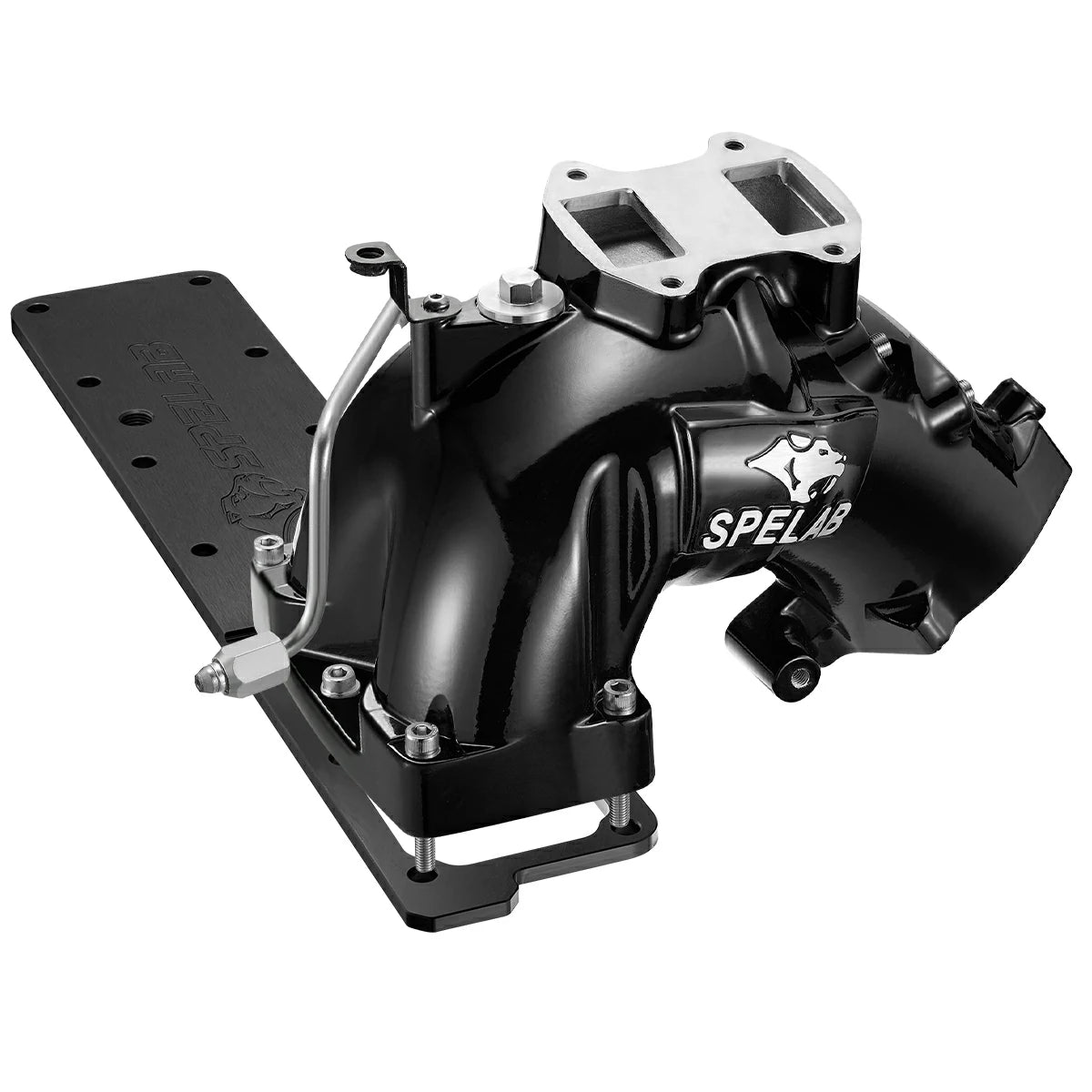
$278-$798
Buy Now6. Aluminum Intake Horns: Enhancing Airflow
Aluminum intake horns smooth airflow into the manifold or turbo inlet. Their rigidity and heat resistance reduce turbulence and pressure losses common with plastic horns.
- Maintains shape under high temperature and boost pressure
- Reduces airflow turbulence for better cylinder filling
- Improves turbo response in low-RPM ranges
- Durable under repeated high-load cycles
7. Conclusion
Aluminum intake manifolds combine thermal efficiency, structural stability, and tunable airflow to improve torque, horsepower, and overall engine performance. Intake horns further optimize airflow, but the core benefits arise from the manifold’s material and engineering design.
8. FAQ
Q1: Are aluminum intake manifolds suitable for high-performance or racing engines?
A1: Yes. Aluminum withstands high-load cycles and heat, performing reliably in turbocharged or modified engines.
Q2: Does aluminum suffer from heat soak?
A2: Aluminum absorbs heat faster than plastic but also dissipates it faster. With proper airflow, intake temperatures remain lower and more stable.
Q3: Is this upgrade worth it for daily drivers or towing rigs?
A3: Yes. Aluminum prevents cracking under heat/boost and improves efficiency and reliability over plastic manifolds.
Q4: Will I need an ECU tune?
A4: Usually no, unless pairing with significantly larger turbo/injectors.
Q5: Is maintenance easier with aluminum?
A5: Yes. Aluminum can handle aggressive cleaning and chemical dips to remove carbon buildup without damage.
Q6: Can I install this myself?
A6: Most aluminum manifolds are bolt-on and DIY-friendly with basic mechanical skills and proper tools.

John Lee
Mechanical Engineer | 10+ Years Experience
John has spent the last decade engineering and testing high-performance automotive components. Specializing in drivetrain durability and thermal management across Powerstroke, Cummins, and Duramax applications, he bridges the gap between OEM limitations and aftermarket performance. His philosophy: "Factory parts are just a starting point."


