
Updated on April 7, 2026.
If you are new to diesel truck ownership or just getting into performance modifications, you have probably heard both terms at the parts counter, on forums, or in YouTube videos. At first glance, they can look similar. Both sit near the front of the truck, both use fins and tubes, and both are designed to move heat.
So what is the actual difference between an intercooler and a radiator?
The short answer: they are both heat exchangers, but they cool completely different things, operate in different systems, and fail in different ways. Your truck needs both, but they are not interchangeable.
The Short Answer
An intercooler cools compressed intake air coming from a turbocharger before that air enters the engine.
A radiator cools engine coolant that circulates through the engine block and cylinder head.
Both are heat exchangers, but they belong to different systems:
- The radiator is part of the engine cooling system.
- The intercooler is part of the intake / charge-air system.
What Is an Intercooler?
An intercooler helps reduce the temperature of air compressed by a turbocharger or supercharger before that air enters the engine. Because compression raises air temperature, the intake charge becomes less dense. Cooling it again helps restore density and oxygen content before combustion.
That matters because cooler, denser intake air can support stronger combustion, better efficiency, and more consistent performance under load.

How Does an Intercooler Work?
Intercoolers work by transferring heat from compressed intake air to a cooler medium. In an air-to-air setup, outside airflow removes heat. In an air-to-water setup, coolant absorbs heat from the charge air before that heat is moved into a separate cooling circuit.
- The turbocharger compresses incoming air.
- Compression raises both pressure and temperature.
- Hot compressed air flows into the intercooler.
- The intercooler removes heat from that air.
- Cooled air exits and moves toward the intake manifold.
Types of Intercoolers
There are two main types of intercoolers:
- Air-to-air intercooler: uses outside airflow to remove heat. It is common because it is simple, durable, and cost-effective.
- Air-to-water intercooler: uses coolant or water as part of the heat-transfer process. It can offer strong cooling performance but adds more complexity and maintenance points.
If you want the full airflow explanation, read How Does an Intercooler Work?.
What Is a Radiator?
A radiator is one of the core components in your truck's cooling system. Its job is to remove heat from engine coolant after that coolant has circulated through the engine and absorbed combustion heat.
Without a functioning radiator, the engine can overheat quickly. That makes the radiator essential for engine survival, not just performance.

How Does a Radiator Work?
- The water pump circulates coolant through the engine block and cylinder head.
- The coolant absorbs combustion heat.
- Hot coolant flows into the radiator.
- The radiator transfers heat into outside air through thin tubes and fins.
- Cooled coolant exits the radiator and returns to the engine.
Types of Radiators in Heavy-Duty Trucks
Most modern diesel trucks use aluminum radiators with plastic end tanks, though some applications use all-aluminum designs.
- Single-pass vs. dual-pass: dual-pass designs route coolant through the core twice for improved heat exchange.
- Integrated transmission cooler: many diesel truck radiators include an internal heat exchanger for transmission fluid.
- Material differences: aluminum is common for weight and efficiency, while copper is known for strong thermal conductivity.
Intercooler vs Radiator: Main Differences
The easiest way to understand the difference between an intercooler and a radiator is to compare what each one cools, which system it belongs to, and what happens when it fails.
| Radiator | Intercooler | |
|---|---|---|
| What it cools | Engine coolant | Compressed intake air |
| System | Engine cooling system | Intake / charge-air system |
| Fluid type | Liquid coolant | Pressurized air |
| Primary goal | Prevent engine overheating | Improve combustion and performance |
| Typical location | Front of engine bay | Between turbocharger and intake system |
| Typical failure result | High coolant temperature, overheating | Power loss, boost issues, smoke, drivability problems |
| Can they replace each other? | No | No |
Cooling Effectiveness
Intercoolers reduce the temperature of compressed air entering the engine. Radiators dissipate heat from the coolant to prevent engine overheating. Both cool, but they cool different media for different reasons.
Installation Location
Radiators are usually mounted at the front of the vehicle for maximum airflow. Intercoolers are typically positioned along the turbo-to-intake path in the charge-air system.
Materials and Design
Both often use aluminum fins and tubes, but they are engineered around different flow conditions, different sealing requirements, and different system demands.
Why a Radiator Cannot Replace an Intercooler
This is one of the most common beginner misunderstandings.
- They cool different media: a radiator is built for liquid coolant, while an intercooler is built for compressed air.
- They belong to different systems: one is in the engine cooling system, the other is in the intake system.
- They face different operating conditions: the flow path, internal design, and sealing requirements are not the same.
- They fail differently: radiator problems usually show up as overheating; intercooler problems usually show up as power and boost problems.
Air-to-Water Intercoolers: The Confusing Middle Case
An air-to-water intercooler still belongs to the intake system, but it uses a liquid circuit to help remove heat from compressed air. That is why some of its hardware can resemble a small radiator.
Even so, it is still an intercooler. Its purpose is still to cool compressed intake air, not engine coolant circulating through the engine block.
On most diesel pickups, air-to-air intercoolers remain the standard setup, while air-to-water designs are more common in specialized performance applications.
Product Comparison: Radiator vs Intercooler Kit
Radiator – 2017–2022 6.7L Powerstroke Ford F250 F350 F450
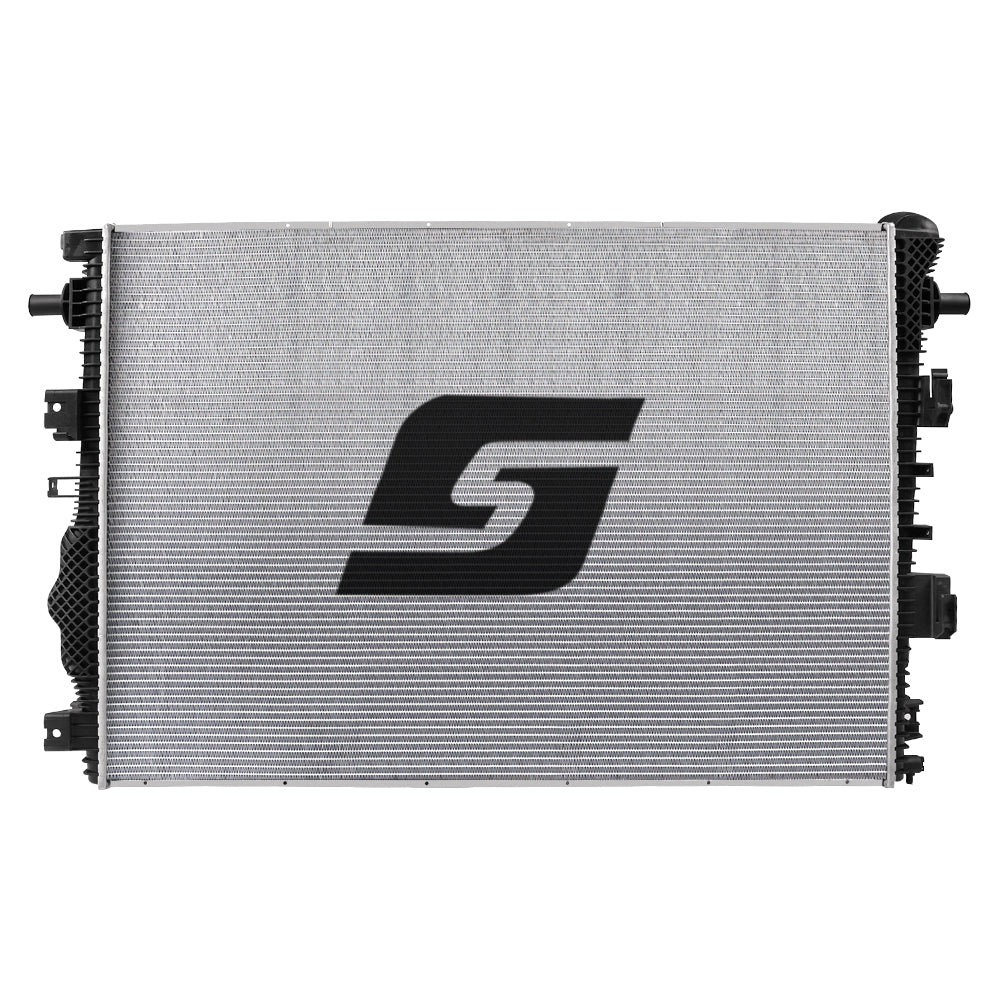
- High-efficiency core with more fins per inch and heavy-duty tubes.
- Internal reinforcements for added strength at vulnerable points.
- Expansion-friendly gasket design to address common OE stress points.
- Reinforced end tanks and upgraded mounting points for durability.
Intercooler Kit – 2013–2018 6.7L Cummins Dodge Ram 2500/3500
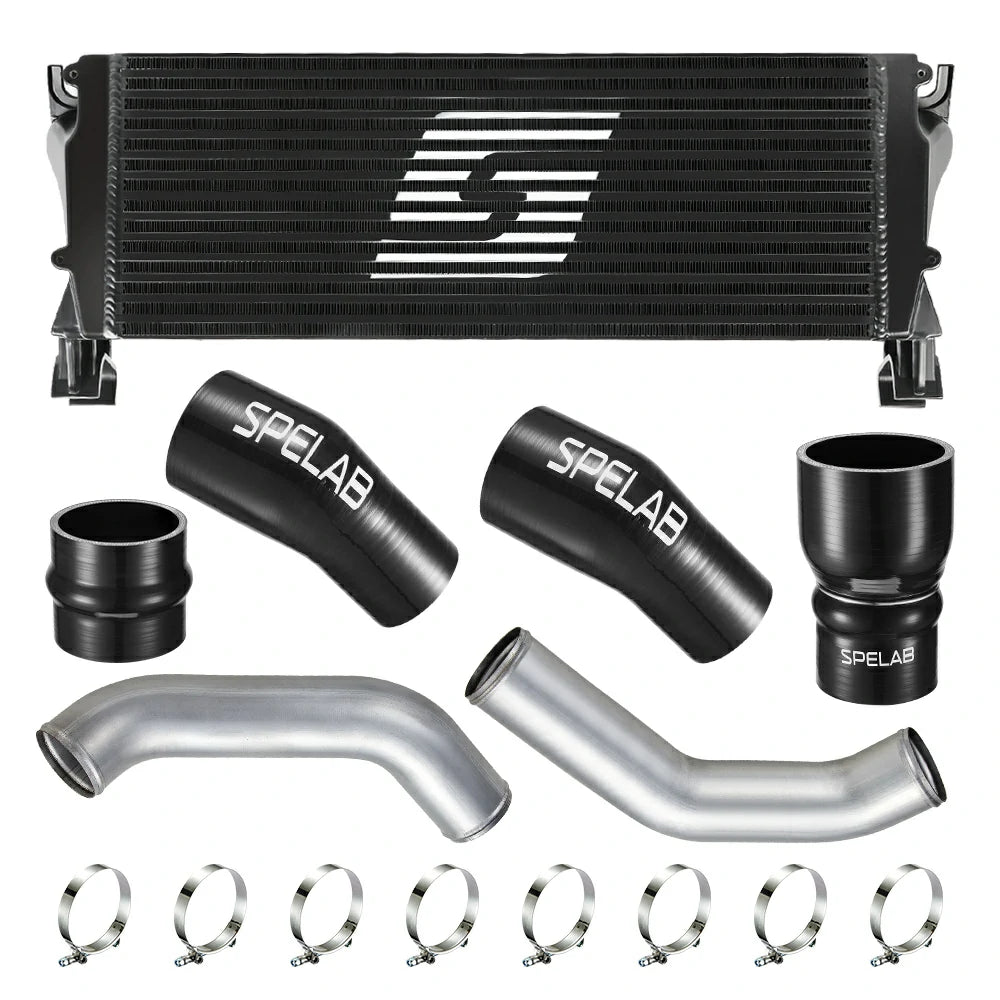
- Direct-fit replacement for 2013–2018 Dodge Ram 2500/3500 6.7L Cummins applications.
- Bar-and-plate core built for high-pressure charge-air use.
- Mandrel-bent aluminized carbon steel piping.
- Heavy-duty silicone couplers and clamps for stronger charge-air sealing.
Cost and Value Comparison
A radiator and an intercooler kit are not direct alternatives, so cost comparison only makes sense when you are deciding which system is causing the problem. A radiator is an engine-protection component. An intercooler or intercooler kit is a performance and charge-air reliability component.
In practical terms, the better value depends on the symptom you are solving, not on which part looks more impressive on paper.
What Happens When Each One Fails?
Radiator Failure Symptoms
- Engine temperature climbing too high
- Coolant leaks under the truck
- Steam from under the hood
- Sweet coolant smell
- Low coolant condition
- Heater not blowing hot air
A radiator problem is an engine-protection issue. Continued overheating can lead to serious engine damage.
Intercooler Failure Symptoms
- Loss of power
- Sluggish throttle response
- Turbo lag
- Black smoke under acceleration
- Boost leaks
- Oil residue around boots, pipes, or couplers
- Inconsistent performance under towing or heat
On many diesel trucks, the issue is not always the intercooler core itself. Pipes, boots, clamps, and couplers are common failure points in the charge-air system.
Can a Bad Intercooler Cause Radiator Problems?
Usually, no.
On most diesel trucks with air-to-air intercoolers, a failing intercooler or leaking intercooler pipe does not directly affect the radiator or the cooling system. A boost leak may reduce power and increase smoke, but it does not directly cause coolant overheating.
The exception is an air-to-water intercooler with an internal coolant-related failure. In that case, coolant loss could indirectly affect cooling performance. But this is not the standard situation on most diesel pickups.
Which Should You Check First?
This is the most practical part of the intercooler vs radiator question.
Check the radiator and cooling system first if you see:
- Engine overheating
- Coolant leaks
- Steam from under the hood
- Heater problems
- Coolant smell
Check the intercooler system first if you see:
- Power loss
- Turbo lag
- Black smoke
- Poor throttle response
- Underboost symptoms or boost leaks
- Oily boots or pipe connections
If the truck is hot, think radiator first.
If the truck is weak, smoky, or not building boost correctly, think intercooler first.
Maintenance and Upkeep
Radiator Maintenance
- Inspect for coolant leaks
- Monitor coolant level and condition
- Check hoses and connections
- Watch for corrosion or fin damage
- Remove debris that blocks airflow
- Replace worn or old coolant as needed
Intercooler Maintenance
- Inspect the core for physical damage or blockage
- Clean debris from the fins
- Check boots, clamps, and pipes for leaks
- Look for oil residue around couplers
- Monitor boost behavior and performance changes
- Inspect air-to-water coolant circuits if applicable
Which Upgrade Makes Sense?
Radiator and intercooler upgrades solve very different problems.
- Upgrade the radiator if your truck overheats under load, the stock cooling system is no longer keeping up, or the radiator is leaking or deteriorating.
- Upgrade the intercooler or intercooler pipes if you are seeing heat soak, higher-boost demands, recurring boost leaks, or weak factory charge-air hardware.
This is why “radiator vs intercooler” is not really a product choice. Most of the time, the real question is which system is causing your current problem.
Intercooler vs Radiator FAQ
Q: What is the main difference between an intercooler and a radiator?
A: A radiator cools engine coolant. An intercooler cools compressed intake air. They belong to different systems, handle different media, and solve different problems.
Q: Do intercoolers need coolant?
A: Not always. Air-to-air intercoolers use ambient airflow, while air-to-water intercoolers use coolant or water as part of the heat-transfer process.
Q: Do all cars have an intercooler?
A: No. Intercoolers are mainly used on turbocharged or supercharged vehicles. Naturally aspirated engines usually do not need one.
Q: Can an intercooler cause the engine to overheat?
A: Not directly on a standard air-to-air setup. If the engine is overheating, the radiator, coolant system, thermostat, water pump, or coolant level are more likely causes.
Q: Why do turbocharged engines use intercoolers?
A: Because compressing air raises its temperature. The intercooler cools that air before it enters the engine, helping restore density and support more effective combustion.
Q: Does a bigger intercooler reduce engine temperature?
A: A larger intercooler can reduce intake air temperature more effectively, which can improve performance. But that is different from directly fixing a cooling-system overheating problem.
Q: Can a damaged radiator affect engine performance?
A: Yes. A damaged radiator can cause inadequate cooling, engine overheating, and serious performance or durability problems.
Q: How often should a radiator be checked?
A: It should be inspected regularly for leaks, corrosion, airflow blockage, and coolant condition as part of normal cooling-system maintenance.
Q: Are aluminum radiators better than copper radiators?
A: Aluminum radiators are widely used because they are lighter and efficient. Copper radiators are known for strong thermal conductivity. The better choice depends on the application.
Q: Which should I check first if my truck is running poorly?
A: Check the intercooler system first for power loss, black smoke, turbo lag, or boost symptoms. Check the radiator and cooling system first for overheating, coolant leaks, steam, or heater issues.


