Author: John Lee, SPELAB Mechanical Engineer. Updated on May 13, 2026.
Quick Answer
You do not always need a traditional paper gasket for your differential cover, but you absolutely need a reliable sealing method. Depending on your axle, cover material, and service habits, you can seal a differential cover with RTV silicone, a paper gasket, or a reusable rubber gasket.
For many factory stamped steel covers, RTV is often the better choice because it can fill small surface imperfections. For rigid aftermarket aluminum covers with a machined flange, a reusable rubber gasket is usually cleaner, easier, and better for future service. The real key is not just the gasket type — it is clean surfaces, correct RTV bead placement, even bolt torque, proper cure time, and using the right gear oil.
Let’s be honest: old gear oil smells terrible. It has a sulfur, rotten-egg odor that seems to stay on your clothes for days. Nobody wants to change differential fluid twice because the cover started leaking a week later. This guide explains how to seal the differential cover correctly the first time.
Gasket vs RTV: Which One Should You Use?
The right sealing method depends on your differential cover. A thin stamped steel cover does not behave like a thick cast aluminum cover. Stamped steel can bend around the bolt holes, while a rigid aluminum cover usually provides a flatter sealing surface.
| Cover Type | Best Sealing Method | Why It Works |
|---|---|---|
| Factory stamped steel cover | Gear-oil-safe RTV silicone | RTV can fill minor flange distortion and surface imperfections |
| Aftermarket cast aluminum cover | Reusable rubber gasket or gear-oil-safe RTV | A machined flange gives the gasket a flatter surface to seal against |
| Old rusty or bent cover | Replace or flatten the cover first | No gasket can reliably seal a badly warped flange |
| Off-road vehicle with frequent gear inspections | Reusable rubber gasket | Cleaner service with less scraping every time the cover comes off |
| Budget repair | RTV or paper gasket depending on condition | Works only if the surfaces are clean, flat, and torqued correctly |
If your current cover is rusty, bent, dented, or repeatedly leaking, browse SPELAB’s differential cover collection before resealing the same old part again.
The 3 Main Ways to Seal a Differential Cover
Not all sealing methods are equal. The best choice depends on budget, surface condition, and how often you service the axle.
| Sealing Method | Pros | Cons | Best For |
|---|---|---|---|
| RTV Silicone / Gasket Maker | Good on uneven surfaces; affordable; widely available | Messy; needs cure time; must be scraped off during future service | Stamped steel covers, one-time repairs, rougher flanges |
| Paper Gasket | Cheap; easy to position; quick to install | Tears easily; may seep if surfaces are uneven; often needs light sealant | Budget repairs on clean, flat surfaces |
| Reusable Rubber Gasket | Clean install; no cure time; reusable; easier future service | More expensive; needs flat mating surfaces | Aftermarket aluminum covers, off-roaders, frequent fluid changes |
Why Stock Differential Covers Leak
The leak is not always the gasket’s fault. Many factory differential covers are made from thin stamped steel. When the bolts are over-tightened, the flange can bend around the bolt holes. This creates small low spots between bolts where gear oil can seep out.

Common leak causes include:
- Warped stamped steel cover flange
- Old RTV or gasket material left on the housing
- Oil residue on the mating surface
- Bolts tightened unevenly
- Bolts over-tightened and flange distorted
- RTV bead placed outside the bolt holes instead of around them correctly
- Gear oil added before RTV has cured
- Drain or fill plug washer leaking instead of the cover gasket
Why a Machined Aluminum Cover Seals Better
A cast or billet aluminum differential cover is usually thicker and more rigid than a stamped steel cover. A flat machined flange helps the gasket or RTV compress evenly instead of being squeezed out around distorted bolt holes.
An aluminum cover can also help with durability and heat management, especially on tow rigs, off-road trucks, and heavy-duty applications. Many performance covers add cooling fins, magnetic drain plugs, extra capacity, or stronger housing protection depending on the axle design.
Dana 60, Ford 10.5, and Ford 8.8 Fitment Examples
If you are upgrading a heavy-duty axle, confirm the exact axle before ordering. For example, a Dana 60 differential cover does not fit the same axle as a Ford Sterling 10.5 differential cover. For lighter Ford truck or performance builds, a Ford 8.8 differential cover may be the correct direction.
How to Seal a Differential Cover Without Leaks
Whether you use RTV or a gasket, surface preparation is the most important part of the job. A premium gasket will still leak if the flange is oily, gouged, bent, or tightened unevenly.
Step 1: Loosen the Fill Plug First
Before draining the differential, make sure the fill plug can be removed. If you drain the axle first and then discover the fill plug is seized, the vehicle may be stuck without gear oil.
Step 2: Spray the Bolts Before Removal
Before you loosen the cover bolts, spray them with penetrating oil and let them sit for several minutes. Differential cover bolts live under the vehicle, where rust, salt, mud, and heat cycles can make them stubborn.
Bolts snap. It happens. A few minutes of prep can save you from drilling out a broken bolt.
Step 3: Drain the Gear Oil
Place a drain pan under the differential. Remove the cover bolts gradually, leaving one or two bolts loosely threaded at the top until the cover breaks free and the fluid drains.
Old gear oil has a strong sulfur smell, so wear gloves and keep rags nearby.
Step 4: Remove the Cover and Inspect It
Once the fluid is drained, remove the cover and inspect the flange. Look for rust, dents, cracks, deep scratches, bent bolt holes, or old sealant buildup.
If the cover is badly warped, rusted, or dented from off-road impacts, resealing it may only be a temporary fix.
Step 5: Clean the Housing Surface
Remove every trace of old RTV or gasket material from the axle housing. Use a plastic scraper, gasket remover, or a careful razor blade approach. Avoid gouging the metal.
If you have an aluminum housing or aluminum cover, do not attack the sealing surface with a screwdriver, metal chisel, or aggressive grinding disc. A deep scratch can create a permanent leak path. Even a premium reusable gasket may seep if the flange is gouged.
Step 6: Clean the Magnet and Inspect Metal Debris
If your cover or drain plug has a magnet, clean it carefully and inspect what comes off. A light gray metallic paste is common from normal wear. Large flakes, sharp chips, or chunks are not normal and may point to gear, bearing, or carrier damage.
| Magnet Debris | What It Usually Means | What to Do |
|---|---|---|
| Fine gray paste | Normal gear and bearing wear particles | Clean the magnet and refill with correct gear oil |
| Small glitter-like particles | Possible accelerated wear | Inspect fluid condition and monitor for noise |
| Sharp flakes or chips | Possible gear tooth or bearing damage | Stop and inspect the differential before driving hard |
| Water-contaminated milky oil | Water intrusion through vent, seal, or housing | Service immediately and inspect vent routing |
Step 7: Apply RTV Correctly, If Using Sealant
If using RTV, choose a gear-oil-safe sealant. Apply one continuous bead around the cover flange. The bead should go around the inside edge of every bolt hole so oil cannot travel along the bolt threads and leak from the bolt heads.
- The Circle Rule: Run the RTV bead around the inside of every bolt hole.
- Continuous bead: Do not leave gaps or broken sections.
- Skin-over time: Let the RTV skin over according to product instructions before final assembly.
- Do not over-apply: Excessive RTV can squeeze out and make future service harder.
Step 8: Install the Cover and Tighten Evenly
Install the cover and start all bolts by hand. Tighten gradually in a crisscross pattern. Do not fully torque one side while the other side is still loose.
Torque specs vary by axle, bolt size, and cover design. Many truck differential cover bolts fall around the 25–35 ft-lb range, but always verify the correct spec for your axle and cover. If the cover manufacturer provides a torque spec, follow that instruction.
| Task | Best Practice | Why It Matters |
|---|---|---|
| Starting bolts | Thread all bolts by hand first | Prevents cross-threading |
| Tightening pattern | Use a crisscross pattern | Compresses gasket or RTV evenly |
| Torque | Use axle-specific spec | Prevents stripped threads and warped covers |
| RTV cure | Follow sealant cure instructions before filling | Prevents gear oil from washing uncured RTV away |
Step 9: Refill With the Correct Gear Oil
After the gasket or RTV is ready for fluid, refill the differential with the correct gear oil weight and amount. Always check the owner’s manual or axle specification.
Step 10: Check for Leaks After Driving
After the first short drive, inspect the cover flange, drain plug, fill plug, and bolt heads. If you see a leak from one bolt, the problem may be thread seepage rather than the main gasket seal.
Common Differential Cover Leak Problems
| Leak Location | Likely Cause | What to Check |
|---|---|---|
| Cover flange | Dirty surface, warped cover, failed RTV, damaged gasket | Flange flatness, gasket seating, surface prep |
| Bolt heads | Sealant bead did not go around bolt holes, thread seepage | RTV path, bolt thread sealant, bolt torque |
| Drain plug | Bad crush washer, O-ring, or thread seal | Washer condition, plug threads, torque |
| Fill plug | Loose plug, damaged threads, missing seal | Plug fit, thread sealant, washer or O-ring |
| Bottom of cover | Impact damage, rust, over-tightened flange | Cover condition, housing edge, fluid trail |
Drain Plug, Fill Plug, and NPT Thread Sealing
Not every leak near the differential cover is a cover gasket leak. Drain and fill plugs can also seep if the washer, O-ring, or thread seal is worn.
- Crush washer plug: Replace the copper or aluminum washer if it is flattened or damaged.
- O-ring plug: Inspect the O-ring for cracks, cuts, or swelling.
- NPT plug: Use a small amount of liquid thread sealant or PTFE tape if appropriate.
NPT threads are tapered. Do not over-tighten a tapered plug in an aluminum differential cover. Too much force can distort or crack the threaded boss. Tighten to a snug seal, then inspect for slow drips after the first drive.
What If You Drive Through Water?
Off-road trucks and tow rigs that see water crossings need extra attention. Even if the cover gasket seals perfectly, water may still enter through the axle vent tube, axle seals, or a damaged plug seal.
After a deep water crossing, inspect the fluid. Milky or cloudy gear oil can indicate water contamination. Water-contaminated oil should be changed quickly because it can reduce lubrication and accelerate bearing or gear wear.
If your truck is used off-road, the differential cover is only one part of the service plan. Also check the vent hose routing, breather condition, axle seals, and plug seals.
When Should You Upgrade the Differential Cover?
You do not need to upgrade the cover every time you change gear oil. But if the original cover is damaged, rusty, bent, or repeatedly leaking, replacing it may be smarter than resealing it again.
Consider upgrading if you see:
- Rust bubbles or pinholes
- Bent flange around bolt holes
- Repeated leaks after resealing
- Impact damage from off-road use
- No drain plug on the factory cover
- Heavy towing or high-temperature use
- A need for easier future fluid service
For more detail, read SPELAB’s guide to signs it is time to replace your differential cover.
Product Recommendation
If you are tired of cleaning RTV, chasing leaks, or dealing with warped stamped steel covers, a rigid aluminum cover can make future maintenance easier.
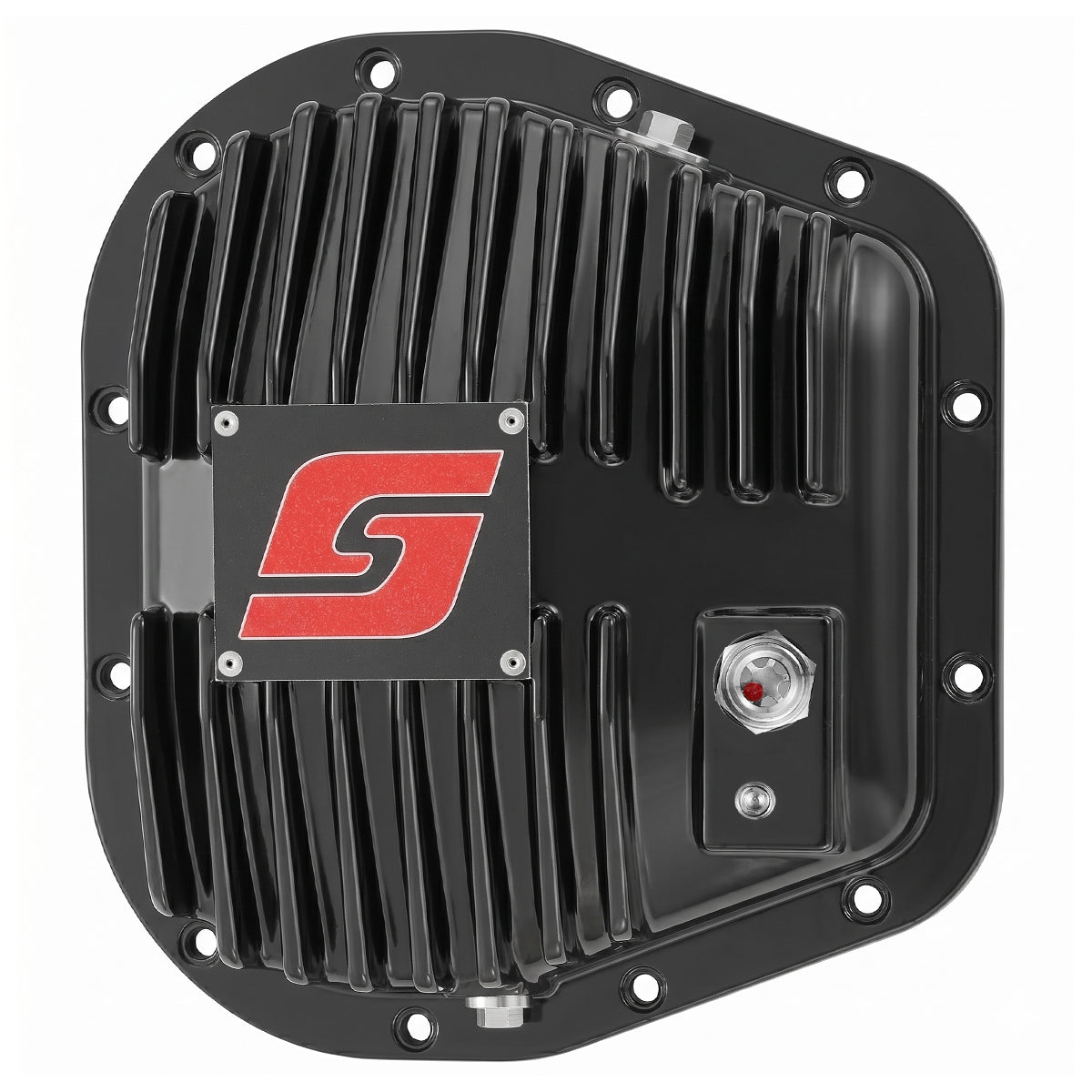
SPELAB Aluminum Differential Cover
A rigid aluminum differential cover with a machined sealing flange can help reduce leak risk, support cooling, and make future fluid service cleaner. Confirm axle fitment before ordering.
Popular fitment directions include Dana axle covers, Ford Sterling 10.5 covers, Ford 8.8 covers, and other truck/SUV applications.
Shop Differential CoversFinal Recommendation
You do not always need a paper gasket for your differential cover, but you do need the right sealing strategy. RTV works well when applied correctly, especially on stamped steel covers or slightly imperfect surfaces. A reusable rubber gasket is cleaner and easier for frequent service, especially with a flat machined aluminum cover.
The key is not just the gasket type. Real leak prevention comes from clean surfaces, a flat cover flange, correct RTV bead placement, even bolt torque, proper cure time, and using the right gear oil and friction modifier where required.
For more engineering background, read SPELAB’s article on how differential covers help manage heat and durability. If you want a more installation-focused example, see SPELAB’s Dana 35 differential cover sealing guide.
FAQ
Q: Do you need a gasket for a differential cover?
A: Not always. You need a reliable seal, but that seal can come from RTV silicone, a paper gasket, or a reusable rubber gasket. The best choice depends on the cover type, axle housing, flange condition, and how often you service the differential.
Q: Is RTV better than a gasket for a differential cover?
A: RTV is often better for stamped steel covers or slightly uneven surfaces because it fills small gaps. A reusable rubber gasket is usually cleaner and easier on flat machined aluminum covers.
Q: Can I use both RTV and a gasket?
A: Sometimes, but do not overdo it. A thin film of sealant may help hold a paper gasket in place, but too much RTV can squeeze out, create uneven sealing, or make future service harder.
Q: How long should RTV cure before adding differential fluid?
A: Follow the sealant manufacturer’s instructions. Many RTV products need skin-over time before assembly and longer cure time before fluid fill. Adding gear oil too early can wash away uncured sealant and cause leaks.
Q: Why is my differential cover leaking from the bolts?
A: Oil may be traveling along the bolt threads because the RTV bead did not go around the inside of the bolt holes, or because the bolt threads need sealant. Remove one bolt at a time, apply appropriate thread sealant if needed, and reinstall to the correct torque.
Q: Can I reuse a differential cover gasket?
A: Paper gaskets and RTV seals are usually single-use. Reusable rubber gaskets with a steel core are designed for multiple services if they are not damaged, crushed, or contaminated.
Q: What happens if I over-tighten differential cover bolts?
A: Over-tightening can strip threads, warp a stamped steel cover, squeeze out the gasket, or force RTV too thin to seal correctly. Use a torque wrench and follow the axle or cover manufacturer’s spec.
Q: Do drain and fill plugs need gaskets?
A: Many drain and fill plugs use a crush washer, O-ring, tapered pipe thread, or thread sealant. If the leak is near the plug, inspect the washer, O-ring, and threads before blaming the cover gasket.
Q: How often should differential fluid be changed?
A: Always follow your owner’s manual. Many vehicles fall around 30,000 to 60,000 miles under normal use, but towing, racing, off-roading, water crossings, and heavy loads may require more frequent service.
Q: What should I do after a water crossing?
A: Check the gear oil for a milky or cloudy appearance. Water can enter through the axle vent tube, seals, or plugs even if the cover gasket is sealed. If the oil looks contaminated, change it quickly and inspect the breather system.
Q: What does metal on the magnetic drain plug mean?
A: A fine gray paste is usually normal wear. Sharp flakes, chunks, or large metal particles are not normal and may indicate gear or bearing damage. Inspect further before towing, racing, or off-roading.
Q: Will an aluminum differential cover lower temperature?
A: A finned aluminum cover can help transfer heat away from the gear oil better than a thin stamped steel cover. The real-world temperature change depends on vehicle load, axle design, speed, fluid level, and airflow around the cover.

John Lee
Mechanical Engineer | 10+ Years Experience
John has spent the last decade engineering and testing high-performance automotive components. Specializing in drivetrain durability and thermal management across Powerstroke, Cummins, and Duramax applications, he bridges the gap between OEM limitations and aftermarket performance. His philosophy: "Factory parts are just a starting point."