Updated on August 23, 2026.
Full disclosure up front: SPELAB provided the parts featured in this article for Nock Ranch's install and review. When it comes to modding a 5th Gen (2019-2021) Ram 6.7L Cummins, most owners aren't chasing a dyno sheet — they want reliability, clean airflow, and a truck that still starts on a cold morning after a long day of work. We sent our SPELAB All-in-One Delete Kit to Mick from the YouTube channel Nock Ranch for a real install case study on his own truck.
Who is Nock Ranch?
If you don't know Nock Ranch, you should. Mick is a hands-on mechanic based in Ohio who specializes in classic car revival and heavy diesel equipment rescue — resurrecting old excavators and Caterpillar dozers off private land and worksites. His 2019 Ram 3500 Dually is the truck that hauls them. That's a real towing and payload duty cycle for off-road and worksite recovery work, and it's exactly the kind of use SPELAB's delete hardware is built and sold for.

Mick's philosophy is simple: "Don't be afraid to grab that wrench and get after it." Because his truck earns its keep, reliability isn't optional. This is an installation case study built around his experience — not an independent third-party test, and we're saying that plainly rather than calling it something it isn't.
Here's our technical breakdown of his build: what the soot buildup actually tells you, what this exact kit does and doesn't fit, the install itself, the exhaust configuration he picked, and the tuning package that came with it.
1. The "Why": What That Soot Buildup Actually Means
At around the 10-minute mark, Mick pulls the stock intake elbow off his 6.7L and finds this:
"That is insane. The amount of soot is caked... it's still breathing, but not by much."

What's actually happening: the stock EGR system routes hot exhaust gas back through the EGR cooler and into the intake to lower peak combustion temperature. That exhaust gas carries unburned carbon and soot particulate, which condenses into a tar-like coating on the intake elbow, throttle valve, and manifold runners over time — especially on trucks that see long idle hours or sustained load. That coating narrows the usable intake path.
Symptoms worth checking for, in rough order of how easy they are to confirm yourself: visible black, tar-like residue when you shine a light down the intake elbow with the boot off; a rougher idle than the truck had when new; a flat spot in throttle response under load; and more frequent DPF regeneration cycles. None of these are unique to EGR soot — a boost leak, a dirty MAF sensor, an injector balance problem, or rising DPF differential pressure can all produce similar symptoms — so the visual check at the intake elbow is the cheapest way to confirm EGR soot specifically before you spend money on anything.
One thing worth being direct about: removing the EGR hardware stops future soot deposits from forming. It does not by itself clean out carbon that's already caked onto the intake elbow, throttle body, or manifold runners — that existing buildup still needs to be physically cleaned or the affected parts replaced during the install.
For a street-registered, daily-driven truck, the manufacturer-correct path is to diagnose and repair the factory EGR system — clean or replace the cooler, valve, or sensors as needed — not to delete it. SPELAB's EGR Delete Kit hardware is built and sold for off-road, racing, and agricultural-use trucks like Mick's recovery rig, not for vehicles that stay registered for public roads. It's worth weighing the tradeoffs before you delete anything, especially on a truck you plan to keep street-legal.
2. Fitment: What This Exact Kit Covers (and What It Doesn't)
The kit Mick installed is built specifically for 2019, 2020, and 2021 Ram 2500/3500 pickups with the 6.7L Cummins — not a general "2019-and-up" fit. Ram's 5th Gen HD platform kept running changes across its production life, and the 2025 model year introduced a genuinely different powertrain: Stellantis's own announcement confirms the 2025 Ram HD moved to a new 6.7L Cummins High-Output engine and an 8-speed TorqueFlite HD transmission. A kit built for 2019-2021 trucks is not a match for that later platform, which is why we're not calling this a "2019+" fit.
| Requirement | What the kit covers | Why it matters |
|---|---|---|
| Model year | 2019, 2020, or 2021 Ram 2500/3500 6.7L Cummins pickups only | 2022 and newer, and all 2025+ High-Output trucks, are not covered by this SKU |
| Cab configuration | Pickup only | The manufacturer's own fitment notes state this kit does not fit Cab & Chassis commercial-style trucks |
| Transmission (2019-2020 only) | Requires selecting Aisin or 68RFE at checkout | The tune file is built for one transmission; ordering the wrong one means the wrong calibration |
| Model year 2021 | Separate tune track from 2019-2020 | 2021 trucks don't use the Aisin/68RFE split — order the 2021-specific option |
| PTO-equipped trucks | Not supported | The manufacturer's tuning notes explicitly exclude PTO units |
| Exhaust configuration | Selectable at checkout: 4" DPF Race, 4" DPF Race w/Muffler, 4" Downpipe-Back, or 5" Downpipe-Back | This is not a one-size kit — pipe size and style are chosen per order, covered more in the sound section below |
Mick's truck is a 2019 build, and the 2019-2021 6.7 Cummins All-in-One Delete Kit is the correct product family for that build window — but the transmission and pipe-size selection still has to match his specific truck at checkout. If your truck is a 2022 or newer 5th Gen, or a 2025+ High-Output build, this kit is not your part; verify fitment on the exact product page for your model year before ordering.
3. Installation: An Engineer's Review
Mick called the install "fairly self-explanatory," and he didn't run into major issues with the SPELAB hardware. Two points are worth calling out for anyone doing this themselves.
The Coolant Reroute
- Observation: on Mick's truck, the coolant hose near the firewall was a tight fit to work around.
- Our Design: the kit includes a brass barbed fitting sized to secure this line under vibration and heat cycling. Mick opted to slide the hose over the existing nipple instead, which works, but the barbed fitting is the more secure option for a truck that sees sustained load and worksite vibration.
The CCV Reroute
- Why it matters: Mick also installed the Updated CCV Reroute Kit for his 6.7 Cummins. The factory CCV system vents oil mist and blow-by gas from the crankcase back into the turbo's compressor inlet. Over time, that oil mist can coat the compressor wheel and charge-air piping — a slow efficiency loss that's easy to miss until someone actually inspects the piping.
- What the reroute changes: instead of feeding that mist back into the turbo, the reroute vents it externally or through a catch can, keeping the compressor wheel and intercooler piping cleaner over time. Blow-by volume tracks engine load, cylinder pressure, wear, and temperature more than idle time alone, so a truck doing sustained heavy pulls will generate more of it than one that simply idles a lot.

If you want the mechanism in more depth, it's worth reading how crankcase oil separation actually works before you install. One practical note for cold climates: a CCV line with no catch can and poor routing can let moisture condense and freeze in the line, which backs up crankcase pressure — plan routing and catch can maintenance around your climate, not just your budget.
4. Exhaust Configuration: 5-Inch vs. 4-Inch
This kit doesn't come with one fixed exhaust — pipe size and style are ordered per build. Mick's own guidance on this split, echoed in our product documentation: a 4-inch straight pipe delivers a tighter, raspier note that's more noticeable at lower RPM, and tends to suit daily-driven or mildly built trucks where excess drone is unwelcome. A 5-inch pipe delivers a deeper, more refined tone with less high-pitch resonance, and tends to suit higher-output builds and heavy towing where the extra exhaust flow helps.
- 5-Inch straight pipe: deep, aggressive tone, but Mick felt the drone at cruise RPM would wear on him during long highway-adjacent hauls with a loaded trailer.
- 5-Inch into 4-Inch (Mick's choice): he used a reducer to bring the tailpipe down to 4 inches. "That is exactly what I want." This is Mick's personal preference on his specific truck and route — not a universal rule for every Ram build, since drone also depends on tailpipe exit point, wheelbase, cab style, and mounting.

The piping across every configuration is mandrel-bent T409 stainless, which avoids the crimped, flow-choking bends you get from cheaper press-bent pipe — that's true at 4 inches or 5 inches. Changing tailpipe diameter does change flow and tone characteristics either way, so pick the size that matches how you actually drive and tow, not just the one with the deepest sound clip. Browse the full straight pipe exhaust and DPF delete pipe collection for other diameter and style options.
5. Real-World Use: Towing, Payload, and Worksite Duty
Mick's truck earns its keep hauling recovered equipment off-property and around the shop — the kind of off-road, agricultural, and worksite use SPELAB's delete hardware is built and sold for. A few honest notes if your build sees similar duty:
| Use case | What this mod realistically changes | What to still watch |
|---|---|---|
| Heavy towing (equipment trailers, dozers) | Clean intake airflow avoids the soot-driven restriction seen on high-mileage EGR systems under sustained load | EGT and coolant temperature on long grades — this hardware doesn't replace watching your gauges |
| Worksite idling and heavy payload runs | Less crankcase oil mist reaching the turbo compressor wheel with the CCV reroute installed | Catch can maintenance interval, especially with long idle hours or sustained heavy pulls |
| Off-property and rough-terrain recovery work | No change to dust or debris exposure at the intake filter — this mod addresses EGR soot, not filtration | Air filter condition still needs regular inspection on dusty access roads |
| Extreme cold starts | No verified cold-start airflow benefit from this mod alone — don't expect a measurable difference here | CCV reroute routing and catch can placement to avoid moisture freeze-up in sub-zero climates |
6. Tuning: What's Actually Included
A delete kit install is a two-part job: hardware and software, and this specific kit bundles both.
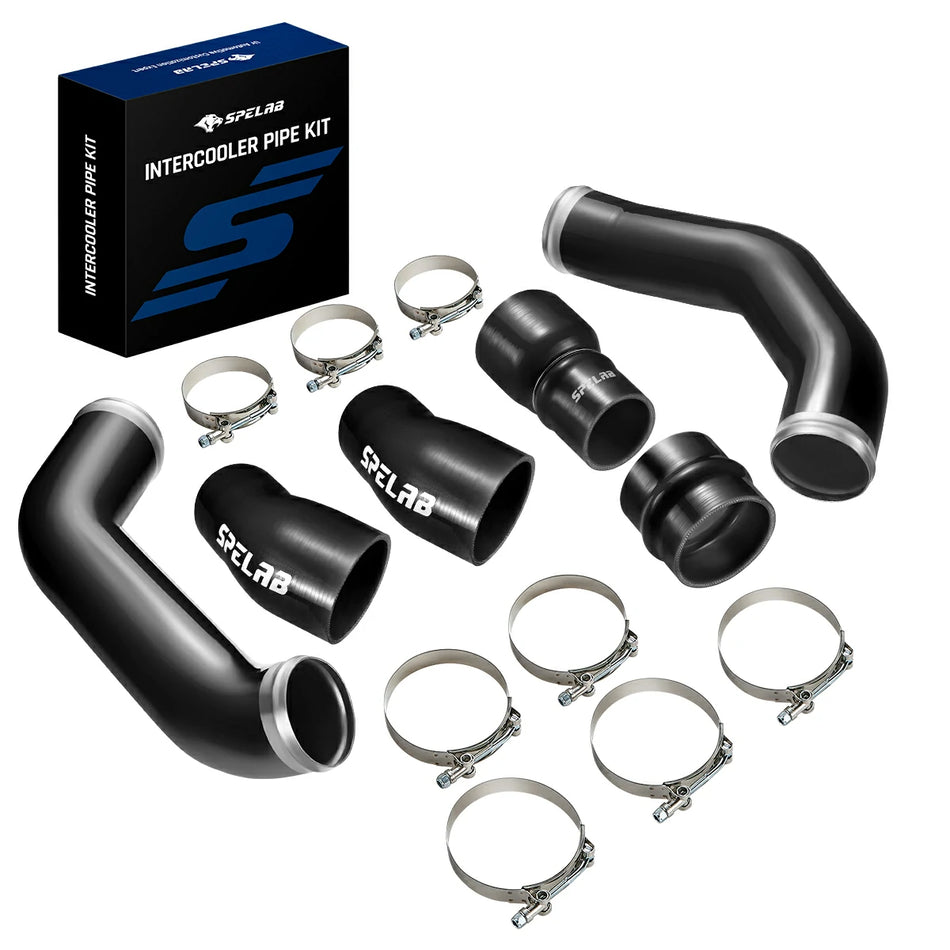
- Hardware (SPELAB): block-off plates, mandrel-bent piping, and reroute hoses that let the engine breathe and drain correctly once the EGR and CCV paths are changed.
- Software: the 2019-2021 All-in-One kit ships with an EZ Lynk tune device and a custom tune file included — you choose Single Tune (a one-time stock-optimized flash with factory EGT protection intact) or SOTF Tune (switch-on-the-fly between multiple power levels) at checkout, matched to your transmission for 2019-2020 trucks or your 2021-specific build.
Watch Mick's full install video on the Nock Ranch channel.
Conclusion
Mick from Nock Ranch sums up his own experience this way:
"I'm happy with the quality. I'm happy with the ease of install... This is a good way to free up your engine bay and have peace of mind."
Thanks to Nock Ranch for letting us feature this build. If you're into classic car revivals and watching heavy equipment get a second chance at life, subscribe to his channel.

Frequently Asked Questions
Q: Does the SPELAB 2019-2021 kit come with a tuner?
A: Yes, for this specific kit — it includes an EZ Lynk tune device and a custom tune file (Single Tune or SOTF Tune), selected at checkout to match your transmission (Aisin or 68RFE for 2019-2020) or your 2021 build. Tunes are custom, non-refundable, and take about 7-10 business days. The package does not include a TCM tune, and it doesn't support PTO-equipped trucks.
Q: Will this kit fit a 2022 or newer 5th Gen Ram?
A: No. This kit is built specifically for 2019, 2020, and 2021 pickups. Ram changed the platform going into later model years, and the 2025 model year moved to a new 6.7L Cummins High-Output engine and 8-speed transmission. Check the exact product page for your model year before ordering.
Q: Is the installation difficult for a beginner?
A: As Mick found, it's self-explanatory if you're mechanically inclined, but removing the stock EGR hardware can eat time due to bolt access and heat-cycled fasteners. Set aside a full weekend rather than an afternoon.
Q: Does this kit remove the EGR cooler or just block it off?
A: The All-in-One Delete Kit uses block-off plates and rerouted components to stop exhaust gas flow through the EGR path. Depending on configuration, the factory cooler housing may stay physically in place but is no longer active in the airflow loop. It does not automatically clean carbon that's already built up in the intake — that's a separate inspection and cleaning step.
Q: Will this fit a Cab & Chassis truck?
A: No. The manufacturer's own fitment notes for this kit specifically exclude Cab & Chassis commercial-style trucks — it's built for pickup configurations only.
Q: Will I notice a fuel economy change after the install?
A: Some owners report steadier throttle response after an EGR delete, particularly under load, but actual fuel economy varies with driving habits, payload, tune selection, and duty cycle. Treat any specific MPG number as anecdotal, not a guarantee.
Q: Is this kit legal to run on a street-registered truck?
A: No. This hardware is intended for off-road, racing, and agricultural-use vehicles only, per the manufacturer's own product listing. Removing or disabling emissions equipment on a vehicle that stays registered for public roads violates the Clean Air Act and related state regulations, and there's no general legal path that exempts a previously-certified street vehicle by simply relabeling its use.