
Author: John Lee, SPELAB Mechanical Engineer. Updated on February 25, 2026.
TL;DR
A DPF delete typically costs $300–$3,500 for parts or $3,000–$10,000 for full professional services, depending on the vehicle, tuning requirements, and labor rates. While some off-road users report performance gains and maintenance benefits, legal restrictions, strict EPA regulations, and tuning software availability should be carefully considered before proceeding.
The DPF is intended to serve as a support system for a diesel vehicle's emissions control system. However, the component has a few drawbacks, including poor airflow and decreased engine power caused by a clogged DPF filter.
DPF deletion appears to be the surefire approach to get rid of a clogged diesel particulate filter, prevent your truck from going into limp mode, increase a car's power, and improve its fuel efficiency. The operation to remove the diesel particulate filter comes with a number of conditions, nevertheless.

What is a DPF?
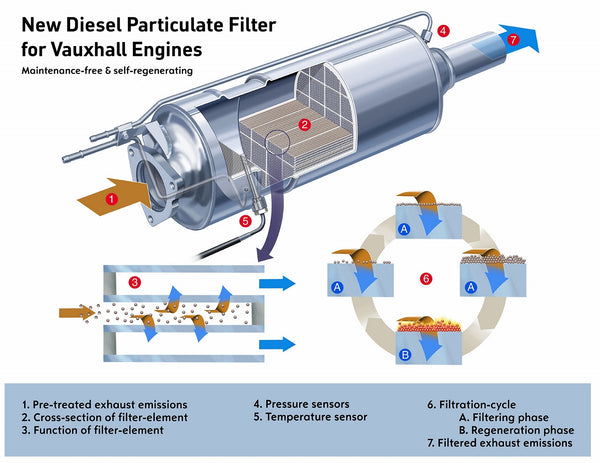
DPF, or diesel particulate filter, is an emission control device that captures and stores exhaust soot to reduce harmful emissions from diesel vehicles. The filter is made from ceramic-based materials such as cordierite or silicon carbide and contains a catalyst coating to help oxidize pollutants like carbon monoxide and hydrocarbons.
Over time, the DPF fills with soot and requires regeneration to burn off accumulated particles. If regeneration fails or the filter becomes clogged, it can restrict exhaust flow, leading to reduced fuel efficiency and severe engine performance issues.
What is DPF Delete?
A DPF delete is the process of removing the diesel particulate filter and reprogramming the engine control unit (ECU) so the vehicle can operate without the emissions component. Often, this is combined with an EGR delete kit and a DEF (Diesel Exhaust Fluid) delete to completely bypass the factory emissions loop, which also provides significant weight reduction for the vehicle.
What is a DPF Delete Pipe?
A delete pipe replaces the factory exhaust section containing the DPF (and sometimes the catalytic converter), allowing exhaust gases to flow unrestricted.
The Hidden Component: Software & Tuning (The Elephant in the Room)
Removing the hardware alone is not enough. Sensors will detect the missing filter, throw a check engine light, and immediately trigger limp mode. ECU tuning recalibrates the engine management system to prevent fault codes and restore normal operation.
The Current Reality: Due to strict EPA regulations and industry crackdowns, finding a reputable tuner or platform (like EZ Lynk or EFI Live) that provides off-road tuning and delete files is currently the most challenging part of the entire process. Many tuning companies have been forced to stop selling these files. Today, acquiring the right software is often harder—and sometimes more expensive—than buying the physical hardware.
How Much Does A DPF Delete Cost?
Costs vary depending on vehicle type, parts, and labor. A full professional delete typically ranges between $3,000 and $10,000, while individual components for custom or DIY installations cost significantly less.
DPF Delete Cost Breakdown
| Item/Service | Parts Cost | Full Service Cost |
|---|---|---|
| Basic DPF Delete Pipe | $300 – $600 | $800 – $1,500 |
| EGR + DPF Delete Kit | $500 – $900 | $2,000 – $4,500 |
| Full Delete with Tuning Software | $1,200 – $3,500 | $3,000 – $10,000 |
Example Kit Pricing
- 6.7 Powerstroke DPF Delete Kit: about $300
- 6.7 Cummins Delete Kit (2010–2014): about $527
- Ford 6.7 Powerstroke EGR Delete (2015–2016): about $359
- L5P Duramax Delete Kit (2017–2023): about $799
Installation: DIY vs Professional
- DIY: Typically 2–4 hours for bolt-on kits with proper tools. However, flashing the ECU requires specialized devices.
- Professional: Shops charge roughly $150–$250 per hour, with total labor often 5–8 hours.
Example Pricing by Popular Diesel Platforms
Looking at real-world platforms helps put DPF delete costs into context. Below are typical price ranges for two of the most common heavy-duty diesel engines.
6.7 Powerstroke DPF Delete Cost
For Ford Super Duty trucks equipped with the 6.7L Powerstroke engine, a basic DPF delete pipe that replaces the exhaust section from the downpipe to the muffler generally costs around $300–$600. When paired with tuning and professional installation, total costs typically range between $3,000 and $8,000.

6.7 Cummins DPF Delete Cost
On Ram 2500 and 3500 trucks powered by the 6.7L Cummins engine, hardware-only delete kits commonly fall in the $500–$900 range. A full setup including ECU tuning and labor generally brings total costs to about $3,500–$9,000.

Note: Prices vary depending on model year, exhaust configuration, and local labor rates. Always verify compatibility and intended vehicle use before purchasing parts.
DPF Delete Pros and Cons
| Pros | Cons |
|---|---|
| Potential increase in horsepower & torque | Will definitively void factory powertrain warranty |
| Reduced exhaust backpressure | Noticeable raw diesel smell & black smoke |
| Lower long-term maintenance costs | Finding delete tuning software is extremely difficult |
| Significant weight reduction | Illegal for public road use (EPA fines apply) |
| No regeneration downtime or limp mode | Guaranteed emissions or MOT failure in strict regions |
Real-World Usage Scenarios
Towing & Heavy-Duty Use
For trucks used for towing, reduced exhaust restriction may help maintain consistent power under load and eliminate the risk of the truck dropping into limp mode during long pulls. However, commercial work trucks may face very strict compliance checks and weigh-station inspections.
Daily Driving (The Smell & Smoke Factor)
For daily commuting, performance gains are often overshadowed by the drawbacks. Without a DPF and catalytic converter, your truck will have a strong, raw diesel exhaust odor. Furthermore, heavy acceleration can produce thick black smoke (often referred to as "rolling coal"). This can attract unwanted attention from law enforcement and make daily driving less pleasant. Legal risks generally outweigh the benefits for street-only vehicles.
Legal & Compliance Considerations
In many regions, including the United States, removing emissions equipment from a road-going vehicle violates environmental regulations.
- Federal law (EPA regulations) prohibits tampering with factory emissions systems on public-road vehicles.
- Vehicles will fail emissions tests (or result in MOT failure internationally).
- Heavy fines or penalties may apply to both owners and tuning shops.
- Most kits and tunes are strictly sold for off-road or closed-course competition use only.
Is DPF Delete Worth It?
For some off-road, agricultural, or competition-focused builds, owners report improved power delivery, reduced maintenance, and no more clogged filters. However, the absolute loss of your factory warranty, the raw diesel smell, and the extreme difficulty of finding tuning software should be evaluated carefully before deciding.
Conclusion
DPF delete costs can range from a few hundred dollars for parts to up to $10,000 for a fully installed and tuned setup. While there are undeniable performance and maintenance benefits for off-road use, regulatory compliance, tuning availability, and daily drivability changes (like odor and smoke) must be part of your decision-making process.
FAQ
Q: How much does a DPF delete cost?
A: Typically $300–$3,500 for hardware/parts, or $3,000–$10,000 for full professional service including tuning software and labor.
Q: Will a DPF delete void my truck's warranty?
A: Yes. Removing or tampering with factory emissions equipment will definitively void your engine and powertrain warranty from the manufacturer.
Q: Why is DPF delete tuning software so hard to find now?
A: Due to aggressive EPA crackdowns and hefty fines imposed on tuning companies, most major shops and platforms have stopped developing or selling off-road delete tunes for modern diesels.
Q: Does a deleted truck smell bad or blow black smoke?
A: Yes. Without the DPF and catalytic converter, the exhaust will have a noticeable raw diesel odor (similar to older tractors). Depending on the tune you choose, it may also produce visible black smoke under heavy acceleration.
Q: Can a DPF delete be reversed?
A: Yes, but it is expensive. It requires reinstalling the factory emissions components (DPF, SCR, EGR) and reprogramming the ECU back to stock settings. This can often cost as much as the initial delete.
Q: Can I still pass an emissions test or state inspection after a delete?
A: In most cases, no. If your state requires an OBDII plug-in test or a visual inspection of the exhaust system, a deleted truck will fail automatically. This modification is strictly for off-road or competition use only.
Q: Do I still need to use Diesel Exhaust Fluid (DEF) after deleting the DPF?
A: No. A proper delete tune will disable the entire SCR (Selective Catalytic Reduction) system. You will no longer need to refill the DEF tank, and the truck will not enter "limp mode" for DEF-related issues.
Q: Will deleting the DPF actually make my engine last longer?
A: Yes, many mechanics agree that it does. By removing the DPF and EGR, you stop soot from being recirculated into the intake manifold and prevent diesel fuel from diluting your engine oil during "regeneration" cycles.
Q: How does a DPF delete affect the resale value of my truck?
A: It is a double-edged sword. While some private buyers will pay a premium for a "fully deleted" truck, many licensed dealerships will refuse to take it as a trade-in unless it is returned to factory specifications.
Q: Do I need to delete the EGR at the same time as the DPF?
A: While not strictly required, it is highly recommended. Leaving the EGR active while the DPF is gone can still cause carbon buildup in your intake. Most "full delete" projects address both systems simultaneously for maximum reliability.

John Lee
Mechanical Engineer | 10+ Years Experience
John has spent the last decade engineering and testing high-performance automotive components. Specializing in drivetrain durability and thermal management across Powerstroke, Cummins, and Duramax applications, he bridges the gap between OEM limitations and aftermarket performance. His philosophy: "Factory parts are just a starting point."


