Updated on July 17, 2026.
An EGR delete stops or bypasses exhaust-gas recirculation by removing or blocking EGR hardware and usually changing the engine's control strategy. It can keep recirculated soot out of the intake, but it also raises NOx emissions, changes the engine's certified emissions configuration, and can disrupt DPF, SCR, sensor, and diagnostic behavior. It does not guarantee more horsepower, better fuel economy, lower EGT, or a repair for the fault that started the conversation.
Key Takeaways
For a road-driven diesel pickup, repairing the EGR system is the practical and compliant answer; deletion belongs only in a use case that is independently confirmed as lawful.
- Removing EGR flow can reduce intake soot exposure, but combustion temperature and NOx emissions can increase.
- Power, fuel-economy, coolant-temperature, and EGT changes vary by engine, load, calibration, and aftertreatment condition.
- Coolant loss, white smoke, P0401/P0402, frequent regens, or weak towing power require diagnosis before parts are ordered.
- EGR, DPF, SCR/DEF, MAP, MAF, EGT, and NOx sensor strategies interact on modern diesel trucks.
- Cleaning, sensor service, cooler replacement, valve replacement, or intake cleaning often solves the actual road-truck problem without removing emissions equipment.

What an EGR Delete Actually Changes
An EGR delete removes the controlled exhaust flow that the engine uses to reduce combustion temperature and NOx formation.
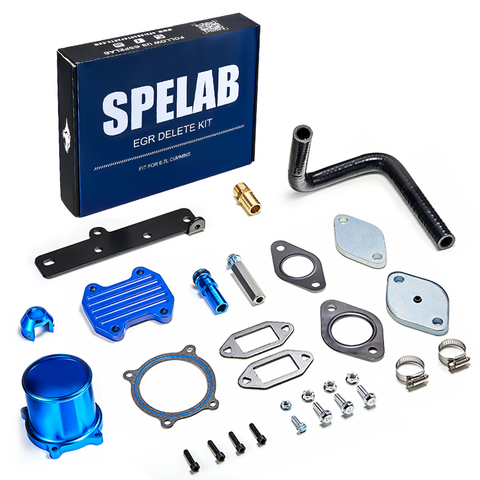
Hardware changes may include blocking exhaust and intake passages, removing an EGR valve or cooler, and rerouting coolant. Electronic changes may be needed because the ECU expects specific EGR position, airflow, temperature, and pressure behavior. That expectation is tied to the engine family and model year, so a plate kit by itself does not complete a modern system change.
Keep, Clean, Replace, or Delete?
Choose the next step from the truck's measured fault and legal use, not from a promise of easy power.
| Truck condition | Most sensible path | Checks before work | Why |
|---|---|---|---|
| Road-driven truck with no EGR fault | Keep and maintain | Service history, sensor data, intake deposits, and coolant condition | A functioning certified system does not need preventive removal |
| Restricted valve, dirty MAP sensor, or intake sludge | Clean and retest | Commanded versus actual EGR, MAP/MAF data, CCV oil carryover, and passage condition | Cleaning may restore control without replacing good hardware |
| Coolant loss with white vapor or a sweet exhaust smell | Pressure-test and replace the failed cooler if confirmed | External leaks, EGR cooler, charge-air cooler, head gasket, and cylinder evidence | An internal cooler leak can mimic a larger engine problem |
| P0401/P0402, frequent regen, or limp mode | Diagnose the complete emissions system | Wiring, valve position, differential pressure, EGT/NOx sensors, DPF loading, and calibration | A single code does not identify the failed part |
| High-mileage tow truck with heavy soot and oil deposits | Clean the intake and correct the source | EGR flow, CCV system, injector condition, boost leaks, idle hours, and duty cycle | A clean replacement part will foul again if the root cause stays |
| Competition or nonroad application | Verify legal status, rules, fitment, and calibration before hardware | Vehicle classification, event rules, exact engine generation, DPF/SCR strategy, and tuning support | An “off-road” label alone does not establish a lawful exemption |
Symptoms That Need Diagnosis First
EGR trouble can cause drivability and emissions symptoms, but the same symptoms also come from boost, fuel, cooling, intake, and aftertreatment faults.
- P0401 or low-flow codes: check blocked passages, valve movement, wiring, sensor bias, and commanded versus actual data.
- P0402 or excessive-flow codes: check a valve stuck open, control faults, deposits on the seat, and incorrect airflow readings.
- Weak acceleration or towing power: inspect charge-air boots, turbo control, exhaust leaks, fuel delivery, DPF restriction, and derate status.
- Frequent active regen: review idle hours, short-trip use, DPF pressure data, exhaust-temperature sensors, dosing, and engine-out soot production.
- Cold-start white vapor with coolant loss: pressure-test the EGR cooler and cooling system; do not jump straight to a head-gasket diagnosis.
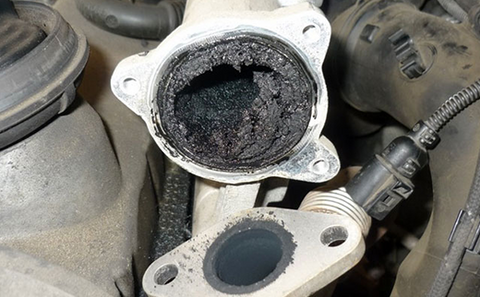
- Sticky black sludge: dry EGR soot can mix with CCV oil mist into a tar-like deposit around the intake horn and MAP sensor. That buildup can restrict airflow, bias MAP readings, and send the diagnosis in the wrong direction.
Use the guide on whether soot and oil deposits point to one system or several to decide how far the cleaning job needs to go.
Power, Fuel Economy, and EGT Claims
No responsible mechanic can promise a fixed horsepower gain, a 20% fuel-economy increase, or a guaranteed EGT drop from an EGR delete.
A truck with a valve stuck open or a badly restricted intake may feel stronger after the fault is corrected because commanded airflow and boost are restored. That improvement is a repair result, not proof that every healthy truck gains the same power by removing EGR.
Fuel economy changes with payload, trailer weight, grade, tire size, axle ratio, idle time, ambient temperature, regeneration frequency, tune, and driving style. Hand-calculated tank data collected over several comparable fill-ups is more useful than the dashboard average after a modification.
EGT also needs context. Removing recirculated gas can change oxygen concentration and combustion temperature, while calibration and fueling determine what happens under load. Watch pre-turbo EGT, boost, coolant temperature, transmission temperature, and exhaust backpressure together on a towing truck.
How EGR Changes Affect the DPF and SCR System
Changing EGR while leaving the DPF and SCR hardware untouched can create a mismatch between engine-out emissions and the aftertreatment strategy.
The ECU uses airflow, EGR position, temperature, pressure, NOx, and oxygen-related data to manage emissions and regeneration. Altering one part of that chain can produce diagnostic codes, incorrect soot estimates, abnormal regen behavior, poor drivability, or derate. Results vary by platform and calibration, so “delete EGR but keep everything else” is not a universal mechanical shortcut.
Read why aftertreatment behavior can change after airflow strategy changes before treating the EGR and DPF as unrelated boxes.
Road-Legal and Warranty Reality
Removing or disabling required EGR equipment on a U.S. road vehicle can violate federal anti-tampering law even where local inspection is limited.
The EPA vehicle and engine tampering policy addresses emissions-control tampering and aftermarket defeat devices under the Clean Air Act. State rules, inspection programs, registration, warranty, insurance, and fleet policies can add separate exposure. Confirm current requirements for the exact vehicle and use before changing certified hardware.
The detailed breakdown of how federal, state, inspection, and warranty exposure stack up is useful when a truck crosses state lines, works in a fleet, or may be sold later.
Fitment Checks for Lawfully Permitted Applications
Competition or nonroad hardware must match the exact engine generation, chassis, coolant routing, sensors, and control strategy, and the owner must independently confirm that the use is lawful.
Ford fitment starts with the engine-generation split, not the badge on the fender. Compare exhaust block-off points, EGR cooler and valve layout, coolant bypass routing, sensor ports, and supplied brackets across 2011-2014, 2015-2016, 2017-2019, and 2020-plus trucks. For a lawfully permitted build, use the 2011-2025 6.7L Powerstroke EGR hardware kit only as an application-specific hardware reference after those checks.
Ram fitment depends on pickup versus cab-and-chassis packaging, EGT sensor arrangement, throttle-valve hardware, cooler plumbing, and the 2013-2018 versus 2019-plus changeover. Match those physical details before using the 2010-2025 Ram 6.7L diesel EGR hardware kit as a fitment reference.
GM trucks require the exact engine code before anything else. L5P cooler routing, valve position, dipstick and hose brackets, sensors, and calibration boundaries differ from LML, LMM, LBZ, LLY, and LB7 layouts. The 2017-2025 L5P Duramax EGR valve-and-cooler kit belongs only in an exact L5P fitment check.
Do Not Confuse EGT Relocation With an EGR Repair
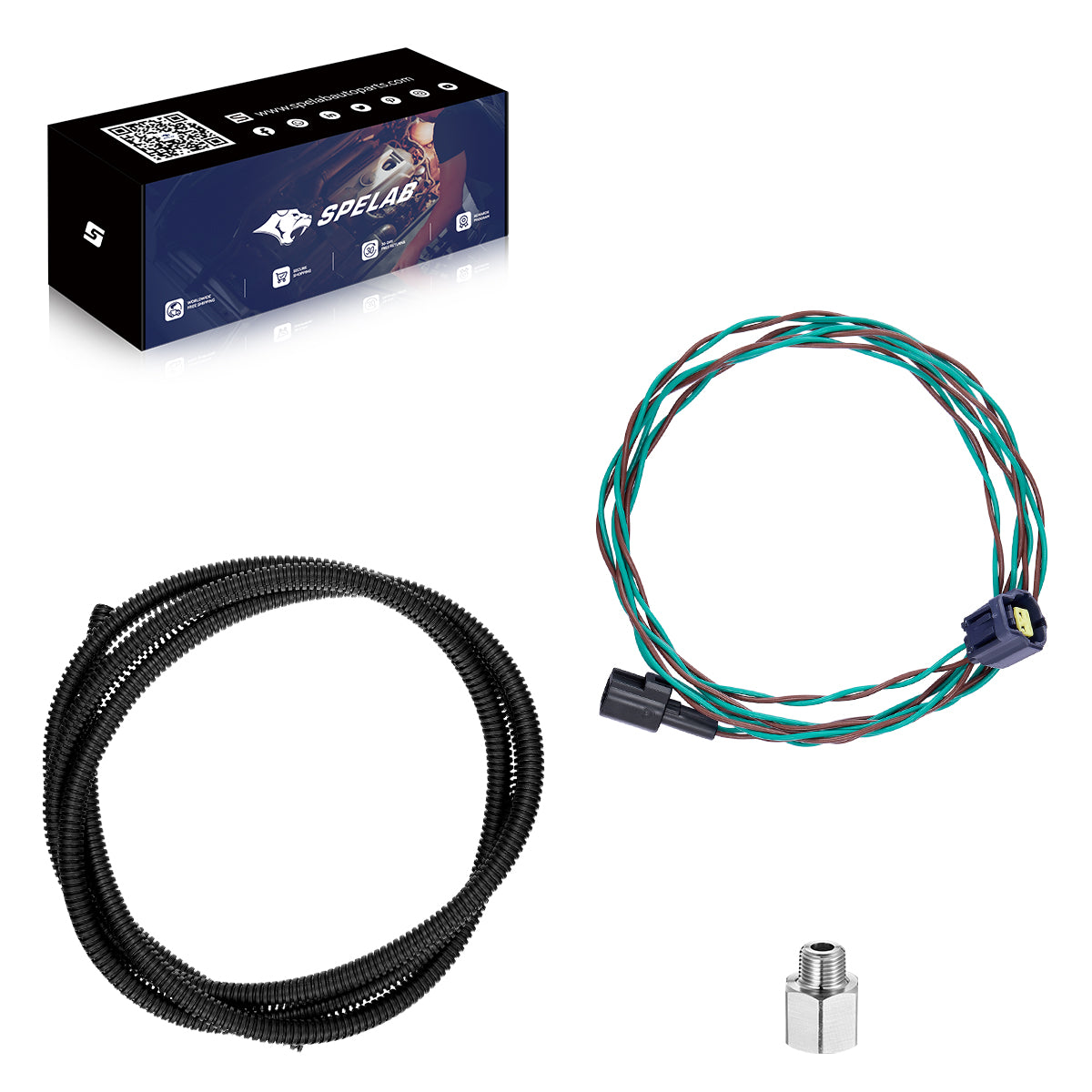
An EGT sensor relocation harness changes sensor placement or connection; it does not diagnose an EGR valve, repair a leaking cooler, or establish a legal emissions configuration.
A Better Repair Plan for a Road-Driven Truck
Road trucks usually need a measured repair: clean the fouled passages, replace the failed valve or cooler, restore sensor accuracy, and verify aftertreatment operation.
- Scan before disassembly. Save active, pending, and history codes with freeze-frame and regen data.
- Check the basics. Verify coolant level, oil condition, air filter sealing, boost boots, exhaust leaks, wiring, and battery voltage.
- Command the system. Compare requested and actual valve position, airflow, temperatures, pressure, and NOx data using the correct service procedure.
- Pressure-test suspected leaks. Separate an EGR cooler leak from an external coolant leak, charge-air cooler leak, or head-gasket concern.
- Clean only serviceable components. Protect sensors and intake ports from solvents and loosened carbon.
- Replace failed hardware. Use year-correct gaskets, O-rings, coolant seals, and torque procedures.
- Verify the repair under the real duty cycle. Recheck codes, commanded data, coolant level, regen behavior, and towing performance.
EGR Delete FAQ
These answers cover the performance, fuel-economy, EGT, DPF, tuning, reliability, and legal questions diesel owners ask most often.
Q: What does an EGR delete do?
A: It blocks or removes exhaust-gas recirculation and usually requires a compatible control strategy. Intake soot exposure may fall, but NOx emissions rise and linked emissions diagnostics can change.
Q: Does an EGR delete add horsepower?
A: No fixed gain is guaranteed. Correcting a stuck-open valve or restricted intake may restore power that the truck had already lost.
Q: Will an EGR delete improve fuel economy by 20%?
A: Do not count on a 20% gain. Verify fuel use with hand-calculated, comparable tanks instead of a short dashboard average.
Q: Does an EGR delete lower EGT?
A: Not predictably. Compare logged EGT under the same load, grade, weather, calibration, and sensor location.
Q: Can I delete EGR and keep the DPF?
A: The systems are electronically and thermally linked. Changing EGR strategy while retaining the DPF can affect soot modeling, regeneration, diagnostic codes, and derate behavior, and it does not resolve the legal issue for a road vehicle.
Q: What are common signs of an internally leaking EGR cooler?
A: Possible signs include repeated coolant loss with no obvious puddle, white exhaust vapor after warm-up, a sweet smell, cooling-system pressure changes, or contamination near the EGR path. Test before blaming the head gasket.
Q: Is an EGR delete legal on a street-driven diesel truck?
A: Removing or disabling required emissions controls can violate the federal Clean Air Act, and state, inspection, warranty, insurance, or fleet rules may add consequences. Verify current law for the exact vehicle and use.

About the Author
John Lee
Mechanical Engineer | 10+ Years Experience
John has spent the last decade engineering and testing high-performance automotive components. Specializing in drivetrain durability and thermal management across Powerstroke, Cummins, and Duramax applications, he bridges the gap between OEM limitations and aftermarket performance. His philosophy: "Factory parts are just a starting point."