Updated on May 31, 2026.
A cheap diesel exhaust kit can turn a simple weekend job into a truck-on-jack-stands nightmare. If the pipe does not line up, the clamps are junk, or the seller cannot explain your truck’s fitment, the money you saved disappears fast.
For off-road and competition-use diesel builds, choosing a reliable DPF delete shop is really about three things: exact fitment, parts that can survive heat and vibration, and a supplier that understands tuning and emissions-law responsibility before you start ordering parts.
What Makes a DPF Delete Shop Reliable?
A reliable DPF delete shop should do more than list a pipe diameter and a price. It should help you understand whether the part fits your exact truck, what material it uses, what hardware is included, and what off-road tuning support may be required.
The difference between a real diesel performance supplier and a random marketplace seller usually shows up under the truck. A good kit should line up with OEM-style hangers, clear the crossmember, avoid brake lines and wiring, include the right clamps and gaskets, and come with enough fitment detail that you are not guessing during installation.
Avoid the “Sawzall Special”
The first warning sign is vague fitment. If a listing says “universal diesel pipe” but does not mention year range, wheelbase, cab style, bed length, or engine platform, you may be looking at the classic “Sawzall Special”—a cheap, generic pipe that forces you to cut, weld, or hack up factory components just to make the hangers line up.
That is how a budget kit turns into an expensive Saturday afternoon. The truck is apart, the pipe is too short, one flange will not seal, and the missing clamp is somehow the only part that matters.
- The Sawzall Special: Poorly bent pipes that require cutting or fabrication to solve hanger alignment.
- Thin-gauge tin: Low-grade steel that can rust, crack, or buzz under diesel vibration.
- The leaky flange: Badly machined connections that leave soot marks and make the cab smell like a bus depot.
- Ghost kits: “Complete” kits that show up without the one gasket, clamp, or adapter needed to finish the job.
- No support after sale: Sellers who disappear when you ask why the pipe hits the crossmember.
| Feature | Reliable DPF Delete Shop | Budget Marketplace Seller |
|---|---|---|
| Fitment | Vehicle-specific, with OEM-style hanger alignment | Vague “universal” fitment claims |
| Hardware | Lists clamps, gaskets, bolts, and adapters | Missing or low-grade hardware |
| Material | Explains steel grade and corrosion resistance | No clear material information |
| Support | Fitment help and off-road tuning guidance | Little or no technical support |
Fitment Comes Before Everything Else
Every diesel platform has its own exhaust layout. A 2015 Powerstroke kit is not automatically the same as a 2020 Powerstroke kit. A crew cab short bed may not route exactly like a crew cab long bed. Some kits are filter-back, some are downpipe-back, and some depend on whether the truck uses a 4-inch or 5-inch layout.
A real shop should understand the Big Three platforms before recommending parts:
- Ram 2500/3500 6.7L Cummins: Confirm model year, bed length, pipe diameter, and whether the setup is 4-inch or 5-inch.
- Chevy Silverado / GMC Sierra 2500HD and 3500HD 6.6L Duramax: Check engine generation, especially LML and L5P differences.
- Ford F-250 / F-350 / F-450 6.7L Powerstroke: Confirm year range, cab and bed configuration, and whether the kit is downpipe-back or filter-back.
If you are comparing by platform, start with focused categories such as 6.7L Cummins DPF delete pipes, 6.6L Duramax DPF delete pipes, and Powerstroke-specific listings instead of generic diesel exhaust pages.
Choose Material Based on Climate, Not Just Price
If your truck lives in Arizona, a budget material may last longer than it would in Ohio, Michigan, Pennsylvania, or anywhere that sees salt. Rust Belt trucks need better corrosion resistance because road salt, winter slush, heat cycles, and vibration punish cheap exhaust tubing fast.
| Material Type | Corrosion Resistance | Best Use Case | Buyer Note |
|---|---|---|---|
| Aluminized Steel | Moderate | Dry climates or short-term budget builds | May age faster in salt-heavy regions |
| 409 Stainless Steel | High | Work trucks, towing rigs, and general diesel use | Good balance of cost and durability |
| 304 Stainless Steel | Very high | Rust Belt, snow states, premium builds | Best choice when corrosion resistance matters most |
Tuning Support Separates Real Shops from Parts Flippers
Hardware is only half of the conversation. On off-road or competition-use diesel builds, the truck’s control system and exhaust setup need to be planned together. If the ECU still expects factory emissions components to be present, the result can be warning lights, derate, limp mode, or poor drivability.
A responsible shop should explain what off-road calibration support may be required, what the buyer must confirm before installation, and why emissions-law compliance is the vehicle owner’s responsibility.
Expert Tip: Do not start removing factory emissions components until you understand the legal restrictions, off-road tuning requirements, and installation sequence for your specific truck. If you are unsure, talk to a qualified diesel technician before ordering parts.
For owners who want hardware and calibration planning in one place, an off-road diesel performance package can be easier to plan than piecing together parts from unrelated sellers.
Off-Road Product Examples by Platform
The right kit should be selected by engine platform, year range, and exhaust layout. The examples below are for off-road and competition-use applications only.
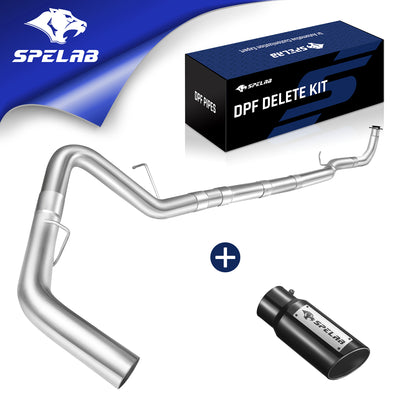
Built for Duramax owners who need year-specific fitment and heavy-duty construction for competition-use builds.
Buy Now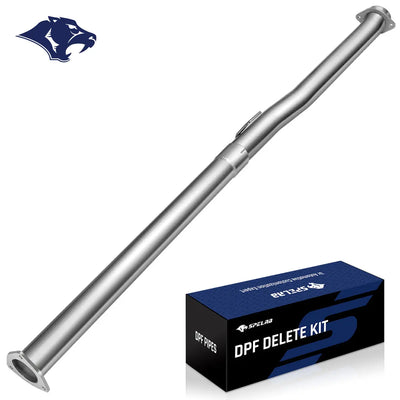
Designed for Powerstroke owners who need platform-specific fitment instead of universal pipe routing.
Buy Now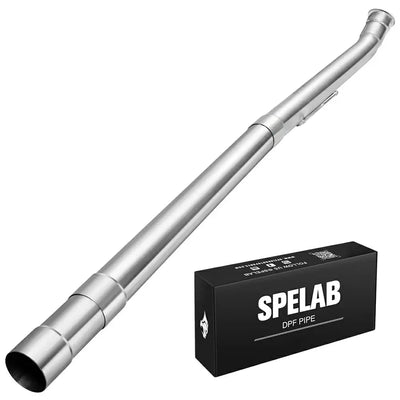
A platform-specific option for Cummins owners comparing fitment, pipe diameter, and included hardware.
Buy NowQuestions to Ask Before You Buy
Before ordering, contact the shop or review the product page carefully. A reliable supplier should be able to answer these questions without guessing:
- Does this kit fit my exact year, make, model, engine, cab, and bed length?
- Is this product for off-road and competition use only?
- What material is the pipe made from: aluminized steel, 409 stainless, or 304 stainless?
- Are clamps, gaskets, bolts, and hangers included?
- Does this kit require cutting, welding, or fabrication?
- What tuning or calibration support is required before installation?
- What happens if the pipe does not fit my listed application?
- How does the shop handle missing hardware or shipping damage?
When a DPF Delete Shop Is Not the Right Answer
Not every diesel problem should lead to delete hardware. If the truck is still used on public roads, the safer and legal path is usually diagnostics, repair, cleaning, or emissions-system maintenance. Codes, regen frequency, soot loading, sensor faults, or limp mode should be diagnosed before buying parts.
If you are still deciding whether an emissions-related modification makes sense for your application, read this guide on DPF delete benefits, problems, and risks before making a parts decision. You can also review diesel emissions delete legal risks if you are comparing EGR, DPF, or combined off-road modifications.
Final Recommendation
A reliable DPF delete shop should make the buying process clearer, not riskier. Look for exact fitment, strong material options, complete hardware, clear legal disclaimers, off-road tuning guidance, and real technical support. Avoid sellers that rely on vague universal fitment, unusually low prices, or aggressive performance promises without explaining compatibility and compliance.
The best shop is the one that helps you match the right parts to the truck’s actual platform. Start with your truck’s year, engine, cab, bed length, and intended use, then choose a supplier that can support the full installation path from hardware to fitment questions.
FAQs
Q: How can I tell if a DPF delete shop is reliable?
A: A reliable shop provides clear fitment data, legal off-road-use notices, material information, included hardware details, tuning guidance, and reachable technical support. If the product page is vague or the shop cannot answer platform-specific questions, that is a red flag.
Q: Are DPF delete kits legal for street use?
A: In most regulated areas, DPF delete parts are not legal for pollution-controlled vehicles used on public roads. These components should be treated as off-road or competition-use parts only, and the vehicle owner is responsible for emissions-law compliance.
Q: What should I ask before ordering a delete pipe?
A: Ask whether the pipe fits your exact year, engine, cab, bed length, and exhaust layout. Also confirm material type, included hardware, tuning requirements, whether fabrication is needed, and what the return policy says about fitment problems.
Q: Why does tuning matter with DPF delete hardware?
A: The truck’s ECU expects factory emissions components to be present. On off-road or competition builds, the calibration must match the hardware setup to avoid warning lights, derate, limp mode, or poor drivability.
Q: What material is best for a diesel delete pipe?
A: For dry climates or short-term budget builds, aluminized steel may be acceptable. For work trucks, towing rigs, and salt-state use, 409 stainless is usually a stronger long-term choice. For maximum corrosion resistance, 304 stainless is the premium option.
Q: How do I avoid fitment issues?
A: Avoid universal listings and choose a product page that names your truck’s exact year range, engine, body style, and exhaust configuration. Good shops also list hardware, pipe diameter, hanger style, and whether cutting or welding is required.
Q: Is the cheapest DPF delete shop always a bad choice?
A: Not always, but unusually low prices often mean thinner material, weaker clamps, vague fitment, missing hardware, or limited support. The lowest price is not a good deal if the kit does not fit or creates extra labor.
Q: Can a shop help me choose between Cummins, Duramax, and Powerstroke kits?
A: A good shop should understand that Ram Cummins, GM Duramax, and Ford Powerstroke trucks use different layouts and year ranges. If a seller treats every diesel truck the same, the risk of ordering the wrong kit is much higher.
Legal Notice: DPF delete components are intended for off-road or competition-use vehicles only. Emissions regulations vary by region, and it is the responsibility of the vehicle owner to ensure compliance with all local, state, and federal laws.

John Lee
Mechanical Engineer | 10+ Years Experience
John has spent the last decade engineering and testing high-performance automotive components. Specializing in drivetrain durability and thermal management across Powerstroke, Cummins, and Duramax applications, he bridges the gap between OEM limitations and aftermarket performance. His philosophy: "Factory parts are just a starting point."