Updated on July 23, 2026.
OEM radiator hoses fail because rubber, heat, coolant chemistry, pressure cycles, oil contamination, clamps, and plastic quick-connect fittings all age together. On a diesel truck that tows, idles, plows, hauls payload, or climbs grades in summer heat, a tired hose can go from a small crusty seep to a full coolant loss event fast. The fix is not always "buy the toughest part"; it is to find why the hose failed, then choose rubber, silicone, aluminum tube, or a full cooling-system repair based on the truck's real workload.
Key Takeaways
- Soft, swollen, oil-soaked, cracked, crusty, or ballooned radiator hoses should be inspected before towing or long highway trips.
- Plastic quick-connect ends, flattened O-rings, weak spring clips, and clamp marks can leak even when the hose body still looks decent.
- Electrochemical degradation can attack a coolant hose from the inside, so a clean outside does not always mean the hose is healthy.
- Match the upgrade to the failure point: rubber for normal stock service, silicone for heat and service access, and aluminum coolant tube hardware for exposed long spans or weak plastic ends.
- Powerstroke, Cummins, and Duramax trucks have different failure points, so fitment and routing matter more than generic hose advice.
Quick Answer: Why Do OEM Radiator Hoses Fail?
OEM radiator hoses fail when heat cycles, pressure pulses, coolant condition, clamp load, oil exposure, and fitting wear break down the hose material or sealing surfaces.
Rubber hoses are not junk. EPDM rubber works well for normal service life because it is flexible, affordable, and easy for the factory to route around a packed engine bay. The problem is time plus diesel-truck use. A 6.7 Powerstroke tow rig, a Ram 6.7 Cummins work truck, and an LML or L5P Duramax running heavy in hot weather ask more from the cooling system than a light commuter car. Once the hose loses elasticity or the fitting stops sealing square, the truck starts telling on itself: sweet coolant smell, white crust, damp clamps, low coolant light, or temperature climb under load.

What Happens If A Radiator Hose Fails?
A radiator hose failure can dump coolant, pull air into the system, overheat the engine, and turn a simple hose job into a towing bill or engine repair.
| Failure Result | What The Driver Notices | Why It Matters |
|---|---|---|
| Coolant seep | Sweet smell, damp fitting, white crust, small splash marks near a clamp | A small cold seep can become a hot-pressure leak once the truck is towing |
| Air pocket | Heater output changes, temp swings, gurgling after shutdown | Air reduces heat transfer and can make the owner chase the wrong part |
| Hose burst | Steam, sudden low coolant warning, temperature spike, wet engine bay | The truck should be shut down safely before heat damage starts |
| Overheating under load | Runs fine empty, then climbs on a grade or with a trailer | Diesel engines under payload build heat fast and do not forgive long overheating |
| Repeat coolant loss | Reservoir needs topping off every few days or after each trip | The hose may be a symptom of pressure, cap, reservoir, or head-gasket trouble |

If you are already pricing the job, this labor cost breakdown helps separate a planned repair from the much uglier cost of an overheat event.
Why OEM Rubber Hoses Age Out
OEM rubber hoses age out because every hot-cold cycle slowly changes the rubber, reinforcement layer, fittings, seals, and clamp pressure.
- Heat cycling: repeated warm-up and cooldown can make rubber hard, cracked, or less elastic.
- Pressure cycling: boost load, towing heat, and pressure-cap behavior can make a weak hose balloon.
- Coolant chemistry: old coolant, wrong coolant, mixed coolant, or contamination can attack hose material internally.
- Oil contamination: oil on the outside can soften rubber, especially near clamps and bends.
- Quick-connect aging: plastic ends, internal O-rings, and spring clips can seep even when the hose tube looks fine.
- Electrochemical degradation: electrical current through coolant can attack the hose from inside before the outside looks terrible.

Real Warning Signs Before A Hose Lets Go
The best warning signs are texture, shape, residue, smell, temperature behavior, and how the hose acts after a full heat cycle.
| Warning Sign | Likely Cause | Garage Check |
|---|---|---|
| Soft or mushy hose | Oil contamination, age, coolant damage, overheated rubber | Compare to a known-good hose only when cool; inspect for oil source |
| Hard, cracked, or shiny hose | Heat aging and loss of elasticity | Flex gently when cool and inspect bends, clamp zones, and underside |
| Ballooned section | Weak reinforcement or excessive system pressure | Pressure-test the system and verify the cap rating and cap function |
| White crust around fitting | Slow coolant seep from clamp, O-ring, quick-connect, or tank neck | Clean, drive to full temperature, cool down, then recheck for fresh residue |
| Temp rises only towing | Restricted flow, weak radiator, air pocket, fan issue, or hose collapse | Check live coolant temp, fan engagement, radiator face, hose shape, and pressure control |
DIY pro tip: before pulling an old quick-connect loose, blow out the spring-clip pocket with compressed air or electrical contact cleaner and use a small pick tool carefully. Road grit and salt can jam the C-clip, and a flying clip can turn a quick driveway job into a parts hunt under the truck.
Do not judge the system only in the driveway. A hose that behaves empty can act different when the truck is pulling a 12,000-lb trailer up a grade, sitting in traffic after a hot shutdown, or crawling through jobsite mud with the A/C on.
Rubber, Silicone, Or Aluminum: Which Makes Sense?
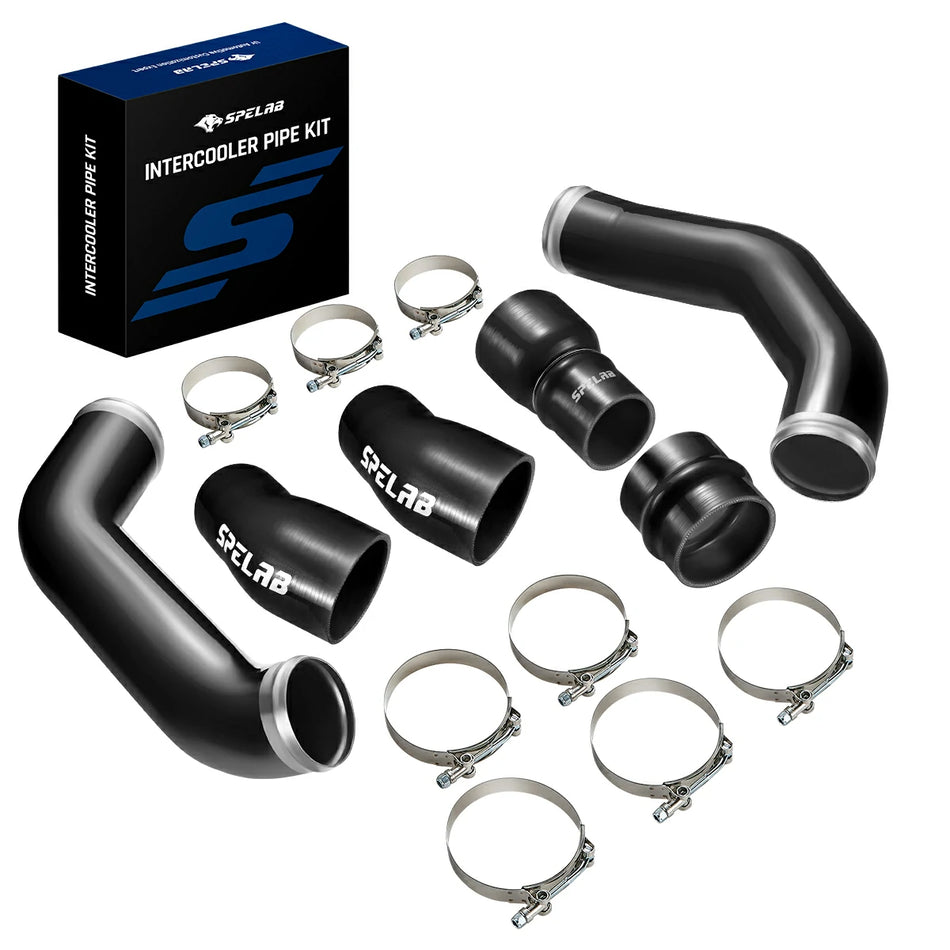
Rubber is a service-life replacement, silicone improves heat and flexibility margin, and aluminum coolant tubes remove the long rubber span from high-heat routing where fitment allows.
| Option | Best Use Case | Strength | Watch-Out |
|---|---|---|---|
| OEM-style rubber | Stock truck, normal use, budget repair | Factory fit and quiet routing | Still a wear item; quick-connect and O-ring issues can remain |
| Silicone hose | Higher heat, towing, repeated service, better flexibility | Better heat tolerance and longer service margin when built correctly | Needs correct clamps, bead engagement, and fitment; not all kits are equal |
| Aluminum coolant tube | Known failure-prone upper hose path, heavy-duty use, plastic-end concerns | Rigid, durable, less rubber exposed to heat and pressure | Fitment, bracket alignment, O-ring sealing, and vibration isolation matter |
| Full cooling-system repair | Repeat overheating, pressure problems, old reservoir, weak radiator | Fixes root cause instead of just replacing the visible hose | Costs more upfront but prevents repeat failures |
For a deeper material discussion, this material lifespan comparison explains where silicone helps and where an aluminum tube makes more sense.
Platform Notes For Diesel Trucks
Powerstroke, Cummins, and Duramax cooling-system failures look similar at the puddle, but the weak points and repair choices are platform-specific.
6.7 Powerstroke
On 6.7 Powerstroke trucks, upper hose routing, quick-connects, reservoir condition, radiator health, and towing heat should be checked as one system.
Work trucks that idle, tow, and run high underhood temperatures often show seepage at fittings before the hose body fails. If the rubber is tired or the fittings are suspect, a 6.7 Powerstroke coolant hose kit is the product-family direction to compare after diagnosis. If routing or repeated heat exposure is the complaint, a 6.7 Powerstroke coolant reroute kit may fit the job better, depending on year and configuration.


6.7 Cummins
On 6.7 Cummins trucks, upper coolant pipe condition, hose-barb leaks, radiator capacity, and pressure control matter most under towing and hot-weather load.
Ram 2500 and 3500 trucks used for hauling can stress the upper coolant path repeatedly. If the hose-barb area or long rubber span is the weak point, compare a 6.7 Cummins upper coolant pipe or a 6.7 Cummins coolant hose barb adapter repair kit after confirming the leak source. Do not miss pressure cap behavior; a weak cap can make good hoses look guilty.
Duramax LML And L5P
Duramax LML and L5P upper coolant routing should be inspected for plastic-end seepage, clamp residue, heat cycling, and fitment-specific hard-pipe upgrade opportunities.
An LML tow rig that sees summer grades may need a different decision than a light-duty daily driver. For 2011-2016 trucks, the LML Duramax upper coolant pipe is the correct fitment direction to compare. For newer L5P trucks, the L5P Duramax upper coolant tube should be judged by year, bracket layout, and current hose routing. This 2011-2016 case notes guide is useful when the complaint is specifically LML upper hose behavior.
Do Not Blame The Hose Too Fast
A leaking or swollen hose can be the visible failure, but the root cause may be pressure control, air pockets, contamination, overheating, or combustion gas entering the cooling system.
- Pressure cap: a cap that opens too early or too late can create loss, collapse, or excess pressure.
- Thermostat: a stuck thermostat can create temperature swings and pressure pulses.
- Radiator restriction: debris, plugged fins, or internal restriction can push heat into the hose system.
- Coolant reservoir: cracked plastic or a bad cap neck can look like hose loss.
- Head-gasket or EGR cooler issue: abnormal pressure or coolant loss with no obvious leak needs deeper testing.
- Wrong coolant: mixed or neglected coolant can attack seals, hoses, and internal passages.
Use the hose as evidence, not a verdict. If a new hose balloons again, the system is trying to tell you something bigger.
When To Upgrade Instead Of Replacing Stock Rubber
An upgrade makes sense when the truck's workload, age, heat exposure, fitting design, or repeat failure history exceeds what a basic stock-style hose repair can comfortably handle.
Upgrade consideration is strongest for tow rigs, plow trucks, jobsite trucks, high-mileage diesels with original hoses, and platforms with known upper hose or coolant tube complaints. It is weaker for a low-mileage stock truck with one clamp seep and a clean cooling system. For category-level browsing, the Coolant Tube collection and broader Cooling Systems collection keep the decision inside the cooling-system lane.
Pre-Trip Inspection Checklist
A five-minute cold-engine hose inspection before towing can catch many failures before they become roadside steam.
- Check upper and lower hoses when cold for soft spots, hard spots, cracks, swelling, and oil residue.
- Look under every clamp and quick-connect for white crust or fresh dampness.
- Inspect the reservoir level cold and verify the level does not keep dropping after each trip.
- Check the pressure cap, cap seal, and tank neck for distortion or crust.
- Look at the radiator face for bugs, mud, bent fins, or debris before summer towing.
- After a full heat cycle, let the truck cool and recheck for new residue around fittings.
- Carry correct coolant only if you know the system type; mixing chemistry can make problems worse.
After replacing an upper radiator hose or aluminum coolant tube, do not skip bleeding. Use a vacuum refill tool or the highest factory bleed point in the service procedure so an air pocket does not sit near the cylinder head and fake an overheating problem on the first test drive.
For trucks that tow in peak heat, treat the pre-trip inspection as a full cooling-margin check rather than a quick glance at the upper hose.
FAQ
Q: How long do OEM radiator hoses last?
A: Many OEM hoses can last years under normal use, but diesel trucks that tow, idle, work in heat, or have old coolant may age hoses faster. Inspect by condition, not just mileage.
Q: What causes a radiator hose to burst?
A: Common causes include aged rubber, weak reinforcement, pressure spikes, overheating, coolant contamination, oil exposure, or a restricted cooling path. If a fresh hose balloons or bursts again, pressure control needs testing.
Q: Are silicone radiator hoses better than rubber?
A: Silicone hoses can handle heat and repeated service better when built and clamped correctly. Rubber is still fine for stock service, but silicone may make sense for towing, high heat, or frequent maintenance access.
Q: Is an aluminum coolant pipe better than a hose?
A: An aluminum coolant pipe is better when the failure point is a long heat-exposed rubber span, plastic end, or known platform routing problem. It is not automatically better if the truck has pressure-control or radiator problems.
Q: Can I keep driving with a small coolant seep?
A: Short local driving may be possible if coolant level is stable, but towing or highway load can turn a seep into a hot-pressure leak. Mark the level cold, inspect the fitting, and repair it before hard use.
Q: Should I replace the hose or the whole cooling system?
A: Replace only the hose when the rest of the system tests clean. Expand the repair when reservoir condition, radiator flow, thermostat behavior, coolant chemistry, or system pressure also looks questionable.
Q: What is electrochemical degradation in radiator hoses?
A: Electrochemical degradation happens when electrical current travels through coolant and attacks the hose inner liner. The outside can look normal while the inside becomes weak, so unexplained repeat hose failures deserve coolant and ground checks.