Updated: May 20, 2026
On a 6.7L Cummins, torque is rarely the limitation—thermal control is. Once boost, fueling, towing load, and intake air temperature start climbing together, the factory charge-air system can become one of the first weak links. A tired intercooler, leaking boot, cracked pipe, or heat-soaked core can make a strong truck feel lazy, smoky, and inconsistent under load.
Quick answer: Your 6.7 Cummins may need an intercooler upgrade if you see rising EGTs, repeated power fade, chronic boost leaks, plastic end tank fatigue, frequent boot blow-off, higher boost from tuning, or elevated IAT under light-to-moderate load. The intercooler itself cools compressed air, but the full charge-air system—including pipes, boots, clamps, sensors, and CCV oil control—determines whether that cooler air actually reaches the engine.
This guide explains the seven warning signs, how to separate intercooler core failure from pipe or boot failure, how tube-and-fin compares with bar-and-plate, and when a full Cummins performance intercooler upgrade makes more sense than simply tightening clamps.
The 7 Critical Signs Your 6.7 Cummins Needs an Intercooler Upgrade
1. Rising Exhaust Gas Temperatures Under Load
If your EGTs climb faster than usual during towing, long grades, or repeated pulls, the charge-air system should be inspected. A restrictive, heat-soaked, or leaking intercooler can reduce oxygen density entering the engine. Less usable air means combustion becomes less efficient, which can push exhaust temperature higher.
High EGT does not automatically mean the intercooler is bad. It can also come from aggressive tuning, injector issues, exhaust restriction, boost leaks, intake restriction, dirty sensors, or over-fueling. But if EGT rises together with high IAT, low boost, smoke, or power fade, the intercooler system becomes a major suspect.
In real-world towing, a properly matched intercooler may help reduce EGT or slow the rate of EGT rise, but results depend on tuning, fueling, turbo efficiency, boost leaks, load, and ambient temperature.
2. Noticeable Heat Soak and Power Fade
Heat soak happens when the intercooler absorbs more heat than it can reject. At first, the truck may feel strong. After repeated acceleration, long highway grades, or heavy towing, throttle response starts to soften and power feels inconsistent.
This is common when the factory core is being pushed beyond its thermal capacity. Once the core gets saturated with heat, outlet air temperature rises. The engine receives hotter, less dense air, and the ECU may adjust fueling or torque strategy to protect the powertrain.
The key warning sign is not just low peak power. It is power that fades after the truck has been under load for several minutes.
3. Chronic Boost Leaks or Underboost Behavior
A boost leak means compressed air is escaping before it reaches the intake manifold. The turbo may still be working, but the engine is not getting the air mass the ECU expects.
Common signs include:
- Whistling or hissing under load
- Sudden drop in boost pressure
- Black smoke under acceleration
- Lazy throttle response
- P0299 underboost-related behavior
- Oil residue around boots or charge pipes
Do not immediately blame the turbo. On a 6.7 Cummins, the leak may be at the intercooler boots, cold-side pipe, hot-side pipe, end tank, clamp area, or intake connection. A pressure test is the best way to confirm the leak location.
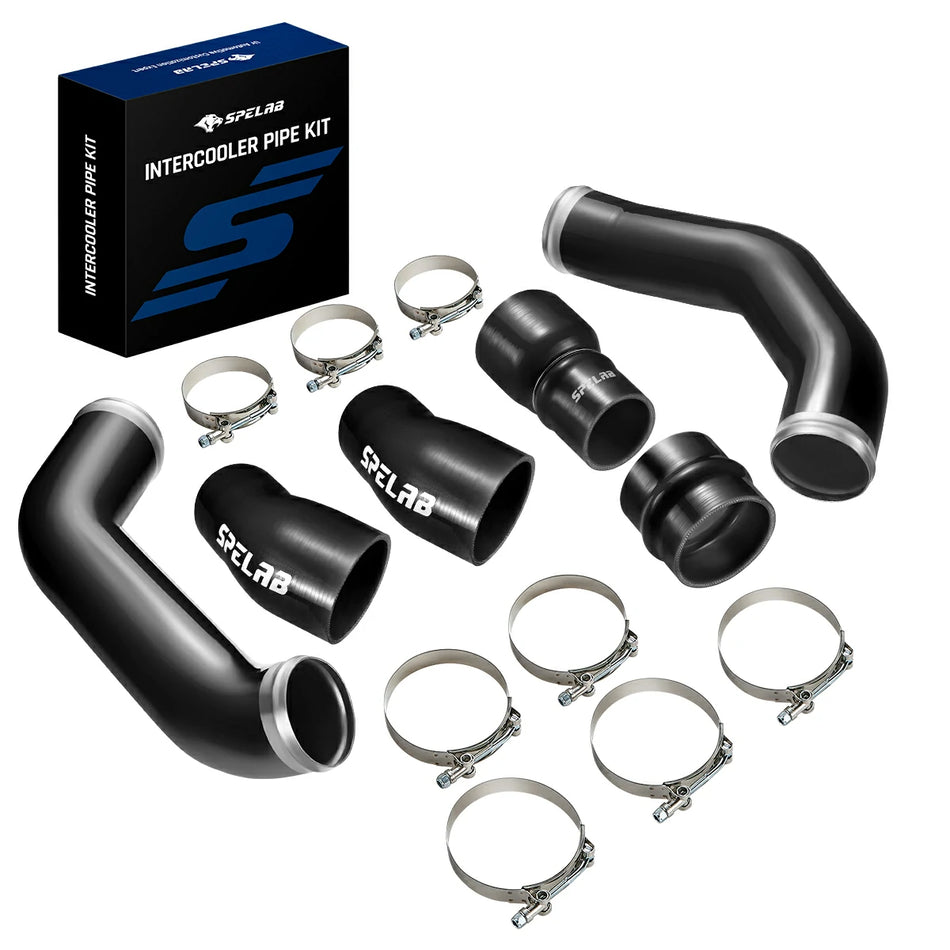
If repeated leaks are coming from the pipe and boot system, a Cummins intercooler pipe kit may be a more direct fix than replacing the core alone.
4. Plastic End Tank Fatigue or Crimp Failure
Many OEM intercoolers use plastic end tanks crimped to an aluminum core. That design works on a stock truck, but heat cycles, vibration, high boost, and age can weaken the plastic and sealing area over time.
Warning signs include:
- Hairline cracks near the end tank
- Oil residue around the crimp seam
- Pressure loss during a boost leak test
- Hissing from the intercooler side tank
- Repeated leak symptoms after boots and clamps are replaced
If the end tank or crimp seam is leaking, clamp upgrades will not solve the root problem. At that point, an all-aluminum intercooler becomes a reliability upgrade, not just a performance upgrade.
5. Frequent Intercooler Boot Blow-Off
Boot blow-off is one of the most common “it felt like the truck exploded” failures on tuned or hard-working diesel trucks. The driver hears a loud pop, then the truck instantly loses power, smokes heavily, and feels like the turbo stopped working.
On high-mileage 6.7 Cummins trucks, CCV oil vapor can coat the inside of the charge-air system. That oil film can soften rubber boots and reduce grip at the pipe flange. Add heavy towing, hot underhood temperatures, and 30–35+ PSI of boost, and the boot can slide off or split under load.
Shop mechanical warning: If your truck repeatedly blows off boots, do not only replace the boot and keep driving. Check for oil contamination, weak clamps, ballooning factory pipes, poor flange grip, and excessive boost spikes. A stronger aluminum pipe setup with quality boots and T-bolt clamps is often one of the most reliable ways to stop repeat failures.
6. Performance Tuning or Increased Boost
Any tune that increases boost, fueling, or towing torque increases demand on the intercooler system. A stock intercooler that worked fine at factory power may struggle once the truck is asked to move more air and fuel.
With tuning, the intercooler must handle:
- Higher compressor outlet temperature
- More charge-air mass flow
- More boost pressure at the boots and pipes
- More sustained heat during towing
- Greater pressure-drop sensitivity
This is why a tuned truck often needs the full system evaluated: intercooler core, hot-side pipe, cold-side pipe, boots, clamps, intake path, sensors, and CCV oil control.
7. Elevated Intake Air Temperature
IAT is one of the best ways to evaluate intercooler performance. If intake air temperature stays far above ambient during light load, or climbs quickly during towing, the intercooler may be heat-soaked, restricted, internally coated with oil, or undersized for the truck’s current setup.
Look for patterns instead of one isolated reading:
- IAT rises quickly during moderate towing
- IAT stays high after the load decreases
- Power fades as IAT climbs
- EGT rises with IAT
- Boost is normal but the truck still feels soft
If high IAT appears together with smoke, underboost, or oil residue, inspect both the intercooler core and the pipe/boot system.

Quick Diagnosis Table: Symptom, Cause, Test and Fix
| Driver Notices | Likely Cause | How to Confirm | Upgrade Direction |
|---|---|---|---|
| EGT climbs during towing | Heat soak, low air density, boost leak, or over-fueling | Compare EGT, IAT, boost, and load data | Intercooler core, boost leak repair, tune review |
| Loud pop and instant power loss | Boot blow-off or charge pipe failure | Pressure test the charge-air system | Pipe kit, boots, clamps |
| Whistling under boost | Leak at pipe, boot, end tank, or intake connection | Smoke test or pressure test | Repair leak before replacing turbo |
| IAT stays high above ambient | Heat-soaked or inefficient core | Track IAT under similar load and weather | Higher-efficiency intercooler |
| Oil residue around boots | CCV oil vapor and weak clamp grip | Inspect boots, pipes, and CCV system | Oil-vapor control, pipe kit, boot replacement |
| Power fades after several minutes of load | Thermal saturation | Watch IAT and EGT trend over time | Better core design and airflow path |
Cooling vs. Flow: The Missing Piece Most People Ignore
An intercooler upgrade is not just about lowering temperatures. It is about lowering temperatures without introducing excessive restriction.
A good intercooler balances two goals:
- Thermal efficiency: How well it removes heat from compressed air.
- Pressure control: How little boost pressure it loses across the core.
The simplified thermal relationship looks like this:
ηcooler = (Thot - Tout) / (Thot - Tambient)
Where Thot is the turbo outlet temperature, Tout is the temperature leaving the intercooler, and Tambient is the outside air passing through the grille.
The pressure side matters too:
ΔP = Pinlet - Poutlet
If pressure drop is too high, the turbo has to work harder to hit the same manifold boost target. That can increase turbo heat, slow response, and offset some of the cooling benefit.
Tube-and-Fin vs. Bar-and-Plate: Which Core Fits Your Truck?
Both designs can work well, but they suit different uses.
| Feature | Tube-and-Fin | Bar-and-Plate |
|---|---|---|
| Weight | Lighter | Heavier and more robust |
| Thermal Behavior | Fast heat release | Higher thermal mass for sustained load |
| Airflow Resistance | Usually lower restriction | Can be slightly higher depending on design |
| Durability | Good for daily driving and lighter towing | Better for high-boost, heavy towing, and rough service |
| Best Use Case | Stock or mildly tuned daily driver | Tuned truck, heavy towing, sustained grades, high EGT control |
A tube-and-fin design can be a smart choice if you want lighter weight and fast heat recovery. A bar-and-plate design can be better if you tow heavy, run higher boost, or need more thermal mass during long uphill pulls.
Intercooler Core vs. Pipe Kit: Do Not Replace the Wrong Part
Many owners say “my intercooler is bad” when the real issue is a pipe, boot, clamp, or intake connection. Before buying the largest core you can find, diagnose the actual failure.
| Symptom | Likely Source | Best First Step |
|---|---|---|
| Sudden loud pop and instant power loss | Boot blow-off or pipe failure | Inspect boots, clamps, and charge pipes |
| Slow power fade during towing | Heat soak or undersized core | Check IAT and EGT under load |
| Whistling or hissing under boost | Boost leak | Pressure test the charge-air system |
| Oil residue around boots | CCV oil vapor plus clamp/boot weakness | Clean, inspect, and check oil source |
| Cracked plastic end tank | Intercooler core/end tank failure | Replace the intercooler |
| High IAT with no leak | Heat-soaked or inefficient core | Compare core design and airflow path |
Oil Film Inside the Intercooler: Why Cleaning Alone May Not Fix It
If you remove the charge pipe and find black, sticky oil residue inside the intercooler, do not assume the intercooler itself caused the problem. On many diesel trucks, crankcase ventilation sends oil vapor into the intake path. That oil vapor coats the inside of the pipes, boots, intercooler, sensors, and intake path.
Oil film can create three problems:
- Thermal insulation: Heavy oil film can reduce direct heat transfer inside the intercooler core.
- Boot softening: Oil can weaken rubber and make boots more likely to slip under boost.
- Soot sludge: Oil vapor can mix with EGR soot and form sticky buildup in the intake path.
If oil contamination keeps returning after cleaning, inspect the CCV system and turbo seals. A sealed, baffled diesel oil catch can may help reduce oil mist entering the intake path. Routing and legality depend on platform, installation method, and local inspection rules, so confirm your setup before changing factory ventilation routing.
Product Fitment Examples
| Product | Image | Best Use Case | Link |
|---|---|---|---|
| All-Aluminum Tube-Fin Intercooler for 6.7 Cummins | 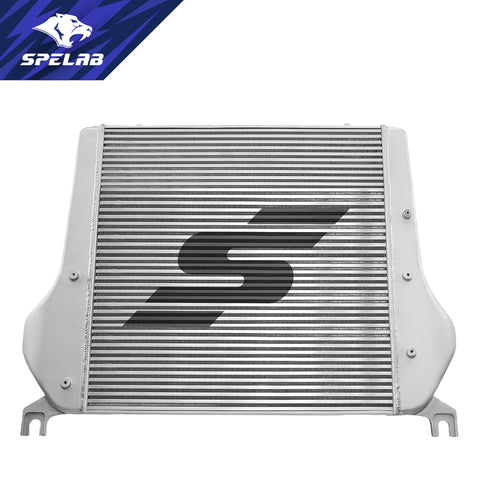 |
Daily driving, lighter towing, and fast heat recovery | View tube-fin Cummins intercooler |
| Intercooler Bar-and-Plate for 6.7L Cummins | 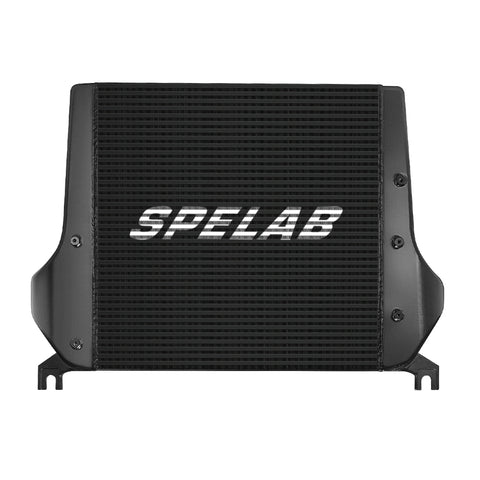 |
Heavy towing, high boost, and sustained thermal load | View bar-and-plate Cummins intercooler |
Related Reading
For a deeper system understanding, read why cooler intake air matters, how intercoolers affect boost pressure, and common intake and boost leak fault codes.
Final Verdict
A 6.7 Cummins intercooler upgrade is worth considering when the truck shows repeated heat soak, rising EGT, chronic boost leaks, plastic end tank fatigue, boot blow-off, elevated IAT, or increased boost demand from tuning and towing.
Do not upgrade blindly. First decide whether the problem is the core, the pipe kit, the boots, the clamps, oil contamination, intake restriction, or tuning. A well-matched intercooler system does not just make air colder—it keeps cooler, denser air moving through the entire charge-air path with minimal pressure loss and fewer leak points.
FAQ
Q:What does an intercooler do on a 6.7 Cummins?
A:The intercooler cools compressed air from the turbo before it enters the engine. Cooler air is denser, which helps combustion efficiency, boost consistency, EGT control, and towing performance.
Q:How do I know if my 6.7 Cummins intercooler is failing?
A:Common signs include rising EGT, loss of power, chronic boost leaks, high IAT, plastic end tank cracks, oily boots, whistling under boost, and repeated boot blow-off.
Q:Can a bad intercooler cause high EGT?
A:Yes. A restrictive, leaking, or heat-soaked intercooler can reduce charge-air density, which may contribute to higher EGT under towing or heavy-load conditions.
Q:Is upgrading the intercooler worth it for a stock 6.7 Cummins?
A:For a stock daily driver with normal IAT and no leaks, it may not be necessary. For frequent towing, hot climates, high-mileage charge-air issues, or repeated power fade, an upgrade can improve consistency and reliability.
Q:What is better for a 6.7 Cummins: tube-and-fin or bar-and-plate?
A:Tube-and-fin is lighter and often works well for daily driving and lighter towing. Bar-and-plate is heavier but better suited for sustained high load, high boost, and heavy towing.
Q:Will an intercooler upgrade add horsepower?
A:On its own, gains are usually modest. The main benefit is cooler, denser air and reduced heat soak. Larger power gains usually require tuning, airflow upgrades, and enough fuel and turbo capacity to use the cooler charge air.
Q:Why do intercooler boots keep blowing off?
A:Common causes include oil-softened rubber, weak clamps, poor flange grip, high boost, cracked pipes, bad installation, or pressure spikes from tuning. Inspect the entire charge-air system, not just the boot.
Q:Should I upgrade the intercooler or the intercooler pipe kit first?
A:If you have boost leaks, blown boots, cracked pipes, or oily couplers, start with the pipe and boot system. If your IAT rises under sustained load and the system is leak-free, consider the intercooler core.
Q:Can oil inside the intercooler hurt performance?
A:Heavy oil film can reduce heat transfer, attract soot, contaminate sensors, and soften boots. A light film is common on many diesel engines, but heavy residue should lead to CCV and turbo seal inspection.
Q:Do I need tuning after an intercooler upgrade?
A:Not always. A mild intercooler replacement may work on the stock tune. If boost, fueling, turbo size, intake path, or airflow strategy changes significantly, tuning should be evaluated as part of the full system.