Updated on July 19 2026.
Yes, you can physically delete EGR without deleting DPF on some diesel trucks, but it is usually a poor street-truck decision because the DPF, EGR, SCR/DEF, sensors, and ECM calibration are built to work as one emissions system.
Key Takeaways
- Deleting EGR while keeping the DPF can change combustion temperature, soot output, NOx behavior, and diagnostic plausibility.
- For public-road diesel trucks, compliant diagnosis and repair should come before any EGR or DPF delete discussion.
- A DPF left in place still depends on accurate soot load modeling, EGT sensors, DPF differential pressure, MAF/MAP readings, and regen strategy.
- Powerstroke, Cummins, and Duramax platforms react differently because EGR flow, DPF logic, DEF/SCR strategy, and tuning access vary by year.
- For legally permitted off-road or competition builds, EGR and DPF decisions should be planned as a matched system, not as a random one-part change.

Short Verdict: Can You Delete EGR Without Deleting DPF?
Technically yes, but an EGR-only delete with the DPF still installed can create more problems than it solves unless the truck is a legally permitted off-road build with proper diagnostics and calibration support.
On a modern diesel pickup, the ECM is not just watching whether parts are bolted on. It is comparing EGR command vs feedback, airflow, MAF/MAP, exhaust temperature, DPF differential pressure, soot load, NOx/DEF/SCR data, regen state, and torque request. When one system is changed while the rest stays stock, the math can stop making sense.
| Question | Practical Answer | What to Check First |
|---|---|---|
| Can EGR be removed while the DPF stays? | Some trucks can be configured that way for non-public-road use, but the system must be calibrated and diagnosed as a whole. | Check EGR command vs feedback, DPF pressure, soot model, EGT sensors, and legal-use status. |
| Is it smart for a street truck? | Usually no. Street trucks should keep emissions systems intact and repair the failed component. | Review inspection rules, warranty impact, and emissions compliance before modifying anything. |
| Will it keep the DPF cleaner? | Not automatically. Poor combustion or mismatched calibration can increase soot loading and regen complaints. | Use a frequent-regen pattern check before blaming one part. |
| Does it add power? | Hardware alone rarely tells the story; gains depend on calibration, airflow, fuel, turbo health, and transmission behavior. | Compare claims against a power-gain reality check. |
EGR Soot, CCV Oil Vapor, and Black Peanut Butter
Dry EGR soot becomes a real drivability problem when it mixes with CCV oil vapor and forms tar-like sludge inside the intake tract.
Mechanics call it black peanut butter for a reason. It can cake the intake horn, intake tract, and MAP sensor port, then feed the ECM false boost and load readings. On a truck under payload, that can show up as lazy throttle, haze or smoke, aborted regen, or premature soot loading. That does not prove the DPF is bad; it means the air path and sensor data need a real inspection.
How EGR and DPF Work Together
EGR reduces combustion temperature and NOx formation, while the DPF traps soot downstream; changing EGR behavior can change what the DPF has to handle.
The EGR valve meters exhaust gas back into the intake under certain operating conditions. That lowers combustion temperature, but it also brings soot into the intake path. The DPF sits in the exhaust and captures particulate matter, then relies on regeneration to burn soot out of the filter. DEF/SCR equipment, NOx sensors, pressure sensors, and temperature sensors help the ECM decide whether the system is behaving correctly.

| System | Main Job | What Can Go Wrong When EGR Is Changed Alone |
|---|---|---|
| EGR | Controls NOx by recirculating exhaust into the intake. | Airflow and combustion modeling can stop matching the factory calibration. |
| DPF | Traps soot and burns it during regeneration. | Soot loading and regen timing can shift if combustion and airflow data change. |
| DEF/SCR | Reduces NOx downstream of combustion. | NOx readings may no longer match expected EGR behavior. |
| ECM/PCM | Coordinates airflow, fueling, torque, emissions monitoring, and derate strategy. | Range/performance codes can appear when sensor data disagrees. |
Why an EGR-Only Delete Can Load the DPF Faster
An EGR-only delete can make DPF behavior worse if the truck's airflow, fuel, temperature, and soot model no longer match the calibration.
In the garage, the complaint usually sounds like this: "I only wanted to clean up the intake, but now it regens all the time." That can happen when the DPF remains in place but the ECM sees airflow, temperature, NOx, and pressure behavior that no longer matches the factory model. The filter may not be physically bad, but the truck can still act like the aftertreatment system is unhappy.

- More soot under certain conditions: If fueling, turbo control, or airflow is not matched, the DPF can see heavier soot loading.
- More frequent regen: A confused soot model or repeated incomplete regen can turn a daily driver into a warning-light machine.
- DTCs and derate logic: EGR flow, MAF/MAP, EGT, NOx, and pressure data can trigger plausibility faults.
- Inspection trouble: Missing or disabled emissions equipment can create visual, readiness, registration, or resale issues.
The first move is diagnosis, not guessing. Use the symptom overlap check to separate EGR complaints from DPF complaints before spending money.
Platform Differences: Powerstroke, Cummins, and Duramax
Powerstroke, Cummins, and Duramax trucks do not respond the same way to an EGR-only delete because their emissions layouts, sensor logic, and tuning access differ by model year.
| Platform | Why Owners Ask This Question | What Matters Before Any Parts Decision |
|---|---|---|
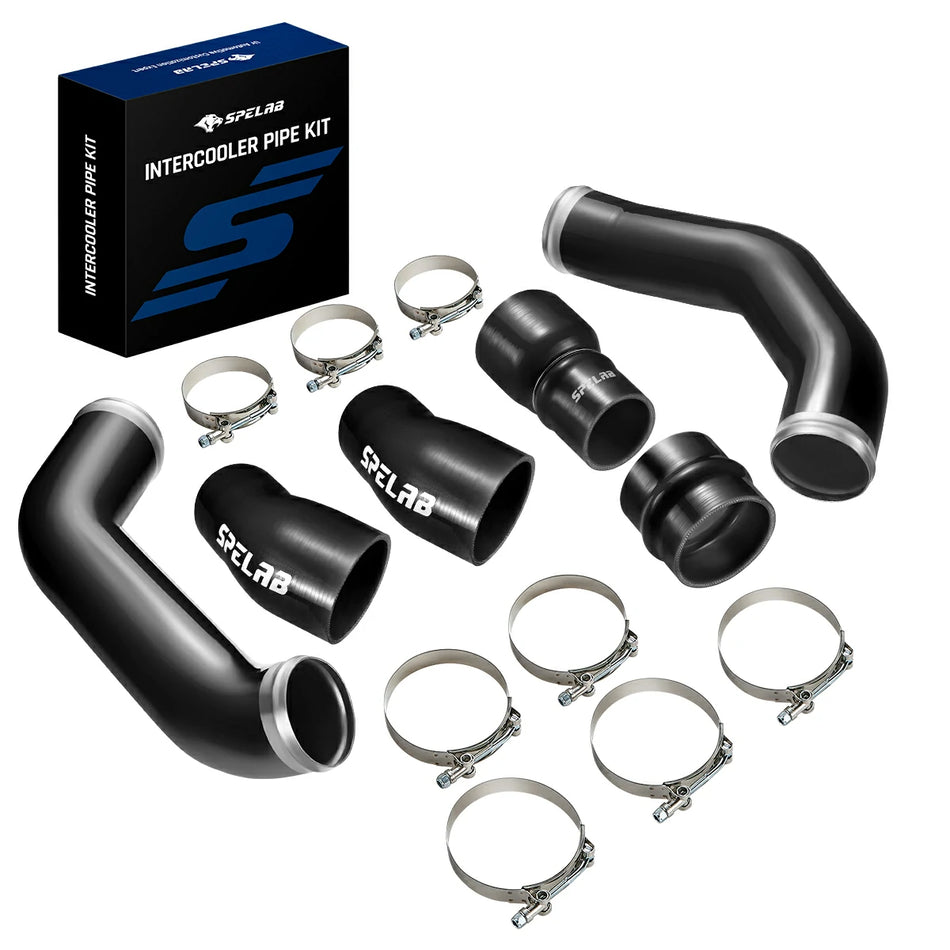
| Ford 6.7 Powerstroke | Owners often want less intake soot while keeping the factory DPF and SCR system. | Verify boost leaks, factory plastic cold-side intercooler pipe or charge-air pipe condition, boots/clamps, MAF/MAP data, soot load, EGR cooler condition, and DPF pressure. |
| Ram 6.7 Cummins | Jobsite idle, cold trips, and towing loads can make regen complaints show up early. | Check pickup vs cab-and-chassis, 68RFE or Aisin behavior, converter behavior, line-pressure behavior, slip data, trans temp, coolant temp, MAP sensor condition, and soot model. |
| GM 6.6 Duramax LML | LML trucks often get mixed into older forum advice that does not fit every use case. | Verify DEF/SCR data, CP4/fuel history, DPF pressure, EGR command, and calibration support. |
| GM 6.6 Duramax L5P | L5P owners face more controller-specific support questions than many older platforms. | Verify VIN/RPO, E41 controller context, ECM/TCM strategy, DEF/SCR status, and 2017-2019 vs 2020+ service support. |
Diagnosis Before Modifying EGR or DPF
A truck with EGR or DPF complaints needs live data before parts, because boost leaks, fuel issues, bad temperature data, and poor regen conditions can mimic emissions failure.
Watch the truck hot, under load, and during the exact complaint. Pull EGR command vs feedback, DPF differential pressure, soot load, ash load, EGT sensors, NOx/DEF/SCR data, MAF/MAP, commanded vs actual boost, rail pressure under load, injector balance, coolant temperature, and transmission slip. Avoid dead-number diagnosis; field values vary by engine, sensor scaling, scan tool, temperature, altitude, calibration, test setup, and duty cycle.
As a rough field reference, a healthy DPF often shows low pressure at hot idle, commonly around 0.2-0.5 psi. During a loaded pull, pressure should rise smoothly. Readings around 3.5-4.0+ psi under load can suggest serious restriction, while a flat 0 psi under throttle points more toward a pressure hose, sensor, or wiring fault. Treat those numbers as guideposts, not a verdict.
| Symptom or Code | Possible Cause | Shop Check |
|---|---|---|
| P0401/P0404 | EGR flow or position problem, carbon buildup, wiring fault, or stuck valve. | Compare command vs feedback, inspect soot/oil buildup, and verify sensor plausibility. |
| P2002 | Low DPF efficiency, exhaust leak, bad pressure data, or damaged substrate. | Check tailpipe soot, differential pressure, exhaust leaks, and pressure lines. |
| P242F | ash load calculation or filter overload condition. | Review mileage, oil ash, cleaning history, regen history, and replacement options. |
| P2463 | High soot load or regen failure. | Check coolant temp, short-trip duty, EGT sensors, combustion health, and fuel quality. |
| Weak pull under payload | Boost leak, rail pressure drop, MAF/MAP error, restricted air filter, or trans slip. | Log commanded vs actual boost, MAF/MAP, fuel pressure, slip data, and transmission temp under load. |
Decision Table: Keep, Repair, EGR-Only, or Full System Planning
The right path depends on whether the truck is street-driven, what the scan data shows, and whether the use case is legally permitted off-road or competition only.
| Situation | Best First Move | Why |
|---|---|---|
| Street-driven truck with EGR or DPF codes | Repair the failed component and keep emissions equipment intact. | It protects inspection readiness, resale, warranty position, and legal compliance. |
| DPF regens too often after short trips or jobsite idle | Diagnose coolant temp, EGT sensors, soot model, fuel quality, and drive cycle. | The DPF may be reacting to use pattern or bad data rather than being the first failed part. |
| Off-road-only truck with repeated EGR hardware failure | Plan EGR, DPF, SCR/DEF, ECM, and TCM support together. | Added torque or sloppy calibration without TCM strategy, converter behavior, line-pressure behavior, slip data, and trans temp monitoring can hurt towing reliability, especially on some 68RFE applications. |
| Used truck with unknown tune or missing parts | Verify factory parts, wiring, stock files, inspection status, and service support. | Return-to-stock costs can be larger than the original modification. |
Legal and Compliance Boundary
For public-road diesel trucks, removing or disabling required EGR, DPF, DEF, or SCR equipment is not a compliant repair path and can create inspection, warranty, registration, and resale problems.
The EPA states that the Clean Air Act prohibits tampering with emissions controls and making, selling, or installing aftermarket devices intended to defeat those controls. Owners should review the EPA page on aftermarket defeat devices before treating any emissions delete as a public-road solution.
State inspection rules vary. California, New York, Colorado, Maine, and other inspection-heavy states may involve OBD readiness, visual inspection, opacity concerns, or registration issues. Verify state requirements and legal-use limits before buying any emissions-related part.
Off-Road Parts and Fitment Research
For legally permitted off-road or competition trucks, fitment research should start with exact platform, system strategy, and calibration support rather than a single EGR-only parts search.
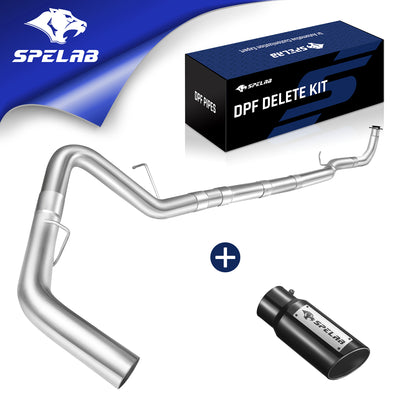
If the goal is only to study hardware categories, start broad with EGR delete kits, then compare whether the truck actually needs matched EGR and DPF delete combo kit planning or compliant repair instead. A DPF that remains installed still needs correct pressure, temperature, soot, and regen logic.
| Research Path | Use Case | Fitment Caution |
|---|---|---|
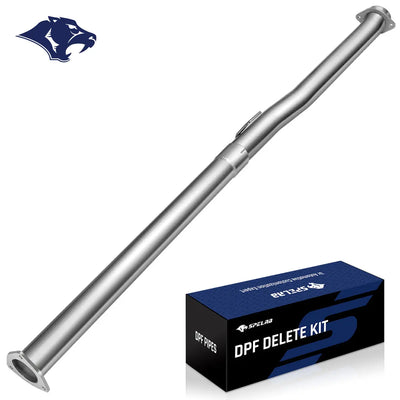
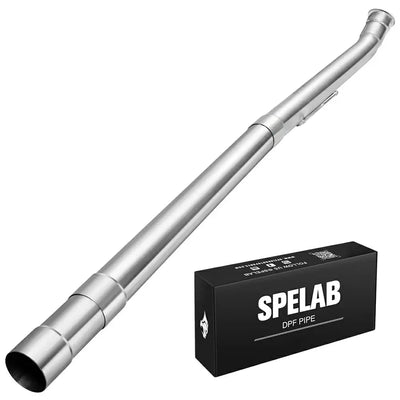
| DPF delete kits | Full off-road exhaust-system planning, not EGR-only street repair. | Match year, cab/bed, pipe diameter, sensor bungs, and legal-use status. |
| L5P Duramax EGR delete kit | Off-road L5P EGR hardware research. | Verify 2017-2025 fitment, coolant routing, ECM strategy, and non-public-road use. |
| Duramax EGR delete kits | Duramax platform comparison across LB7, LLY, LBZ, LMM, LML, and L5P trucks. | Do not mix parts across engine generations without VIN/RPO and hardware checks. |
| 2017-2025 L5P Duramax DPF delete race pipe | Original-style off-road L5P exhaust CTA research. | Confirm truck year split, exhaust layout, sensor positions, and calibration support. |
| 2011-2024 Ford 6.7 Powerstroke DPF delete race pipe | Original-style off-road Powerstroke exhaust CTA research. | Confirm Super Duty year, cab/bed, exhaust size, and emissions-system status. |
| 2019-2025 Dodge Ram 6.7 Cummins DPF delete pipe | Original-style off-road Ram exhaust CTA research. | Confirm pickup vs cab-and-chassis, transmission, exhaust layout, and controller support. |
Towing, Jobsite Idle, and Cold-Weather Reality
Real diesel use matters because towing, payload, idle time, cold starts, and short trips can make EGR and DPF problems look worse than they are.
A 14,000 lb fifth-wheel truck climbing a grade, a municipal truck idling beside a jobsite, and a cold-weather commuter that never gets fully hot all stress the aftertreatment system differently. Heavy towing exposes restriction, high EGT, converter behavior, slip data, and trans temp problems. Long idle keeps exhaust temperature low. Short winter trips can prevent complete regen. Those patterns should be diagnosed before anyone decides that an EGR-only delete is the answer.
If a truck is already in derate or showing a countdown message, do not keep driving it as a science experiment. Pull codes, log live data, inspect fluid levels, and confirm whether the truck needs compliant repair, cleaning, sensor service, or professional diagnosis.
FAQ
Q: Can you delete EGR without deleting DPF?
A: Yes, it can be done on some trucks for legally permitted off-road or competition use, but it is usually not a good street-truck repair because the DPF still depends on correct EGR, airflow, temperature, pressure, and soot-model data.
Q: Will an EGR-only delete clog the DPF?
A: It can contribute to more DPF soot loading or more frequent regen if the calibration, fueling, airflow, or temperature data no longer matches the truck's aftertreatment strategy.
Q: Can I use a blocker plate, dummy plug, or resistor and keep the DPF?
A: Do not treat static signals or hardware mismatch as a reliable fix. Modern ECM logic can cross-check EGR flow, MAF/MAP, EGT sensors, DPF differential pressure, soot load, regen state, NOx/DEF/SCR plausibility, RPM, fuel mass, and boost or turbo commands. A mismatch may trigger range/performance codes, derate, readiness failure, smoke, or drivability problems.
Q: Is deleting EGR without deleting DPF legal?
A: For public-road trucks, removing or disabling required emissions equipment is not a compliant repair path; legal-use limits and inspection requirements must be verified before any purchase or work.
Q: Can an EGR delete improve MPG while keeping the DPF?
A: Do not count on it. MPG depends on duty cycle, tuning, regen frequency, tire size, gear ratio, towing load, injector health, boost control, and transmission behavior.
Q: What should I check before modifying EGR or DPF parts?
A: Check EGR command vs feedback, DPF differential pressure, soot load, ash load, EGT sensors, NOx/DEF/SCR data, MAF/MAP, boost, fuel pressure, injector balance, coolant temperature, and transmission slip under load.
Q: Is it better to delete both EGR and DPF together?
A: For street trucks, compliant repair is the better path. For legally permitted off-road builds, EGR, DPF, SCR/DEF, ECM, TCM, exhaust, and fitment need to be planned together rather than changed one piece at a time.
About the Author

John Lee
Mechanical Engineer | 10+ Years Experience
John Lee works with SPELAB on diesel exhaust, intake, cooling, and emissions-adjacent fitment parts, with a practical focus on towing use, diagnostics, material selection, and service access.