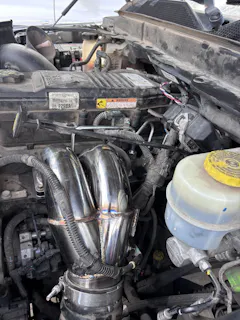
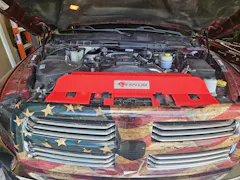
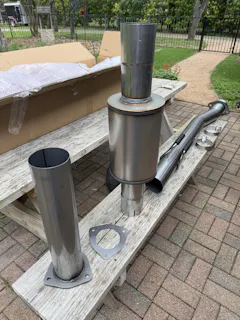
56 Products
DPF Delete Kits
DPF Delete Kits for Off-Road Diesel Builds
A DPF delete kit is usually researched when a diesel truck has repeated regen cycles, DPF warning lights, high exhaust restriction, limp mode, or a failed aftertreatment system on an off-road or competition-use build. The right kit should match the truck's exact configuration, pipe diameter, hardware layout, and tuning plan before any parts go on the lift.
Most owners are trying to solve downtime first: interrupted regen, derate behavior, towing heat, clogged DPF symptoms, or a setup that no longer fits the way the truck is used on private land, farms, jobsites, or race-only applications.
Before You Choose a DPF Delete Kit
- Confirm year, engine, cab length, bed length, pickup vs cab-and-chassis layout, and pipe diameter.
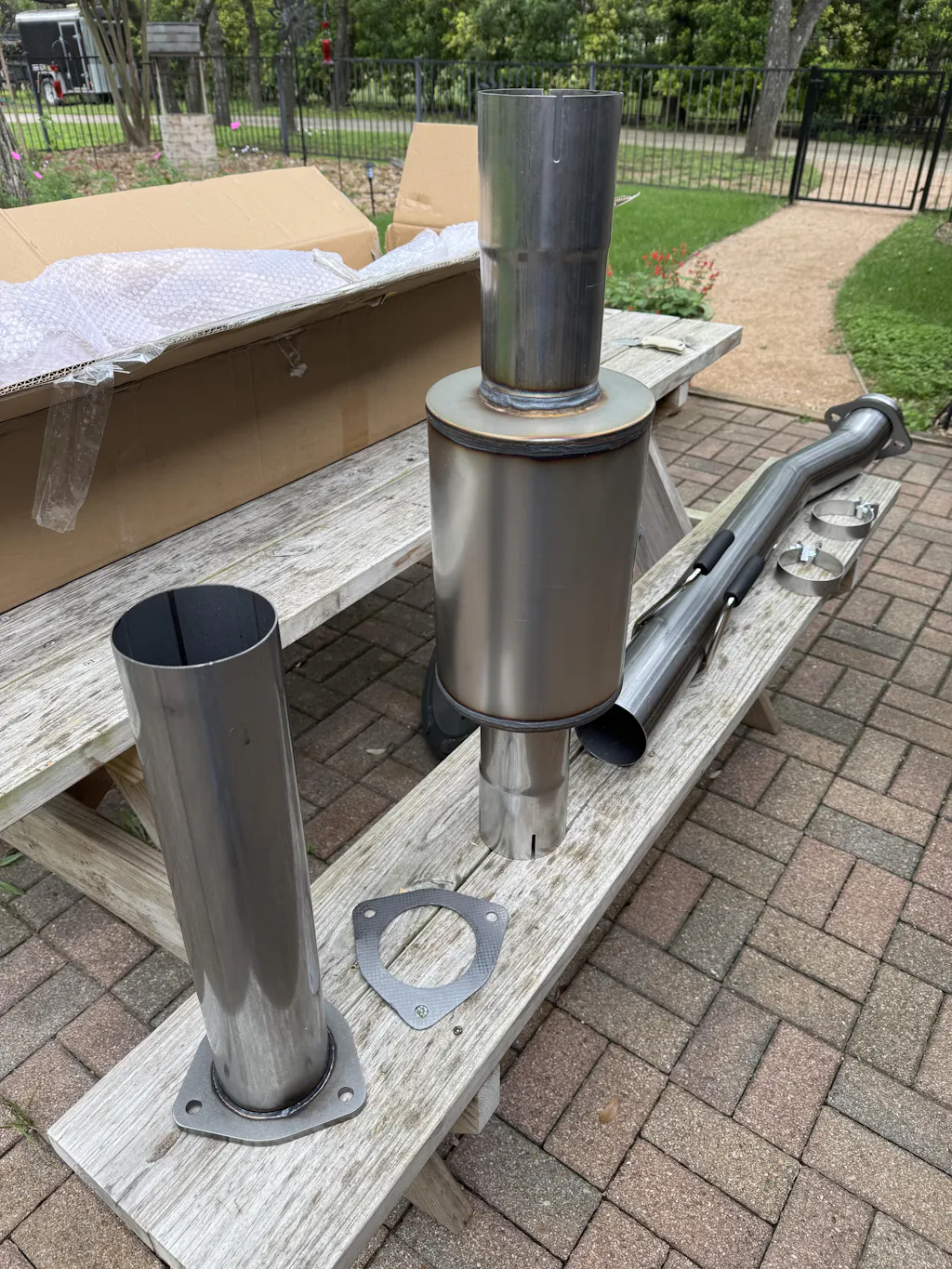
- Match the kit type to the job: DPF pipe, DPF and cat delete pipe, muffler kit, downpipe-back, turbo-back, or all-in-one package.
- Plan for compatible tuning, because the ECU must be calibrated for the hardware change.
- Choose stainless steel or aluminized steel based on climate, salt exposure, budget, and expected service life.
What the Factory DPF System Is Trying to Control
The factory DPF system traps soot, watches exhaust pressure and temperature, and triggers regeneration when soot load reaches a calculated threshold. A restriction, failed sensor, or interrupted regen cycle can make the truck feel plugged up before the driver sees a hard parts failure.
| Factory Component | What It Does | Common Owner Complaint |
|---|---|---|
| DPF filter | Captures diesel soot in the exhaust stream | Reduced power, frequent regen, soot-load codes |
| Differential pressure sensor | Measures pressure before and after the DPF | False clogging warnings, limp mode, pressure codes |
| Exhaust temperature sensors | Track heat during driving and regeneration | Failed regen, warning lights, derate behavior |
| NOx and oxygen sensors | Feed emissions data back to the ECU | Check engine light, emissions codes, poor drivability |
| ECU regen strategy | Commands extra heat and fuel strategy for soot burnoff | Fuel use increases, idle changes, interrupted drive cycles |
Factory DPF Setup vs Off-Road DPF Delete Kit
A factory DPF setup is built around emissions control, while an off-road DPF delete kit is built around reduced exhaust restriction and simpler pipe routing when paired with proper tuning. Results vary by truck condition, tune quality, load, and supporting mods.
| Decision Point | Factory DPF Setup | Off-Road DPF Delete Kit |
|---|---|---|
| Exhaust restriction | Restriction rises as soot load builds | Lower restriction through the replaced pipe section |
| Performance behavior | Power delivery stays tied to factory calibration and emissions hardware | Deleted-and-tuned builds may improve throttle response, EGT control, and fuel use; some owners discuss ranges like +35 to +120 HP, 100°F to 300°F lower EGT, or +1 to +3 MPG, but results are not guaranteed |
| Regeneration | Requires regen cycles to burn trapped soot | Regen strategy must be handled through compatible tuning |
| Maintenance focus | DPF cleaning, sensor diagnosis, and regen-related service | Clamp checks, leak checks, tune support, and fitment verification |
| Legal use | Designed for emissions-controlled street vehicles | For off-road, race, or competition use where permitted by law |
DPF Delete Kit Planning Guide
The best kit choice depends on how much of the exhaust system needs to change and what problem the truck is trying to solve. This table gives a quick way to narrow the product list before checking exact fitment.
| Owner Situation | Kit Direction to Consider | Why It Fits |
|---|---|---|
| Factory DPF section is the main restriction | DPF delete pipe or race pipe | Replaces the DPF area without changing every exhaust section |
| Truck needs a cleaner off-road exhaust path | DPF and cat delete pipe | Removes more of the restrictive aftertreatment section where the kit allows |
| Owner wants less drone on long drives or towing | DPF delete kit with muffler | Keeps sound more controlled than a fully straight-through setup |
| Existing rear exhaust is worn, rusty, or mismatched | Downpipe-back or larger exhaust package | Replaces more pipework and helps avoid mixing old sections with new hardware |
| Dedicated off-road or competition build | Turbo-back delete kit or all-in-one package | Builds a more complete hardware plan, especially when paired with a matching EGR delete kit |
Fitment, Material, and Installation Checks
Most order problems come from fitment details, not pipe quality. Check the truck configuration, material choice, and installation path before choosing a DPF delete kit.
| Check Point | What to Confirm |
|---|---|
| Truck configuration | Year, engine, pickup vs cab-and-chassis, cab length, bed length, hanger layout |
| Pipe size | 4-inch systems are often easier to package; 5-inch systems are common on larger off-road exhaust builds |
| Material | Stainless steel helps with corrosion resistance; aluminized steel can fit budget-focused builds in drier climates |
| Sound control | Muffler-equipped kits can reduce harsh tone and drone during long pulls |
| Install prep | Dry-fit the system, check crossmember and driveshaft clearance, and recheck clamps after the first heat cycle |
| Install resources | Review product-specific notes and SPELAB installation instructions before starting |
Legal and Emissions Notice
DPF delete kits are for off-road, race, or competition use where permitted by law. They are not legal for use on emissions-controlled vehicles operated on public roads, and tuning does not make an emissions-delete setup street legal. Check federal, state, and local rules before buying or installing any emissions-related part. The U.S. Environmental Protection Agency publishes emissions compliance information at epa.gov.
Duramax DPF Delete Kit | Dodge Ram Diesel DPF Delete Kit | Powerstroke DPF Delete Kit | Ecodiesel DPF Delete Kit
Select Your Vehicle
Let customers speak for us
from 5383 reviews
Highly recommend for 2009-14 F150 4x4 3.5 ecobeast!
Installed myself at home took a little over a week for everything to show up, install went tough but that was the trucks fault parts were all good and the tunes run smooth, getting a little over 2 mpg average better fuel economy definitely worth the money.
Made my truck run much better without having to worry about the grid heater bolt falling down in cylinder 6
So far it looks nice and fit pretty well.
Welds look solid and professional quality, I have not installed them yet but I did put them in place under truck to ensure length and thus far everything looks good. I will give an update after install and on the road with them
Product came in earlier than expected and is made out of high quality materials. SPELAB hasn't let me down yet!!
The product installed perfectly high-quality superior part. For my 2022 f350. Coolant reroute kit.
Everything works great all parts fit hangers fit have pictures if needed
This is a really nice set up inexpensive but well-made. Make sure you use 1/4 inch drive and torque wrench, if you get the half socket 10mm and multi size extensions even better it’ll make getting those two back bolts easy
Makes truck breathe better and will definitely blow your y bridge out so do that while you’re in there looks great and fits up pretty good not perfect
Installed this SPELAB EGR Throttle Valve Delete on my 6.7 Cummins and the fitment was perfect. The kit was well made, installation was straightforward, and all the necessary parts were included. Everything lined up as it should and the truck runs great. Highly recommend for anyone looking for a quality replacement component.
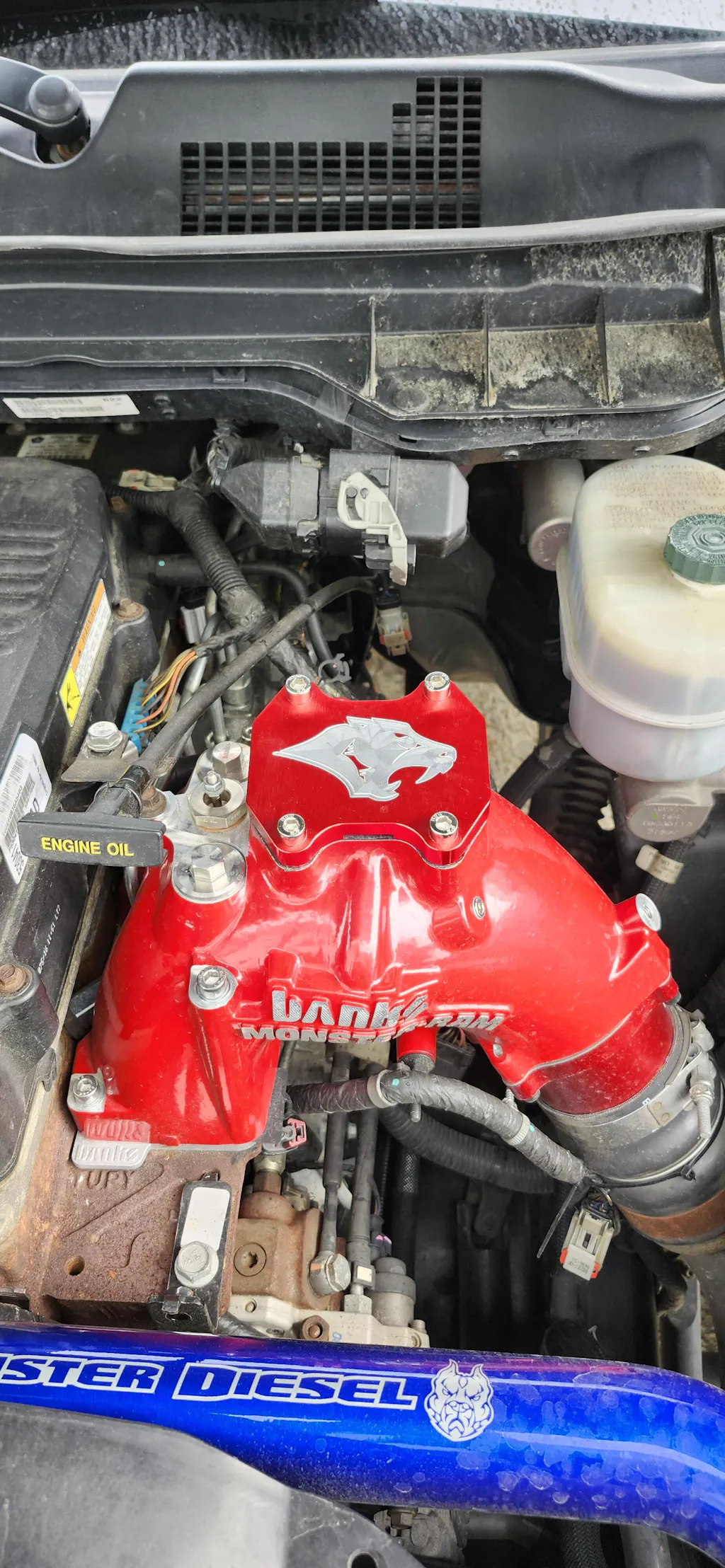
I originally had the Banks Monster Ram intake with grid heater delete, and costed $1200. Recently I decided to give Spelab a try for their 3.5” pusher style intake with grid heater delete. Fraction of the price and performs the same. Only regret I have was my purchase of Banks.
Great product
Good product fast sipping was not that bad of a job
Nicely done ✅
DPF Delete Kits FAQs
Yes—if not tuned. All DPF delete kits must be paired with proper ECU tuning. Without it, your truck may enter limp mode or show engine warning lights.
Yes. High soot load, excessive differential pressure, failed regen, or sensor faults can trigger derate or limp mode. Read the codes and live data before replacing parts.
Deleted-and-tuned off-road builds may improve throttle response, exhaust restriction, EGT control, and fuel use. Some owners discuss ranges like +35 to +120 HP, 100°F to 300°F lower EGT, or +1 to +3 MPG, but results depend on the truck, tune, load, altitude, and supporting mods.
We offer fast shipping across the U.S. and Canada, typically within:
- 3–7 business days in the U.S.
- 5–10 business days to most Canadian provinces
Tracking is provided on all orders. Expedited shipping available at checkout.
Use our vehicle filters or consult our support team. You’ll need to know:
- Engine type (e.g., 6.7L Cummins, LML Duramax)
- Model year (e.g., 2011–2023)
- Cab/chassis or pickup body type
- Inlet size preference (4" or 5")
We're happy to help confirm fitment before you order.
Most diesel trucks take 20–45 minutes to complete a DPF regen. It usually happens every 300–500 miles, depending on driving conditions.
With a SPELAB DPF delete kit and proper tuning, regen cycles are fully eliminated, improving power and fuel efficiency.
The total cost typically ranges from $1,000 to over $3,500, depending on your vehicle and the method used. A basic delete pipe kit starts around $500–$800, but you will also need a tuner (essential to prevent error codes), which adds $500–$1,500. Professional installation labor generally costs between $500 and $1,500. For a detailed breakdown of parts, labor, and tuning fees, read our full guide on the cost to remove a DPF.
No. It can reduce restriction in the removed aftertreatment section, but it will not fix bad injectors, turbo issues, boost leaks, fuel delivery problems, or weak engine compression.
The usual causes are wrong cab or bed configuration, pickup versus cab-and-chassis mismatch, loose factory hangers, twisted clamps, or tightening one section before the full system is aligned.
No for emissions-controlled street use. Removing or disabling emissions equipment is not legal for public-road vehicles in the United States.