
Updated on February 27, 2026.
TL;DR: The factory grid heater improves cold starts and emissions compliance, but it introduces airflow restriction and a low-frequency, high-consequence failure risk known as the “Killer Bolt.” From a durability standpoint, many owners choose to eliminate this risk.
1. Why This Part Became Controversial
The 6.7L Cummins grid heater sits between the intake horn and cylinder head. Its role is to heat incoming air during cold starts.
OEM Design Intent: Why Cummins Used a Grid Heater
The grid heater was implemented primarily for emissions compliance. Cold combustion produces incomplete fuel burn and elevated hydrocarbon output. Heating intake air improves atomization, stabilizes early combustion cycles, and reduces white smoke during startup.
- Improves cold fuel vaporization
- Reduces cold-start emissions spikes
- Helps meet EPA calibration requirements
- Stabilizes idle during initial warm-up
From a regulatory and cold-weather perspective, it makes sense. From a mechanical longevity standpoint, it introduces trade-offs.

2. The “Killer Bolt” – Failure Mechanism Explained
The retaining nut securing the heater grid can loosen over time due to heat cycling and vibration. If it detaches, airflow can carry it directly into cylinder #6.
- Piston crown destruction
- Valve damage
- Cylinder head cracking
- Turbo contamination
While not statistically common, the consequence severity is extremely high.
Engineering Risk Perspective
In reliability engineering, failures are assessed by probability and impact. The grid heater bolt represents a low-probability but catastrophic-impact scenario — often exceeding $10,000 in repair costs.
3. Airflow Restriction & Performance Impact
The heater element partially obstructs intake flow. In stock applications, performance impact is minor. In tuned or high-boost applications, smoother intake geometry improves airflow stability.
Having installed and flow-tested intake horns on dozens of 6.7 Cummins trucks, the measurable benefit is not peak horsepower — it is consistent boost response and improved sealing integrity under load.

4. Electrical & Maintenance Considerations
- P2609 – Intake Air Heater Performance
- P0542 – Heater Circuit High
- High current relay strain
- Soot accumulation at mounting surface
Removing unnecessary high-current heating elements reduces electrical stress long-term.
5. Cost Comparison: Prevention vs Failure
- Delete plate kit: $100–$200
- Labor (if outsourced): $300–$600
- Engine rebuild from bolt ingestion: $8,000–$15,000+
For many owners, the modification is viewed as preventative insurance.
6. Cold Start Strategy Without a Grid Heater
Below 20°F (-6°C), intake heating assists combustion. Above that, most trucks start without issue.
- Use block heater in winter
- Switch to 5W-40 synthetic oil
- Allow idle stabilization
- Use winter diesel additives
7. Installation Overview
- Remove intake horn
- Disconnect heater power lead
- Remove grid heater assembly
- Install delete plate with new gasket
- Torque to specification
Proper sealing is critical to avoid boost leaks.
8. Logical Upgrade Path
When deleting the heater, upgrading the intake horn improves airflow efficiency.
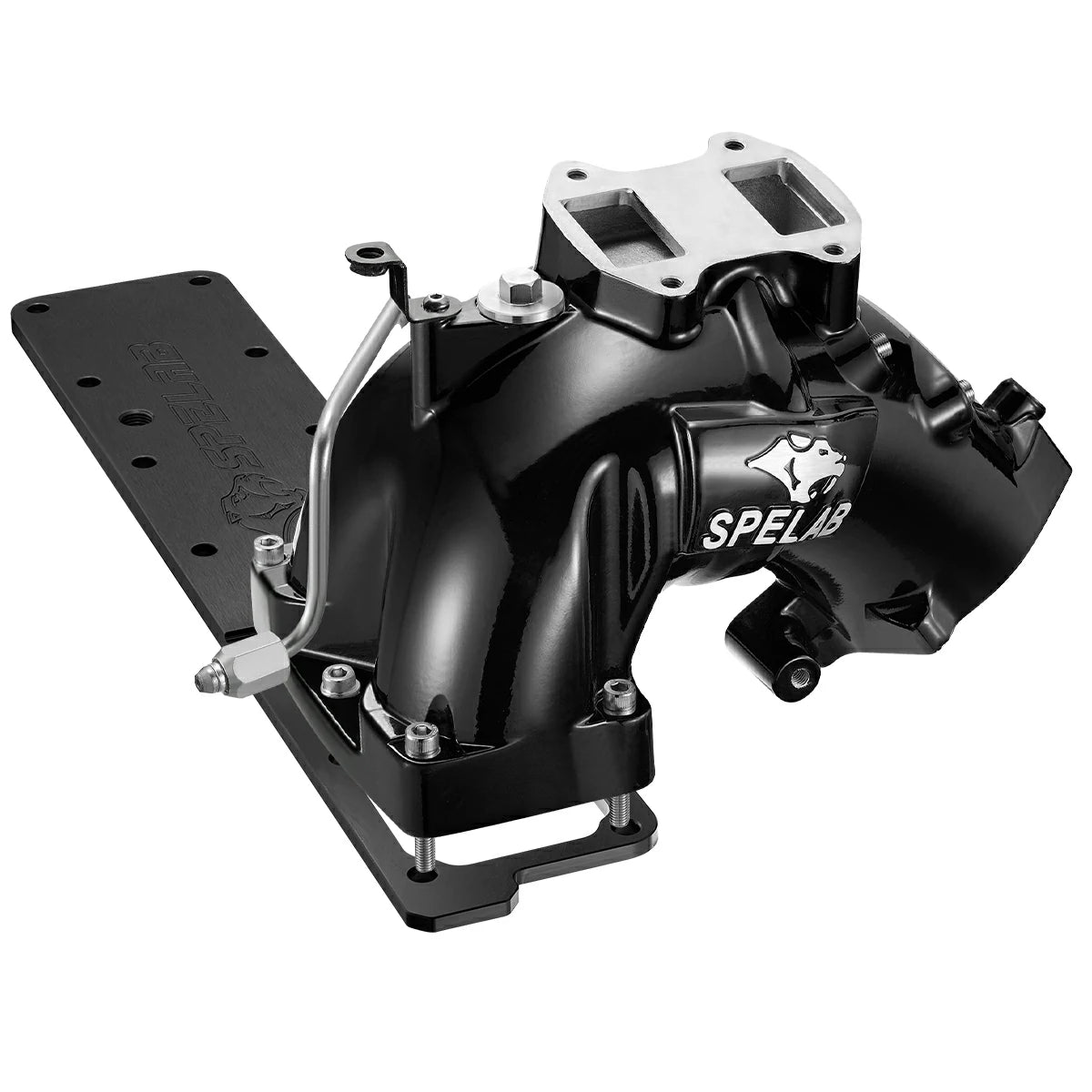
Optimized airflow design. Ideal pairing with grid heater delete plates.
FAQs – Engineering-Level Answers
Q1: Is the “Killer Bolt” failure actually common?
A: Statistically, it is not one of the most frequent failures on the 6.7L Cummins platform. Turbocharger wear, EGR clogging, and emissions-related faults occur more often. However, from a reliability engineering standpoint, the grid heater bolt represents a low-frequency but catastrophic-consequence failure mode. In teardown inspections I’ve reviewed, when ingestion occurs, damage is rarely minor — it typically involves piston destruction and cylinder head damage. That severity is why many owners proactively eliminate the risk.
Q2: Does deleting the grid heater increase horsepower?
A: On a stock truck, peak horsepower gains are typically modest. The more measurable improvement is airflow consistency and boost stability. In applications running higher boost pressures or custom tuning, removing obstructions in the intake tract reduces turbulence and pressure drop. From my testing experience with intake upgrades on multiple 6.7 builds, drivability and throttle response are more noticeable than dyno peak numbers.
Q3: Will a grid heater delete trigger a check engine light?
A: Depending on model year and calibration, removal can trigger intake air heater-related codes such as P2609 or P0542. Some trucks tolerate the modification without persistent issues, while others require ECM recalibration to prevent stored faults. The outcome depends on software version and emissions configuration.
Q4: How much does cold weather performance suffer after deletion?
A: In temperatures above approximately 20°F (-6°C), most engines start reliably without intake heating. Below that threshold, combustion stability during the first few cycles may be slightly reduced. In colder climates, use of a block heater, appropriate oil viscosity (such as 5W-40 synthetic), and winter-grade diesel mitigates nearly all concerns. From a thermodynamic perspective, compression heat still provides the majority of ignition energy.
Q5: Is this modification primarily about performance or reliability?
A: This is fundamentally a reliability-driven modification. Performance improvement is secondary. The primary objective is removing a single-point mechanical failure risk that, while uncommon, carries severe financial consequence. Owners seeking horsepower typically address turbochargers, fueling, and tuning before intake heating components.
Q6: Does deleting the grid heater improve fuel economy?
A: Direct fuel economy gains are minimal in stock form. However, smoother intake airflow can marginally improve combustion efficiency in tuned applications. Any MPG changes are typically secondary to driving habits, tire size, and calibration changes.
Q7: Why is cylinder #6 most often affected during bolt ingestion?
A: The intake runner geometry places cylinder #6 directly beneath the heater mounting hardware. If the retaining nut detaches, airflow dynamics and gravity tend to guide the hardware toward that runner. This alignment explains why cylinder #6 damage appears most frequently in documented cases.
Q8: Can the delete be reversed later?
A: Yes. If factory components are retained and no permanent modifications are made, the grid heater can be reinstalled. However, if ECM calibration changes were performed, software may need to be restored accordingly.
Q9: Does removal affect factory warranty coverage?
A: Modifying emissions-related components may affect powertrain warranty eligibility depending on dealer interpretation and jurisdiction. Owners should consider this before proceeding. From a compliance standpoint, this is an important factor.
Q10: What is the typical cost comparison between prevention and failure?
A: A delete plate installation generally costs a few hundred dollars including labor. In contrast, documented engine rebuild costs following bolt ingestion commonly exceed $8,000–$15,000. From a risk management perspective, many owners view the modification as preventative insurance.
Q11: Is professional installation recommended?
A: Yes. Proper gasket alignment, torque sequence, and sealing integrity are critical. Boost leaks from improper installation can create drivability issues or overwork the turbocharger. While mechanically straightforward, attention to detail matters.
Q12: Are there alternatives that retain cold-start heating without the bolt risk?
A: Yes. Some upgraded intake manifold designs integrate heating elements without exposed fasteners inside the intake stream. These solutions aim to maintain cold-start assistance while eliminating loose hardware risk. From an engineering standpoint, integrated designs are preferable to externally secured hardware.
Q13: Is this modification suitable for daily-driven trucks?
A: Suitability depends on climate and risk tolerance. In moderate climates, daily drivers generally experience no operational drawbacks. In extreme cold regions, owners must rely more heavily on block heaters and proper fuel preparation. The decision ultimately balances mechanical risk against cold-start convenience.
Q14: Does deleting the grid heater reduce soot buildup in the intake?
A: It removes one surface where soot can accumulate, but it does not eliminate soot generation entirely. Intake contamination is primarily driven by EGR flow and crankcase ventilation. The delete slightly simplifies the intake path but does not fundamentally alter emissions system behavior.
Q15: From an engineering standpoint, would you recommend the delete?
A: From a durability engineering perspective, eliminating a low-frequency, high-impact mechanical failure point is logically sound — provided the owner understands regulatory considerations and cold-weather trade-offs. The decision should be informed rather than reactionary.
Q16: What is the most logical complementary upgrade during deletion?
A: Replacing the restrictive factory intake horn with a smoother, high-flow design ensures optimal airflow once the grid heater is removed. In practice, pairing the delete with an upgraded intake component maximizes airflow stability and long-term sealing reliability.

John Lee
Mechanical Engineer | 10+ Years Experience
John has spent the last decade engineering and testing high-performance automotive components. Specializing in drivetrain durability and thermal management across Powerstroke, Cummins, and Duramax applications, he bridges the gap between OEM limitations and aftermarket performance. His philosophy: "Factory parts are just a starting point."


3 comments
Will these components fit a 2018 diesel pusher motor home freight liner 360 hp 6.7?
what is the part number for the intake air heater for the Spelab Air Horn.
I have purchased the Grid Heater Delete Kit, and was wondering if you have a part number for the intake air heater for you air horn?