Updated on August 04, 2026.
The best 6.7 Cummins valve cover is the one that matches your exact Ram, seals flat, manages blow-by without restriction, and gives you a serviceable CCV path. A polished billet cover can look sharp, but finish and brand reputation do not rescue bad Fitment or a pinched gasket. Start with the truck and ventilation plan, then compare material and price.
Quick answer: Keep the OEM cover for a stock, emissions-compliant work truck. If purchase price comes first, the specific SPELAB silver cast-aluminum SKU reviewed here was the least expensive, but it was out of stock and owner feedback makes the catch-can plan important. If you want the most completely documented billet package and can carry the cost, choose D&J. If you want a raw billet cover priced between those two, shortlist Keating and confirm the breather, gasket, hardware, and instructions before paying. Verify every kit by year, engine serial number, pickup versus chassis cab, and CCV configuration.
What a 6.7 Cummins Valve Cover Actually Does
The valve cover seals the top of the cylinder head, keeps engine oil inside, blocks dirt from the valvetrain, supports wiring and related hardware, and forms part of the crankcase ventilation system. On a stock 2009 truck, the official Ram diesel supplement describes a closed CCV system with the filter located on top of the valve cover. It also ties filter replacement to the truck's Perform Service interval. See the official 2009 Ram Diesel Supplement for that factory configuration.
An aftermarket cover may replace the stock filter housing with internal baffles, an external breather, a catch-can connection, or an open vent. That is a system change, not just a lid swap. Hose inside diameter, port location, separator design, drain path, and legal use matter as much as the cover material.
A valve cover does not add horsepower by itself. It is not exposed to intake boost pressure, and cooling fins on the cover do not function like an engine-oil cooler. Aluminum can spread local heat and adds a tough housing, but towing oil temperature, coolant temperature, and EGT problems still require diagnosis at the cooling, lubrication, fueling, and airflow systems.
Fitment Comes Before Brand
Broad labels such as “2006-present” or “2007-2024” are a starting point. Ram changed engine hardware, wiring, emissions controls, and packaging across the third-, fourth-, and fifth-generation trucks. Chassis-cab equipment can also differ from pickup hardware in the same year.
| Fitment item | What to confirm | Failure if missed |
|---|---|---|
| Model year and engine | 6.7L Cummins year range; do not confuse late 5.9L and early 6.7L listings | Wrong mounting, port, or accessory layout |
| Pickup vs. chassis cab | Bracket, harness, intake, and underhood clearance | Interference or a hose that cannot be routed safely |
| CCV configuration | Stock closed loop, closed-loop catch can, filtered open vent, or dedicated venturi kit | Restriction, oil odor, leaks, or an illegal road configuration |
| Ports and fittings | Port count, thread standard, fitting size, hose inside diameter, drain connection | Adapters stacked together or reduced airflow |
| Sealing package | Gasket, isolators, capscrews, washers, torque instructions, and sealant locations | Oil seepage, cracked flange, or stripped threads |
| Vertical clearance | Hood, cowl, intake tube, injector harness, and aftermarket accessories | Contact under engine movement |
If you are shopping for a 2007-2009 truck, use the early 6.7L Cummins parts group to stay within the correct vehicle family. Still verify the individual product variant; a collection page is not a fitment certificate.
Brand Comparison: Published Specifications
The table below uses specifications and prices published on each manufacturer's own product pages and checked on August 3, 2026. Each price is tied to a named reference version so an entry price is not quietly compared with a premium finish. Construction still differs: the SPELAB reference is cast aluminum, while the D&J and Keating references are raw billet. Prices, stock, and included parts can change. “Not published” means the manufacturer did not state the item clearly on the page reviewed; it does not mean the feature is absent.
| Reference option | Published fitment | Construction and weight | CCV or breather information | Listed price at review |
|---|---|---|---|---|
| OEM Mopar | VIN-specific factory application | Factory assembly; exact material varies by application | Retains the certified closed CCV layout and service strategy | Dealer or parts-catalog quote |
| SPELAB silver cast aluminum, SKU SPOS08832SR | 2007-2024 6.7L Ram 2500/3500; page also lists 2006-2007 5.9L | Cast or billet aluminum variants; listed assembly weight 7,282 g / 16.1 lb | Dual-plate design; atmospheric vent and catch-can variants listed | $349.99; selected SKU shown out of stock |
| D&J raw-finish billet | 2006-present 5.9L and 6.7L Ram listing | 6061-T6 billet aluminum; black version listed at 13.2 lb; stainless hardware | Baffled breather, 3/4-inch hose, and threaded provision for a -16 O-ring fitting | $674.99 |
| Keating raw common-rail billet | 2006-up common-rail Cummins listing | Billet aluminum; weight not published on the category page reviewed | Confirm port, baffle, hose, gasket, and hardware details for the selected version | $525 |
This is not a laboratory ranking. The brands do not publish the same flange-flatness measurements, baffle test method, separator efficiency, crankcase flow at a stated pressure, thermal test, or long-term leak rate. Assigning scores for “performance” or “user rating” would create precision that the available evidence does not support.
Torque Instructions, Warranty, and Return Terms
Purchase protection is part of the hardware decision. These are the terms visible during the same August 3, 2026 review, not a promise that a claim will be approved. Save the product page, order confirmation, selected SKU, and written fitment answer before installation.
| Option | Numeric torque instructions found? | Published warranty | Published return terms |
|---|---|---|---|
| OEM Mopar | Use the VIN/ESN-specific factory service procedure | Confirm the purchased part and installer coverage with the selling dealer | Dealer-specific; installed electrical and engine parts may have restrictions |
| SPELAB SKU SPOS08832SR | No numeric value on the reviewed product page | 12-month warranty badge | Page badge says 30 days, lower copy says 14-day free return; custom orders are final |
| D&J raw billet | No numeric value on the reviewed product page | No valve-cover-specific term found on the product or return page reviewed | 30 days, RMA required, 20% restocking fee, buyer pays return shipping; custom orders excluded |
| Keating raw billet | No numeric value on the category page reviewed | No valve-cover-specific term found on the product category or return page reviewed | 30 days from invoice, RMA required, 15% restocking fee, buyer pays return shipping; custom, used, and installed parts excluded |
Because none of the three reviewed aftermarket listings supplied a numeric installation torque for the exact reference cover, torque cannot be used as a brand-ranking metric. Get the applicable instructions in writing before opening the engine. A factory torque from a different cover, gasket, isolator, or fastener package is not a safe substitute.
What Owners Report, and What They Do Not Prove
Owner feedback is useful for finding questions that product pages skip, but it is not a controlled durability test. There is no public, audited return rate, leak rate, or warranty-claim rate that allows a fair three-brand comparison.
- SPELAB: The reviewed product page showed 37 customer ratings. Positive comments commonly mentioned appearance, fit, and easy installation. Several critical reviews reported oil mist from the breathers, the need for a high-flow catch can, missing hose-routing guidance, or debris that needed cleaning before installation. Those reviews are hosted on SPELAB's own store, so treat them as customer-generated signals rather than independent testing.
- D&J: The reviewed black-cover page showed seven ratings. Most were positive about construction and oil control, while one owner specifically wanted instructions and torque specifications. Owner forums still raise catch-can accumulation and installation questions. That is a reason to match the system to the truck instead of repeating one testimonial.
- Keating: The reviewed category page did not provide a comparable set of model-specific owner reviews. Without enough directly relevant reports, the honest rating is insufficient public evidence, not “good” or “bad.”
- OEM: In a RamForum owner discussion, an experienced member recommended Mopar or a local Cummins supplier for a replacement gasket. That is one opinion, but it reflects the low-risk logic of retaining factory Fitment on a stock truck.
An IGOTACUMMINS installation discussion also shows the questions that matter after purchase: how much oil the separator collects, where the vapor goes, and whether a catch can is still needed. Use owner threads to build an inspection checklist, not to calculate a nonexistent failure percentage.
SPELAB Cast and Billet Valve Cover
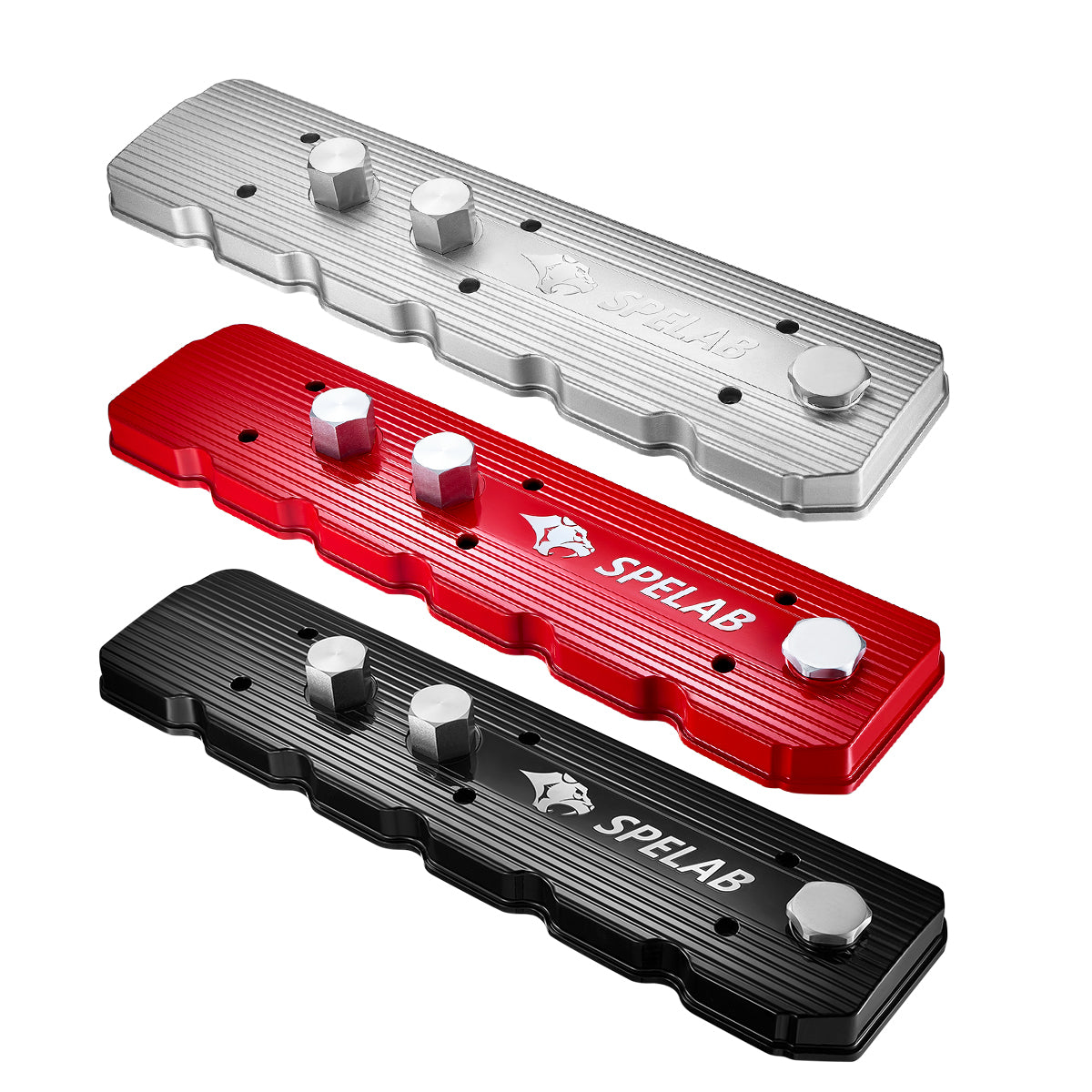
The SPELAB Cummins valve cover is the value-focused option in this group. The product page lists cast and billet aluminum finishes, dual plates for oil separation, standalone-cover and catch-can combinations, and an assembly weight of 7,282 grams. Its biggest advantage is choice: a driver can price a cast Bolt-on configuration without automatically paying billet-machine-shop money.
The buying caution is the broad variant list. Some choices pair the cover with a catch can, while others change finish, material, or port count. Confirm exactly what is included and whether the selected configuration is closed-loop, atmospheric, self-draining, or manually serviced. The page described the selected SKU as out of stock during this review, so availability also needs a live check.
Best for
- Budget-conscious builds that still need a rigid aluminum housing
- Owners choosing between cast and billet finishes on one product page
- Trucks being built with a matched catch-can or CCV routing package
Check before buying
- Exact variant, material, stock status, gasket, hardware, and fittings
- Whether the chosen CCV arrangement is legal for road use
- Installation instructions and torque values for the supplied fasteners
D&J Precision Machine Billet Valve Cover
D&J publishes the clearest hardware and breather description of the compared billet options. Its black product page specifies 6061-T6 billet aluminum, stainless fasteners, a baffled breather, 3/4-inch hose, a -16 O-ring fitting provision, stock oil-cap reuse, and 13.2 pounds. That detail helps a builder plan fittings before the truck is apart.
The tradeoff is cost. The reviewed raw and powder-coated versions were roughly $675-$787 before any additional catch can, custom hose, or labor. The manufacturer says the internal system may eliminate the need for a catch can when the engine does not have excessive blow-by, but that is still a selection question. A hard-working engine with high oil carryover needs diagnosis and measured service data, not a promise that one baffle solves every case.
Best for
- Premium builds that require published 6061-T6 construction
- Owners who want a clearly specified large breather connection
- Show or competition trucks where finish and machining justify the budget
Keating Machine Common-Rail Billet Valve Cover
Keating lists common-rail Cummins valve covers for 2006-up applications in raw, pocketed, black-anodized, and black-pocketed versions. The reviewed prices began at $525 and moved upward with added machining or finish. That places the basic cover between the SPELAB starting listing and D&J's raw billet price.
The category page does not publish enough detail to compare baffle efficiency, weight, gasket contents, breather diameter, or CCV routing line by line. That is not a reason to reject the cover; it is a reason to call before ordering. For a Heavy-duty tow rig, ask what port setup is supplied, whether a catch can is required, and which instructions apply to your year.
Best for
- Buyers who want a machine-shop billet cover with several finish levels
- Projects where the installer is already planning custom breather plumbing
- Owners willing to confirm the package details directly before purchase
When the OEM Cover Is the Better Choice
The stock cover is not automatically a weak part. If it is flat, dry, undamaged, and the truck remains in factory form, keeping the OEM closed CCV system may be the cleanest decision. It preserves known hose routing, factory service logic, noise control, and emissions configuration.
Replace or investigate the stock assembly when you find a confirmed cover crack, damaged sealing rail, stripped attachment point, failed gasket, restricted CCV filter, or a build requirement the stock package cannot support. Use the valve-cover leak diagnosis before blaming the cover. Oil on the side of the engine can travel from another source, and a new billet part will not fix excessive crankcase pressure.
Cast vs. Billet: What the Manufacturing Terms Mean
| Construction | Practical advantage | Practical limitation | Best use |
|---|---|---|---|
| OEM assembly | Factory Fitment, closed CCV integration, and known service procedure | Limited custom ports and appearance; aging assemblies can leak or crack | Stock street truck and fleet service |
| Cast aluminum | Rigid housing and complex shape at a lower production cost | Quality depends on casting, machining, porosity control, and flange inspection | Budget Mod, work truck, and daily driver |
| Billet aluminum | Machined features, premium finish, and easier custom port design | Higher cost; billet alone does not prove better sealing or oil separation | Custom plumbing, competition, and show builds |
Read the detailed cast-versus-billet Cummins guide if material choice is your main question. For either construction, flange flatness, gasket retention, hole alignment, baffle design, and supplied hardware matter more than the word stamped on the box.
How to Choose by Real Truck Use
| Truck use | Priority | Recommended direction |
|---|---|---|
| Stock daily driver | Legal compliance, low odor, predictable service | OEM or a verified closed-loop aftermarket system |
| Towing and Payload | Unrestricted crankcase flow, secure hose routing, leak resistance | Rigid cover with proven baffle and adequately sized closed-loop or approved separator plumbing |
| Jobsite and long idle | Condensate control, service access, dust protection | Easy-to-inspect system with a documented drain and filter plan |
| Off-roading | Bracket security, hose abrasion protection, water and dust exposure | Compact routing with no low hanging drain or open filter in direct spray |
| Extreme cold | Preventing frozen condensate restriction | Short, protected hose runs and frequent winter inspections |
| Competition or show build | Custom ports, finish, serviceability, and underhood presentation | Billet cover selected around the complete breather system |

Failure Symptoms That Matter More Than Brand
| Symptom | Check first | Do not assume |
|---|---|---|
| Oil along the cover rail | Gasket position, flatness, trapped harness, bolt load, and upstream oil source | The cover material is automatically at fault |
| Dipstick lifting or several new leaks | Restricted CCV filter, kinked hose, blocked separator, or undersized fitting | A stronger cover will contain excess pressure safely |
| Oil mist around the engine bay | Open vent position, baffle performance, loose fitting, and actual blow-by level | All atmospheric systems behave the same |
| Oil in charge-air plumbing | CCV return path, separator condition, turbo source, and measured oil use | The valve cover is the only possible source |
| Leak after a towing grade | Crankcase pressure under load, hose heat, engine movement, and gasket compression | A clean idle test proved the installation |
Installation and Ownership Cost
A careful DIY cover and CCV installation commonly takes 3-5 hours. A shop familiar with the platform may quote about 2-3 labor hours before custom fabrication, seized hardware, brittle wiring, or diagnosis. Add the cost of a gasket if not included, fittings, oil-resistant hose, clamps, loom, catch can, and a calibrated torque wrench.
Use the step-by-step Cummins valve-cover installation procedure to see the cleaning, CCV routing, heat-cycle, and post-load checks involved. Installation instructions and torque specifications for the exact cover and hardware must be available before the original cover comes off.
Street-Legal and Warranty Considerations
Changing a factory closed CCV system to atmospheric venting may affect emissions compliance, state inspection, odor, and warranty coverage. The EPA aftermarket tampering policy explains the federal framework. Confirm certification and local rules before modifying a road vehicle. A track-use label does not make a street installation legal.
Final Verdict
There is no honest universal winner. For an emissions-intact work truck, OEM is the benchmark because it preserves the factory system. SPELAB is the practical value pick when its exact cast or billet variant matches the truck and CCV plan. D&J is the strongest documented premium choice in this comparison because it publishes material, weight, hardware, hose, fitting, and baffle details. Keating is a credible billet alternative with a lower listed raw price than D&J, but the buyer should confirm the package details before ordering.
- Want the least-expensive reviewed option? Choose the SPELAB silver cast cover if it is back in stock and you have confirmed the required oil-separation and catch-can layout.
- Want the most documented billet package? Choose D&J if its published breather design and higher price fit the build.
- Want a middle-priced raw billet cover? Choose Keating after confirming exactly what the breather, gasket, hardware, and instructions include.
- Want the lowest-risk stock-truck answer? Keep or replace the OEM assembly and service the factory CCV system.
The real buying order is simple: Fitment, ventilation design, sealing package, instructions, service access, then finish. Brand and color come after the parts that keep oil inside and crankcase pressure under control.
Frequently Asked Questions
Q: What is the best valve cover for a 6.7 Cummins?
A: The best choice matches the exact year and truck configuration, seals with the supplied gasket and hardware, and supports a legal, unrestricted CCV path. OEM suits stock trucks; cast aluminum favors value; billet favors custom plumbing and finish.
Q: Does a billet valve cover add horsepower?
A: No. A valve cover does not create airflow or fueling power. Its useful jobs are sealing, protecting the valvetrain, and supporting crankcase ventilation. Any horsepower claim needs a controlled test of the complete engine setup.
Q: Is billet aluminum always better than cast aluminum?
A: No. Billet provides machined construction and premium finishing, but a well-made cast cover can seal and serve a work truck properly. Flange flatness, gasket retention, baffle design, and hardware are more important than the label alone.
Q: Do valve-cover cooling fins lower 6.7 Cummins oil temperature?
A: Fins increase external surface area, but a valve cover is not a substitute for an engine-oil cooler or cooling-system repair. Do not expect a published oil-temperature reduction unless the manufacturer provides controlled test data.
Q: Do I need a catch can with an aftermarket valve cover?
A: It depends on the internal baffle, blow-by level, hose routing, and whether the system returns vapor to the intake or vents elsewhere. A catch can can collect oil mist and moisture, but it cannot repair worn rings or excessive blow-by.
Q: Why does a new valve cover still leak?
A: Common causes include a pinched gasket, dirty or damaged sealing rail, trapped wiring, incorrect fastener load, warped mating surface, or excessive crankcase pressure. Diagnose the leak path before replacing another cover.
Q: Can I use an atmospheric CCV valve cover on the street?
A: Do not assume so. The factory system is part of the certified emissions configuration. Verify federal, state, and local requirements plus the product's emissions status before changing the ventilation path on a road truck.