Updated on June 16, 2026.
A real-world Ram 3500 case study on regen logic, soot loading, failed DPF replacement, and what to diagnose before replacing another filter.
Direct Answer: Why Does a 6.7 Cummins DPF Keep Clogging After Replacement?
A 6.7 Cummins DPF usually keeps clogging after replacement because the new filter is catching excessive soot from an unresolved upstream problem, such as a boost leak, exhaust leak, injector over-fueling, EGR flow issue, sensor bias, short-trip use, or long idle time.
A new Diesel Particulate Filter can only trap the soot the engine sends into it. If the engine is still running dirty, under-boosted, over-fueled, or confused by bad pressure or temperature data, the replacement DPF starts loading the same way the old one did.
That is why “DPF Full. See Dealer.” can return even after a dealer installs a new filter. The DPF may be the part that plugs, but it is not always the part that caused the problem.
Key Takeaways
A repeated 6.7 Cummins DPF failure should be treated as a root-cause diagnosis problem, not just another filter replacement problem.
- The DPF is the trap, not the soot factory. If soot production stays high, a new filter can clog again.
- A new DPF does not fix boost leaks, injector over-fueling, EGR flow issues, exhaust leaks, bad sensors, or poor duty cycle.
- Auto regen and manual regen can fail when soot load, ash load, EGT data, differential pressure, or active faults are outside the workable range.
- Scan data should come before another DPF replacement. Check soot load, ash load, differential pressure, EGT readings, boost, fueling data, EGR behavior, and idle hours.
- Public-road trucks should follow legal diagnosis, cleaning, repair, or replacement paths before any limited-use hardware is considered.
A Real Case: 17,000 Miles and Three DPF Replacements
A 2022 Ram 3500 needing three DPF replacements by 17,000 miles is not normal and strongly points toward an unresolved soot, airflow, sensor, regen, or duty-cycle issue.
The case comes from a Cummins Forum user known as Yakkety Yak, who owns a 2022 Ram 3500 with only 17,000 miles.

The owner reported that the truck would enter auto regen, the gauge would climb close to full, and then the regen would stop before cleaning the filter. The dealer performed manual regens, could not get the filter clean, and ordered another replacement.
"I am now on my 3rd DPF replacement... The truck goes into auto regen and when the gauge gets close to full, it stops regening... The dealer does a manual regen and can't get it to clean so they order a replacement."
— Yakkety Yak, Cummins Forum
Three DPF replacements before 20,000 miles should make any owner or technician slow down. The filter may be loaded, but the bigger question is why the truck keeps loading it so quickly.
This case highlights a key reality: a failed DPF is often a symptom, not the root cause.
Why a New DPF Can Clog Again: Soot Source vs. Regen Logic
A new DPF can clog again when the engine keeps producing too much soot or when regen logic cannot complete a clean burn because pressure, temperature, airflow, or sensor data is outside the expected range.
The DPF is a trap. It does not create soot; it captures soot. When a filter loads too fast, the root cause usually sits upstream in the engine, air system, fuel system, EGR system, exhaust system, sensor network, or duty cycle.
Experienced Cummins owners in the discussion pointed this out immediately:
"That is not normal... The DPF loading up is a symptom of something else upstream causing excess soot."
That statement is the entire diagnostic lesson. If soot production stays high, a fresh filter only buys time. It does not fix the reason the last filter failed.
The most common upstream contributors are not exotic failures. They are the boring problems that hide under a truck that still “feels normal” around town:
- Boost or charge-air leaks: low clean airflow can make combustion dirtier and increase soot output.
- Exhaust leaks: leaks near sensors can skew EGT or aftertreatment behavior.
- Injector over-fueling or poor spray pattern: extra fuel or poor atomization can increase particulate output.
- Sensor bias: NOx, EGT, MAP, MAF, or differential pressure sensors can mislead regen logic.
- EGR flow irregularities: poor recirculation behavior can affect combustion and soot formation.
- Duty cycle: long idle time, short trips, cold weather, and interrupted regens can keep the DPF from clearing properly.
Forum member BruceStarcrest gave the kind of short answer you hear in a real shop:
"Boost leaks or exhaust leaks."
Regen adds another layer. The truck needs heat, airflow, fuel control, and believable sensor feedback. A highway tow rig may give the DPF enough exhaust temperature to clean itself. A truck that idles on a jobsite, makes short trips, runs cold, or has a small boost leak may never give the system the same chance.
Manual regen also has limits. If the filter is too loaded, ash capacity is too high, DPF differential pressure is out of range, EGT readings do not make sense, or another active fault interrupts the process, the manual regen may stop early or fail to clean the filter. That does not automatically prove the filter alone is defective.
What to Scan Before Replacing Another DPF
Before another DPF is installed, the truck should be scanned for soot load, ash load, differential pressure, EGT behavior, boost, injector data, EGR operation, idle hours, and regen history.
A low-mileage truck with repeated DPF replacement needs a data-first diagnosis. Guessing is how owners end up paying for filters, sensors, shop time, and tow bills without fixing the truck.
| Data Point | Why It Matters | What It Can Reveal |
|---|---|---|
| DPF soot load | Shows current calculated filter loading | Fast soot accumulation or incomplete regen pattern |
| DPF ash load | Shows long-term non-burnable filter capacity loss | Whether cleaning or replacement may be needed |
| DPF differential pressure | Shows restriction across the filter | Loaded filter, bad pressure sensor, cracked or plugged pressure hose |
| EGT sensor readings | Shows whether regen heat behavior makes sense | Lazy EGT sensor, regen temperature problem, exhaust leak influence |
| Boost pressure under load | Shows whether the engine gets the air it expects | Intercooler boot leak, charge-air leak, turbo control issue |
| Injector balance or fueling data | Shows whether fuel delivery is clean and balanced | Over-fueling, poor spray, combustion soot source |
| EGR commanded vs actual | Shows whether the EGR side follows ECM control | Sticky valve, flow irregularity, intake-side soot issue |
| Idle hours and duty cycle | Shows how the truck is actually used | Jobsite idling, short-trip use, interrupted regen pattern |
Ask the dealer or shop for the numbers, not just the conclusion. “Needs another DPF” is not enough on the third filter.
Do Mods Like Cold Air Intakes Cause DPF Failure?
Most quality bolt-on airflow parts do not automatically kill a DPF, but any mod that changes airflow, fueling, exhaust temperature, or sensor readings can expose tight margins in a modern emissions system.
In the forum discussion, the owner mentioned running an aftermarket cold air intake. A clean, properly installed intake generally is not enough by itself to destroy a DPF. The bigger concern is whether the truck’s airflow data, sealing, filter condition, and sensor readings still match what the ECM expects.
We have seen simple issues create ugly DPF complaints: loose clamps, dirty sensors, small charge-air leaks, exhaust leaks ahead of sensors, and tune history nobody wants to admit. A modern 6.7 Cummins does not need a huge failure to start making more soot than the DPF can burn off.
The Cost Reality: Repair Path vs Limited-Use Hardware Path
Repeated DPF replacement gets expensive because each new filter can fail again if the upstream soot source, sensor fault, or drive-cycle problem is still present.
An OEM DPF replacement can cost thousands of dollars once parts, labor, diagnostics, downtime, and repeat dealer visits are included. For a truck still under warranty, that may be the dealer’s problem for now. For an out-of-warranty owner, repeated replacement can become a serious operating-cost issue.
That is why the question should not be “How much is another DPF?” The better question is: “Why did the last one fail?”
| Path | What It Solves | What It Does Not Solve | Best Use Case |
|---|---|---|---|
| Diagnose and repair upstream cause | Targets soot source, airflow issue, fueling fault, EGR problem, or sensor error | May still require DPF cleaning or replacement if the filter is already loaded | Public-road repair path |
| Replace DPF only | Replaces a loaded, damaged, or non-serviceable filter | Does not fix the soot source that clogged the last filter | When root cause is fixed or filter is proven bad |
| Clean or service DPF | May restore flow if the filter is serviceable | Does not fix injector, EGR, boost, exhaust leak, or sensor issues | When filter condition allows service |
| Limited-use hardware | Removes the DPF restriction from a documented race-only or legally allowed non-public-road setup | Does not repair bad combustion, fuel delivery, EGR faults, or boost leaks | Not a public-road emissions repair |
When Limited-Use Hardware Enters the Conversation
Limited-use DPF hardware should only enter the conversation after diagnosis, use-case review, compliance review, and fitment confirmation.
Some owners working on documented closed-course race-only or legally allowed non-public-road applications compare limited-use hardware because repeated DPF downtime is expensive. That path should not be presented as a street-truck repair, and it still does not fix the soot-producing root cause.

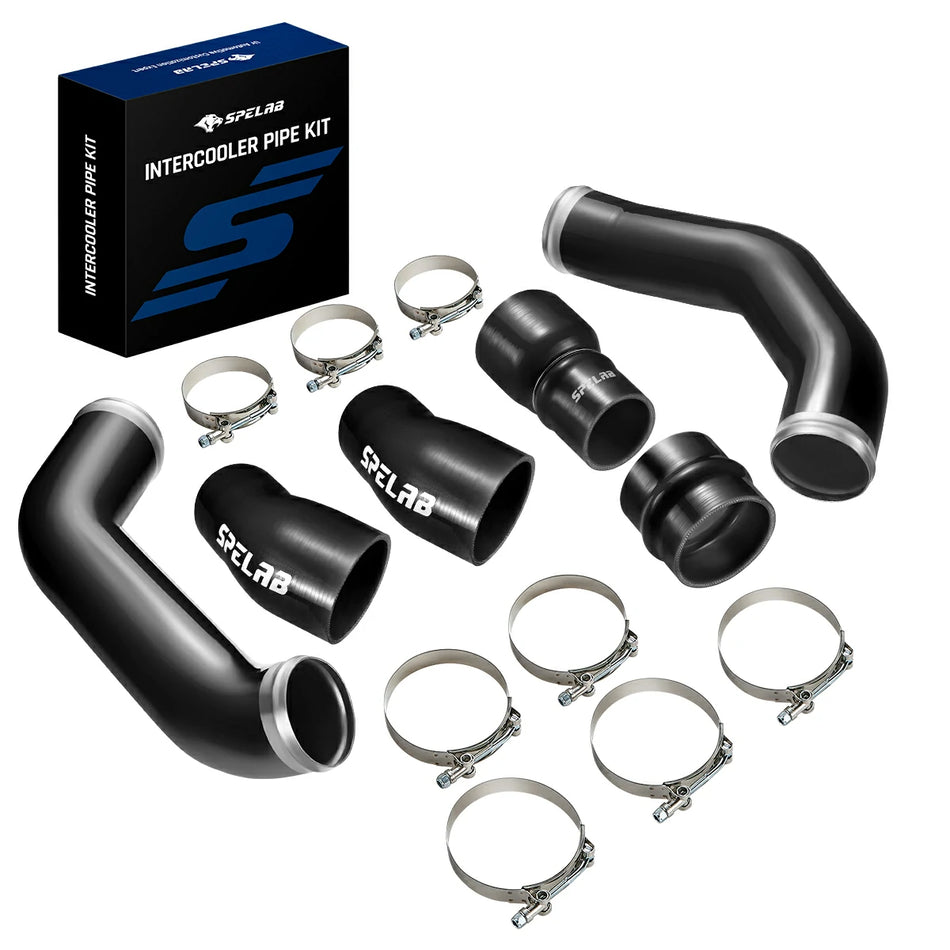
Owners working on documented limited-use builds can compare 6.7 Cummins DPF delete pipe fitment or 6.7 Cummins all-in-one delete kit fitment only after the truck’s year, model, engine, sensor layout, tuner path, and legal-use status are verified.
Street-driven trucks should stay on the legal repair path. SPELAB does not present delete-related hardware as a legal emissions repair for public-road diesel trucks.
Final Thoughts
A repeatedly failing 6.7 Cummins DPF is rarely just a bad filter; it is usually a sign that the engine, sensors, drive cycle, or regen logic still has an unresolved problem.
Some owners may choose to diagnose and repair every upstream variable to maintain full emissions compliance. Others, in documented race-only or legally allowed non-public-road settings, may compare limited-use hardware after diagnosis and compliance review.
The most important step is understanding whether the DPF failed on its own, or whether the engine is still producing too much soot for any filter to survive. Replace the filter without fixing the cause, and the same warning can come back.
FAQ
These are the questions Ram and Cummins owners ask when a DPF clogs again after replacement.
Q: Why does my 6.7 Cummins DPF keep clogging after replacement?
A: A replaced DPF usually clogs again because the engine is still producing too much soot or the regen system is still working with bad data. Check boost leaks, injector behavior, EGR flow, exhaust leaks, sensors, idle hours, and drive cycle.
Q: Can a new DPF fail again if the engine has an upstream soot problem?
A: Yes. A new DPF can load quickly if the upstream soot source is not fixed. The filter catches soot; it does not control how much soot the engine makes.
Q: What causes excessive soot on a 6.7 Cummins?
A: Excessive soot can come from boost leaks, dirty or biased sensors, injector over-fueling, EGR flow irregularities, exhaust leaks, low operating temperature, long idle time, and repeated interrupted regen cycles.
Q: Can a boost leak cause DPF problems?
A: Yes. A boost or charge-air leak can reduce clean airflow, hurt combustion efficiency, increase soot output, and make the DPF load faster than normal.
Q: Does manual regen failure mean the DPF is bad?
A: Not always. Manual regen can fail because the filter is too loaded, ash capacity is high, EGT data is wrong, pressure readings are out of range, or another active fault is interrupting the process.
Q: Should I replace the DPF or diagnose the engine first?
A: Diagnose first unless the filter is physically damaged or proven beyond service. Check soot load, ash load, differential pressure, EGT readings, boost, injector data, EGR behavior, and idle hours before paying for another DPF.
References and Source Notes
This article uses a real Cummins Forum case as the owner-reported starting point and applies diesel diagnostic logic to explain why repeated DPF failure requires upstream root-cause testing.

John Lee
Mechanical Engineer | 10+ Years Experience
John has spent the last decade engineering and testing high-performance automotive components. Specializing in drivetrain durability and thermal management across Powerstroke, Cummins, and Duramax applications, he bridges the gap between OEM limitations and aftermarket performance. His philosophy: "Factory parts are just a starting point."