
Updated: May 21, 2026

If you drive a Ford Powerstroke or EcoBoost truck, the intercooler is one of the most important parts of the turbocharged airflow system. It cools compressed air before that air enters the engine, helping improve charge-air density, reduce heat soak, support stable boost, and maintain consistent power under load.
Quick answer: Choose a SPELAB intercooler by matching your engine, model year, and use case first. A 2003–2007 6.0L Powerstroke owner should focus on EGT control and aging factory cooler fatigue. A 2008–2010 6.4L Powerstroke owner should prioritize heat capacity and boost stability. A 2015–2020 F150 2.7L / 3.5L EcoBoost owner should focus on heat soak, charge-air cooling, and turbo response.
This guide helps you compare SPELAB intercooler options, confirm fitment, understand the real benefits, and decide whether you need a full intercooler, an intercooler kit, or supporting pipe and boot upgrades.
Quick Selection Guide
| If You Drive | Recommended Direction | Best For | Shop |
|---|---|---|---|
| 2003–2007 Ford 6.0L Powerstroke | 6.0 Powerstroke bar-and-plate intercooler | EGT control, towing, aging factory cooler replacement, reliability restoration | View 6.0 Powerstroke Intercooler |
| 2008–2010 Ford 6.4L Powerstroke | 6.4 Powerstroke bar-and-plate intercooler | Heavy heat load, boost stability, towing, high-pressure charge-air cooling | View 6.4 Powerstroke Intercooler |
| 2015–2020 Ford F150 2.7L / 3.5L EcoBoost | EcoBoost intercooler selection through the intercooler collection | Heat soak reduction, charge-air temperature control, turbo response | Browse Intercooler Collection |
Why Upgrade Your Ford Intercooler?
A factory intercooler is designed around stock power, stock boost, and average-duty driving. Once the truck is used for towing, hot-weather driving, performance tuning, or repeated boost-heavy acceleration, the factory charge-air system may begin to show its limits.
A performance intercooler upgrade can help with:
- Lower intake air temperature: Cooler air is denser and supports more efficient combustion.
- Reduced heat soak: A stronger core can maintain performance more consistently during repeated pulls or towing.
- More stable boost delivery: Better core design can help reduce pressure drop across the charge-air path.
- Lower EGT under load: Cooler, denser air may help the engine work more efficiently during towing or hill climbs.
- Improved durability: Heavy-duty aluminum end tanks and a bar-and-plate core can be more reliable than aging factory components.
An intercooler does not magically create horsepower by itself. It supports the airflow system so the turbo, tuning, fueling, and engine can perform more consistently under real driving conditions.
1. SPELAB 6.0 Powerstroke Intercooler
Best Fit
| Engine | Year Range | Compatible Models |
|---|---|---|
| 6.0L Powerstroke Diesel | 2003–2007 | Ford F-250, F-350, F-450, F-550 Super Duty, and compatible 6.0L Powerstroke applications |
Why 6.0 Powerstroke Owners Upgrade
The 6.0 Powerstroke platform is now old enough that many factory charge-air components have been through years of heat cycles, towing stress, vibration, and boost pressure. If your truck shows rising EGT, weak towing response, oily charge pipes, or recurring boost leaks, the intercooler and piping system should be inspected together.
The SPELAB 6.0 Powerstroke intercooler uses a bar-and-plate core and aluminum construction to improve cooling capacity, pressure tolerance, and long-term durability compared with tired factory parts.
| Product | Image | Best For | Action |
|---|---|---|---|
| Intercooler - 2003–2007 Ford 6.0L Powerstroke F250 F350 F450 F550 | 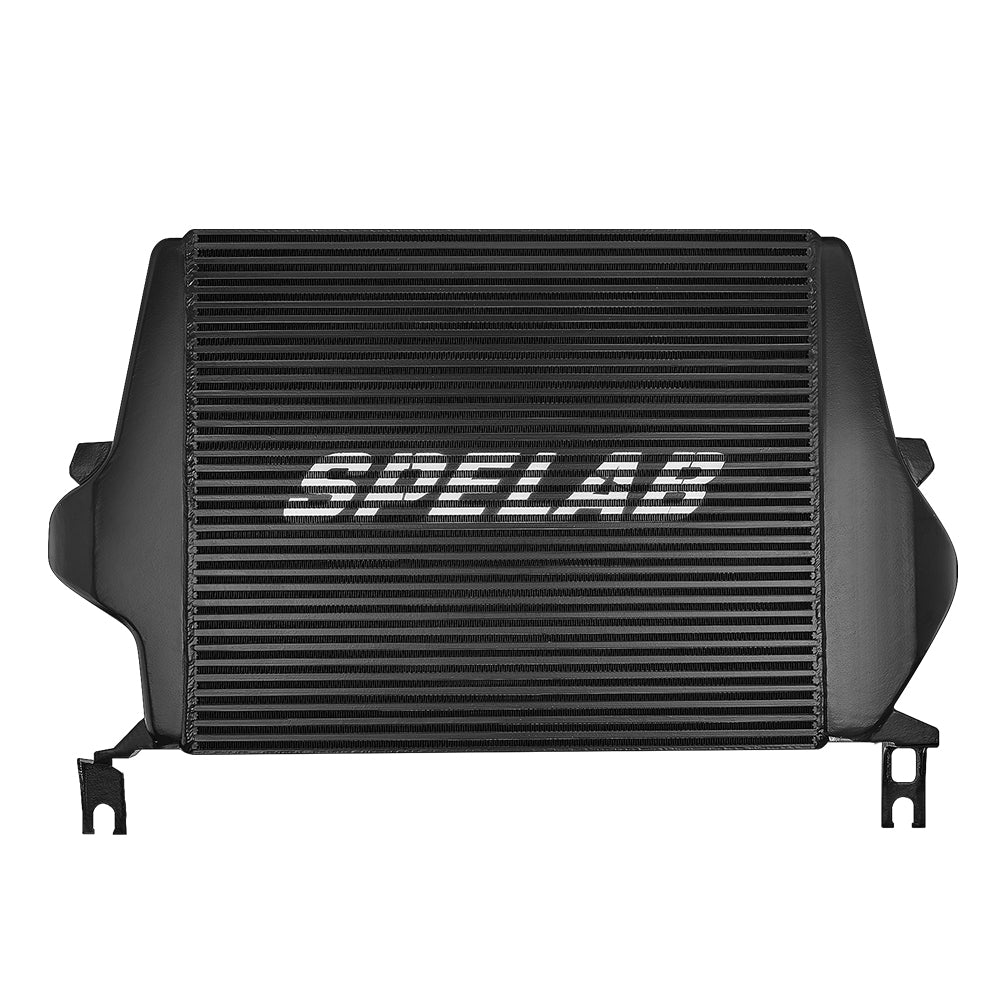 |
High-mileage 6.0L trucks, towing, EGT control, factory cooler replacement | Check Fitment & Current Price |
Recommended Supporting Upgrade
If your 6.0L truck has a hissing sound, oily couplers, low boost, or repeated boot issues, inspect the pipe and boot system before blaming the turbo. In many cases, a 6.0 Powerstroke intercooler pipe kit is the missing piece that helps the new intercooler perform correctly.
2. SPELAB 6.4 Powerstroke Intercooler
Best Fit
| Engine | Year Range | Compatible Models |
|---|---|---|
| 6.4L Powerstroke Diesel | 2008–2010 | Ford F-250, F-350, F-450, F-550 Powerstroke Diesel |
Why 6.4 Powerstroke Owners Upgrade
The 6.4 Powerstroke runs a demanding turbocharged airflow system and can generate serious heat under load. For towing, tuned trucks, or hard-working Super Duty applications, charge-air cooling and pressure stability matter. A weak factory intercooler, leaking boot, or restrictive pipe can make the truck feel lazy, smoky, and inconsistent.
The SPELAB 6.4 Powerstroke intercooler is built for higher heat load, stronger pressure tolerance, and improved cooling consistency over the factory unit.
| Product | Image | Best For | Action |
|---|---|---|---|
| Intercooler - 2008–2010 Ford 6.4L Powerstroke F250 F350 F450 F550 | 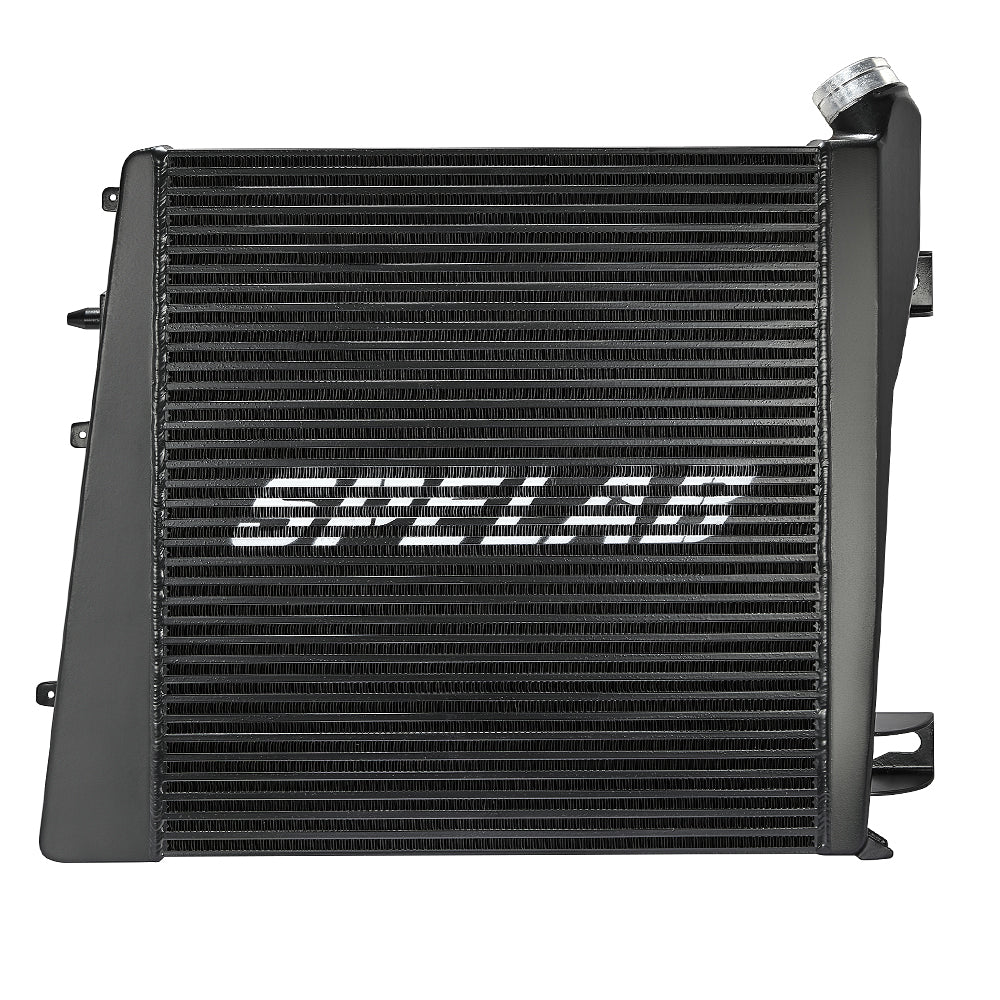 |
High-heat towing, tuned trucks, boost stability, factory cooler fatigue | Check Fitment & Current Price |
Recommended Supporting Upgrades
If you are upgrading the 6.4L intercooler because of boost leaks, pipe fatigue, or oil-softened boots, consider the pipe system at the same time. SPELAB offers a 6.4 Powerstroke hot-side intercooler pipe kit and a 6.4 Powerstroke cold-side intercooler pipe kit to help improve sealing and airflow reliability.
3. F150 EcoBoost Intercooler Guidance
Best Fit
| Engine | Year Range | Compatible Models |
|---|---|---|
| 2.7L / 3.5L EcoBoost V6 | 2015–2020 | Ford F150 EcoBoost V6 |
EcoBoost trucks are especially sensitive to heat soak. A turbocharged F150 may feel strong during the first pull, then lose response after repeated acceleration, summer traffic, or towing. That is usually not because the turbo suddenly became weak—it is often the charge-air system struggling to control temperature.
Product availability note: In the current product list I checked, I did not find a confirmed standalone 2015–2020 F150 2.7L / 3.5L EcoBoost intercooler product page. Because of that, this version does not hard-link to a specific EcoBoost intercooler product. Instead, EcoBoost owners should browse the verified SPELAB performance intercooler collection or confirm current availability before ordering.
OEM Replacement vs. Universal Intercooler vs. SPELAB Direct-Fit Upgrade
| Option | Best For | Strengths | Limitations |
|---|---|---|---|
| OEM Replacement | Stock daily driver with no tuning or towing demands | Factory-style fitment and predictable installation | May retain factory cooling and pressure limitations |
| Cheap Universal Intercooler | Custom fabrication projects | Flexible sizing for custom builds | Mounting, pipe routing, trimming, and fitment may require extra work |
| SPELAB Direct-Fit Intercooler | Truck owners who want a fitment-matched performance upgrade | Designed around specific applications, cooling goals, and durability needs | Vehicle year, engine, and model must be confirmed before ordering |
When Should You Upgrade the Intercooler?
You should consider an intercooler upgrade if your truck shows one or more of these signs:
- Rising EGT during towing or long grades
- Power fade after repeated acceleration
- High intake air temperature under moderate load
- Cracked plastic end tanks or leaking crimp seams
- Whistling, hissing, or boost leak symptoms
- Repeated boot blow-off under boost
- Oil residue around charge pipes and couplers
- Performance tuning that increases boost and airflow demand
If you are not sure whether the core or the pipes are the real problem, start with a pressure test. Many “bad intercooler” complaints are actually caused by loose boots, cracked charge pipes, weak clamps, or oil-softened couplers.
Intercooler Core vs. Intercooler Pipe Kit: Which Should You Buy First?
| Your Symptom | Likely Problem Area | Best Shopping Direction |
|---|---|---|
| Slow power fade after towing for several minutes | Heat-soaked or undersized intercooler core | Upgrade the intercooler |
| Loud pop, instant power loss, black smoke | Boot blow-off or pipe failure | Inspect boots and shop an intercooler pipe kit |
| Whistling or hissing under load | Charge-air leak | Pressure test first, then replace the failed pipe, boot, or core |
| Oil residue around couplers | CCV oil vapor plus weak sealing surface | Inspect CCV system, boots, clamps, and pipe connections |
| High IAT with no boost leak | Intercooler core efficiency problem | Compare direct-fit intercooler upgrades |
For broad fitment browsing, use the verified SPELAB intercooler kits and piping collection. For intercooler cores, use the SPELAB performance intercooler collection.
How to Choose the Right SPELAB Intercooler

1. Confirm Engine and Year First
Do not shop by “Powerstroke” alone. A 6.0L Powerstroke intercooler is not the same as a 6.4L Powerstroke intercooler, and an EcoBoost F150 setup is a different platform entirely. Always confirm year, engine, model, and mounting layout before ordering.
2. Match the Intercooler to How You Use the Truck
- Daily driving: Prioritize fitment, reliability, and balanced response.
- Towing: Prioritize heat capacity, EGT control, and sustained-load cooling.
- Tuned trucks: Prioritize pressure tolerance, boot retention, and airflow stability.
- High-mileage trucks: Inspect end tanks, clamps, boots, and charge pipes before buying only the core.
3. Check Pipe and Boot Condition
A new intercooler cannot perform well if the pipe system leaks. Check couplers, clamps, boots, and pipe flanges before installation. Oil contamination inside the charge-air path can soften rubber and make boots more likely to slip under boost.
Installation Overview
Installation difficulty depends on the truck platform and surrounding components. This is a general overview, not a substitute for the product manual.
- Prepare the truck: Park on a flat surface, let the engine cool, and disconnect the battery if required.
- Remove blocking components: Depending on the platform, this may include grille pieces, intake ducting, fan shrouds, or charge pipes.
- Disconnect the charge-air piping: Loosen clamps carefully and inspect each boot for oil saturation, cracks, or deformation.
- Remove the old intercooler: Support the core and remove mounting hardware without damaging the radiator or condenser.
- Install the SPELAB unit: Position the new intercooler, secure all mounting points, and reconnect piping.
- Pressure test: Check for boost leaks before heavy driving or towing.
- Monitor after install: Watch boost, IAT, EGT, and any abnormal whistle or oil residue around couplers.
Maintenance Tips After an Intercooler Upgrade
Inspect Externally
Check the intercooler fins for debris, bent areas, or blockage. Avoid blasting the core with high-pressure water, which can damage fins.
Watch for Oil Inside the Pipes
A light oil film can be common on turbocharged engines, but heavy oil pooling may indicate CCV oil vapor problems or turbo seal concerns. Oil inside the charge-air path can reduce heat transfer and weaken rubber couplers over time.
Check Clamps After Heat Cycles
After the first few drive cycles, inspect clamps and boots again. Heat, boost pressure, and vibration can settle new connections.
Track IAT and Boost
If you have an OBD monitor, compare IAT and boost before and after the upgrade under similar conditions. This gives a more realistic picture than judging by “seat-of-the-pants” feel alone.

Related Guides
For deeper research before buying, read how adding an intercooler affects boost pressure, the difference between intercooler and radiator systems, and whether a front mount intercooler affects radiator airflow.
Final Buying Recommendation
If you own a 2003–2007 6.0 Powerstroke and need better charge-air cooling or factory cooler replacement, start with the SPELAB 6.0 Powerstroke intercooler and inspect the pipe kit at the same time.
If you own a 2008–2010 6.4 Powerstroke and tow, tune, or drive under high heat load, the SPELAB 6.4 Powerstroke intercooler is the stronger direct-fit choice, with hot-side and cold-side pipe upgrades worth considering if boost leaks are present.
If you own a 2015–2020 F150 EcoBoost, confirm current product availability through the SPELAB intercooler collection before ordering. I did not hard-link a specific EcoBoost intercooler product in this version because the exact product was not found in the uploaded product list.
FAQ
Q:What does a Ford intercooler do?
A:A Ford intercooler cools compressed air from the turbocharger before it enters the engine. Cooler air is denser, which supports better combustion, more consistent boost, and lower intake temperature under load.
Q:Does a SPELAB intercooler add horsepower?
A:An intercooler usually does not add large horsepower by itself. Its main benefit is reducing heat soak and helping the truck maintain power more consistently, especially when towing, tuned, or driven in hot conditions.
Q:Which SPELAB intercooler fits a 2003–2007 Ford 6.0 Powerstroke?
A:Use the SPELAB 2003–2007 Ford 6.0L Powerstroke intercooler and confirm your truck model on the product page before ordering.
Q:Which SPELAB intercooler fits a 2008–2010 Ford 6.4 Powerstroke?
A:Use the SPELAB 2008–2010 Ford 6.4L Powerstroke intercooler and confirm your exact Super Duty model on the product page before ordering.
Q:Should I upgrade the intercooler or the intercooler pipe kit first?
A:If you have high IAT and heat soak with no leaks, start with the intercooler. If you hear hissing, see oil around boots, or experience boot blow-off, inspect the pipe and boot system first.
Q:Does an EcoBoost F150 need an upgraded intercooler?
A:An EcoBoost F150 may benefit from an upgraded intercooler if it suffers from heat soak, repeated power fade, high intake temperature, or towing-related performance drop. Confirm current SPELAB product availability before buying.
Q:Can I install a SPELAB intercooler myself?
A:Many experienced DIY owners can install an intercooler with the right tools, but professional installation is recommended if you are not comfortable removing charge-air piping, checking clearances, or pressure testing the system.
Q:How often should I clean my intercooler?
A:Inspect it during routine service or whenever performance changes. Clean external debris carefully, and inspect internally if you find heavy oil residue in the charge-air pipes.
Q:Will upgrading an intercooler affect my vehicle warranty?
A:Aftermarket modifications may affect warranty coverage depending on the dealer, vehicle, and failure type. Check your warranty terms before installation.
Q:What is the biggest mistake when buying an intercooler?
A:The biggest mistake is buying by engine family alone without confirming year, model, fitment, pipe routing, and whether the actual problem is the core or a boost leak in the piping system.

John Lee
Mechanical Engineer | 10+ Years Experience
John has spent the last decade engineering and testing high-performance automotive components. Specializing in drivetrain durability and thermal management across Powerstroke, Cummins, and Duramax applications, he bridges the gap between OEM limitations and aftermarket performance. His philosophy: "Factory parts are just a starting point."