Updated July 13, 2026.
If your 6.7L Powerstroke smells sweet after a drive, leaves white coolant residue near the driver-side battery area, or keeps dropping coolant level after towing, take a breath before assuming the head gasket is gone. On many Ford Super Duty trucks, coolant loss near the reservoir area starts with aging plastic parts, a weak pressure cap, a leaking Y-pipe, brittle quick-connects, or a yellowed degas bottle that no longer lets you read the coolant level clearly.
That distinction matters. A head gasket diagnosis can send a truck owner into full panic mode, but a reservoir-side leak is often easier to inspect, cheaper to confirm, and much more realistic to repair before the next heavy haul.

Quick Answer: Common 6.7L Powerstroke Coolant Reservoir Leak Causes
When coolant appears near the reservoir on a 2011-2019 Ford 6.7L Powerstroke, check these areas first:
- Yellowed or cracked plastic degas bottle
- Weak or contaminated pressure cap
- Leaking Y-pipe connection
- Brittle quick-connect fittings
- Upper coolant tube or hose seepage
- Loose clamps after prior service
- Coolant pushed out under towing heat and pressure
For trucks that tow regularly, inspect the reservoir area together with the 6.7 Powerstroke upper coolant tube and nearby hose connections. A small stain at idle can become a real leak when the truck is climbing grade with a trailer behind it.
Key Takeaways
- Do not blame the head gasket first just because coolant is disappearing.
- The factory plastic coolant reservoir can yellow, crack, or hide the true fluid level.
- A clear sight glass makes routine coolant checks much easier than guessing through stained plastic.
- The pressure cap, Y-pipe, hose ends, and quick-connects should be inspected before replacing major parts.
- An aluminum reservoir helps solve plastic tank fatigue, but it will not fix a bad hose, failed radiator, or combustion-pressure issue.
Symptoms: Sweet Smell, Steam, White Residue, and Low Coolant Light
A reservoir-side coolant issue usually starts small. You may notice a faint sweet smell after shutdown, dried white or pink residue around the tank, a low coolant warning that comes and goes, or steam near the battery side of the engine bay. These symptoms often show up after highway towing, long idling, or a hot shutdown.
That is exactly why visual inspection matters. Coolant can evaporate before it drips onto the ground, leaving only crusty residue around a hose neck, cap seat, or Y-pipe seam. If you recently bought a used F-250 or F-350, add this area to your pre-tow cooling checklist before trusting the truck with a heavy load.
John Lee’s Real-World Note: Do Not Let Head Gasket Fear Empty Your Wallet
I have seen plenty of 6.7 Powerstroke owners smell coolant once and immediately think the engine is finished. Listen, the fear is understandable. Coolant loss, white residue, and pressure in the system can sound scary. But if the smell is strongest near the driver-side reservoir area, or the leak only shows up after the truck is hot, start with the plastic degas bottle, pressure cap, Y-pipe, and hose connections before assuming the worst.
The reservoir area is a heat-cycled plastic zone. It lives next to a hard-working diesel engine, sees pressure every time the cooling system comes up to temperature, and gets abused when the truck tows heavy in summer. A cracked bottle or tired cap is not good news, but it is not the same as tearing into the engine.
Why the Factory Degas Bottle Area Fails
The factory coolant reservoir is not just a storage tank. It is part of a pressurized cooling system that manages expansion, air separation, and coolant recovery. Over time, heat cycling can turn plastic cloudy, brittle, and difficult to inspect. Once the bottle turns yellow, it can look like an old oil jug; you may not know the true level until the warning light appears.
That poor visibility is one of the most annoying owner complaints. You should not need to shake the truck, shine a flashlight through stained plastic, or wait for the dash to complain just to know whether your coolant level is safe.
Why the Y-Pipe and Hose Connections Deserve Attention
The Y-pipe and surrounding hose connections are common leak suspects because they sit in a pressure and vibration zone. A tiny seep can dry on the surface and leave a chalky trace. That is why it helps to clean the area first, drive the truck through a full heat cycle, and inspect again with a light.
If you are comparing metal tubes, rubber hoses, and connection styles, this guide on coolant pipe versus hose failure points gives useful context. The short version: metal parts usually solve deformation and cracking, but every connection still needs a clean sealing surface and correct clamp pressure.
Yellowed Plastic vs Aluminum Reservoir: What Changes?
An aluminum coolant reservoir does two useful things. First, it removes the yellowed plastic tank from the system. Second, when designed with a sight glass, it gives you a clear check point for daily or pre-trip coolant inspection. That visibility can calm a lot of anxiety for owners who tow, commute long distances, or run their truck in hot climates.
A properly fitted 6.7 Powerstroke aluminum coolant reservoir is most valuable when the original plastic bottle is stained, cracked, hard to read, or already showing coolant residue around the seams. It is not a magic fix for every coolant problem, but it does address one of the most visible weak points in the reservoir area.

2011-2016 vs 2017-2019 Fitment: What Owners Should Check
Ford Super Duty cooling layouts changed across model years, so do not buy from a photo alone. Before ordering any reservoir, coolant tube, or hose kit, confirm your model year, engine, mounting points, hose routing, cap style, and sensor or fitting locations.
| Truck Range | Inspection Focus | Owner Note |
|---|---|---|
| 2011-2016 6.7L Powerstroke | Reservoir shape, Y-pipe routing, cap condition, hose necks | Check for older plastic fatigue and previous repair marks. |
| 2017-2019 6.7L Powerstroke | Tank mounting, hose path, upper coolant routing, fitting match | Do not assume earlier parts fit later trucks without verification. |
| F-250, F-350, F-450, F-550 | Cab/chassis packaging, towing use, cooling system service history | Work trucks may show heat-cycle wear earlier than pavement-only trucks. |
If you are already refreshing the reservoir area, it can also make sense to inspect a 6.7 Powerstroke radiator hose kit when the original hoses are swollen, oil-contaminated, soft near the ends, or showing clamp bite marks.
What an Aluminum Reservoir Fixes — and What It Does Not Fix
An aluminum reservoir can help with plastic tank aging, poor level visibility, seam fatigue, and confidence during routine inspection. It can also make the engine bay easier to monitor because the sight glass gives a direct visual reference.
It does not fix a bad pressure cap, leaking hose, cracked radiator, damaged EGR cooler, combustion gas entering the cooling system, or a loose clamp left from prior work. If the coolant level keeps dropping after the reservoir area is repaired, pressure test the system and keep diagnosing.
Diagnostic Order Before Replacing Parts
- Let the engine cool fully. Never open a hot pressure cap.
- Photograph the coolant level before driving.
- Clean dried residue around the reservoir, Y-pipe, hose ends, and cap seat.
- Drive the truck through a full heat cycle.
- Inspect again with a strong light.
- Pressure test the system if the leak is not obvious.
- Check for repeated bubbling, coolant smell from exhaust, or unexplained pressure after sitting overnight.
If the leak points to the bottle, cap, or nearby hose routing, the Powerstroke coolant expansion tank collection is the right category to compare reservoir-style solutions. If the leak follows hard-line routing or tube connections instead, review Powerstroke coolant tube upgrades rather than blaming the tank too quickly.
Workshop Tip: Quick-Connects Can Break Like Eggshells
Before removing the original reservoir, put towels under the work area and have a drain pan ready. Old quick-connects may be heat-hardened and brittle. If one cracks during removal, do not glue it, tape it, or force it back together just to finish the job. Replace the damaged connector or hose section properly.
This is where a lot of driveway repairs go sideways. The tank gets replaced, the old connector gets reused because it “looked fine,” and the truck comes back with a new leak after the first towing trip.
Plastic vs Aluminum Coolant Reservoir: Real Buying Decision
| Option | Best For | Trade-Off |
|---|---|---|
| New plastic reservoir | Stock replacement on a lightly used truck | Can yellow again over time and may remain hard to read. |
| Aluminum reservoir with sight glass | Towing, high-heat use, repeated reservoir-side seepage | Costs more and still requires correct diagnosis. |
| Hose or tube repair only | Confirmed leak at a hose, tube, or connector | Does not solve a stained or cracked degas bottle. |
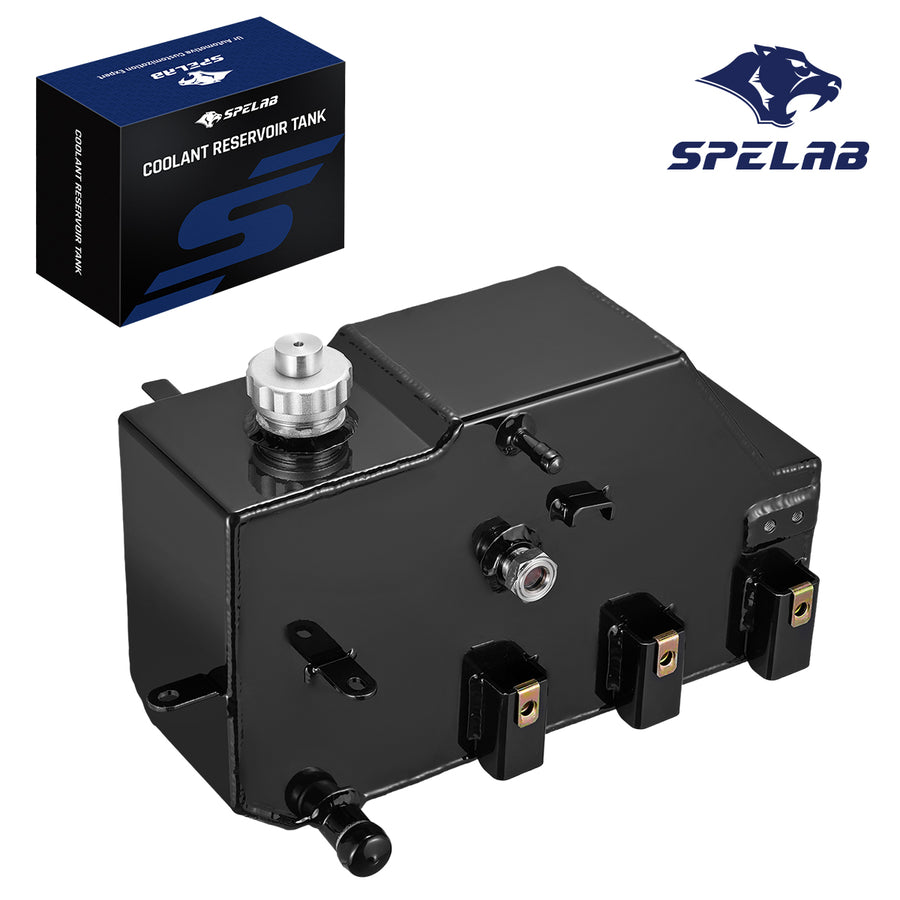
Recommended Product: SPELAB 6.7L Powerstroke Coolant Reservoir
John Lee’s Practical Pick: Replace the Plastic Guesswork
If your original tank is yellowed, hard to read, or already showing residue around the reservoir area, the Coolant Reservoir for 2011-2019 Ford 6.7L Powerstroke Coolant Overflow Tank gives you a stronger aluminum tank body and a clearer sight-glass inspection point. It is a sensible upgrade when the reservoir itself is the weak link, especially on trucks used for towing or long-distance work.
Still, do the boring checks first: cap, hose ends, Y-pipe, clamps, and pressure test. A good reservoir should be part of a correct repair, not a shortcut around diagnosis.
Installation Notes: Cap, Sight Glass, Hose Routing, and Pressure Test
- Work only on a fully cooled engine.
- Transfer or replace the pressure cap according to the part requirements.
- Route hoses without kinks, rubbing, or tension at the fittings.
- Check the sight glass after the system is filled and burped.
- Pressure test before the first towing trip.
- Recheck the level after the first full heat cycle.
For owners pricing out a broader cooling refresh, this radiator hose replacement cost guide is useful when deciding whether to repair only the tank area or refresh old hoses at the same time.
When to Upgrade Before Towing Season
Upgrade before towing season if the tank is badly yellowed, coolant level is hard to verify, residue keeps returning around the bottle, or the truck has already had pressure-related seepage near the reservoir area. A clear check point matters when you are hundreds of miles from home with a trailer and hot weather working against you.
The best time to fix a known reservoir issue is before the trip, not on the shoulder with coolant smell in the cab and the low coolant light staring at you.
Legal, Fitment, and Safety Notice
This guide is for general diagnostic and shopping education. Always confirm fitment by year, engine, body configuration, hose routing, and installation requirements before ordering parts. Cooling systems are pressurized and can cause burns if opened hot. If you suspect combustion gas in the coolant, repeated overheating, coolant in the oil, or unresolved pressure after shutdown, have the truck inspected by a qualified diesel technician.
FAQ
Is coolant loss near the reservoir always a head gasket problem?
No. Head gasket failure is possible on any high-load diesel, but coolant near the reservoir area often comes from the degas bottle, pressure cap, Y-pipe, hose ends, or quick-connect fittings. Diagnose the leak path before assuming engine damage.
Why is the factory reservoir so hard to read?
The plastic can yellow and stain after years of heat cycles. Once that happens, the coolant level can be difficult to see through the tank wall. A sight glass gives a clearer inspection point.
Can I keep driving with a small coolant smell?
Do not ignore it. If the truck is not overheating and the level is stable, you may be able to drive carefully to inspect or repair it. If the low coolant light is on, steam is visible, or temperature is rising, stop and diagnose before causing more damage.
Should I replace the pressure cap with the reservoir?
If the cap is old, contaminated, or not holding pressure correctly, replacing it is smart. A weak cap can cause overflow or pressure behavior that looks like a tank problem.
What if the new reservoir does not stop coolant loss?
Keep diagnosing. Pressure test the system, inspect hoses and tubes, check the radiator, and look for signs of combustion gas in the coolant. The reservoir only fixes reservoir-related failure points.
Owner’s Takeaway
A 6.7L Powerstroke losing coolant near the reservoir does not automatically mean the engine is doomed. Start with the parts you can inspect: the degas bottle, pressure cap, Y-pipe, hose ends, upper coolant routing, and quick-connects. If the original plastic tank is yellowed, cracked, or impossible to read, an aluminum reservoir with a sight glass is a practical upgrade because it removes a common weak point and gives you a better way to monitor the system before the dash warning light gets involved.

About the Author
John Lee
Mechanical Engineer | 10+ Years Experience
John has spent the last decade engineering and testing high-performance automotive components. Specializing in drivetrain durability and thermal management across Powerstroke, Cummins, and Duramax applications, he bridges the gap between OEM limitations and aftermarket performance. His philosophy: "Factory parts are just a starting point."