Updated on August 11, 2026.
A CCV (Crankcase Ventilation) delete or reroute kit changes how crankcase gases are handled on a 6.7 Powerstroke - instead of routing oil mist and blow-by gases back through the factory closed system into the intake, a reroute kit redirects that flow through a catch can or filter to keep oil mist out of the intake tract, intercooler, and sensors. Here's what SPELAB's kit actually does, what the different configurations mean, and what to check before you buy.
What This Kit Actually Does
The factory closed crankcase ventilation system routes blow-by gases and oil mist back into the intake, which is the OEM design. This kit works differently: it's an open-vent design that collects crankcase gases through a catch can, filters oil out through a reservoir stage, and then vents the filtered gas externally rather than returning it to the intake. That's a real distinction worth understanding before you buy - it's not simply "a cleaner version of the factory loop."
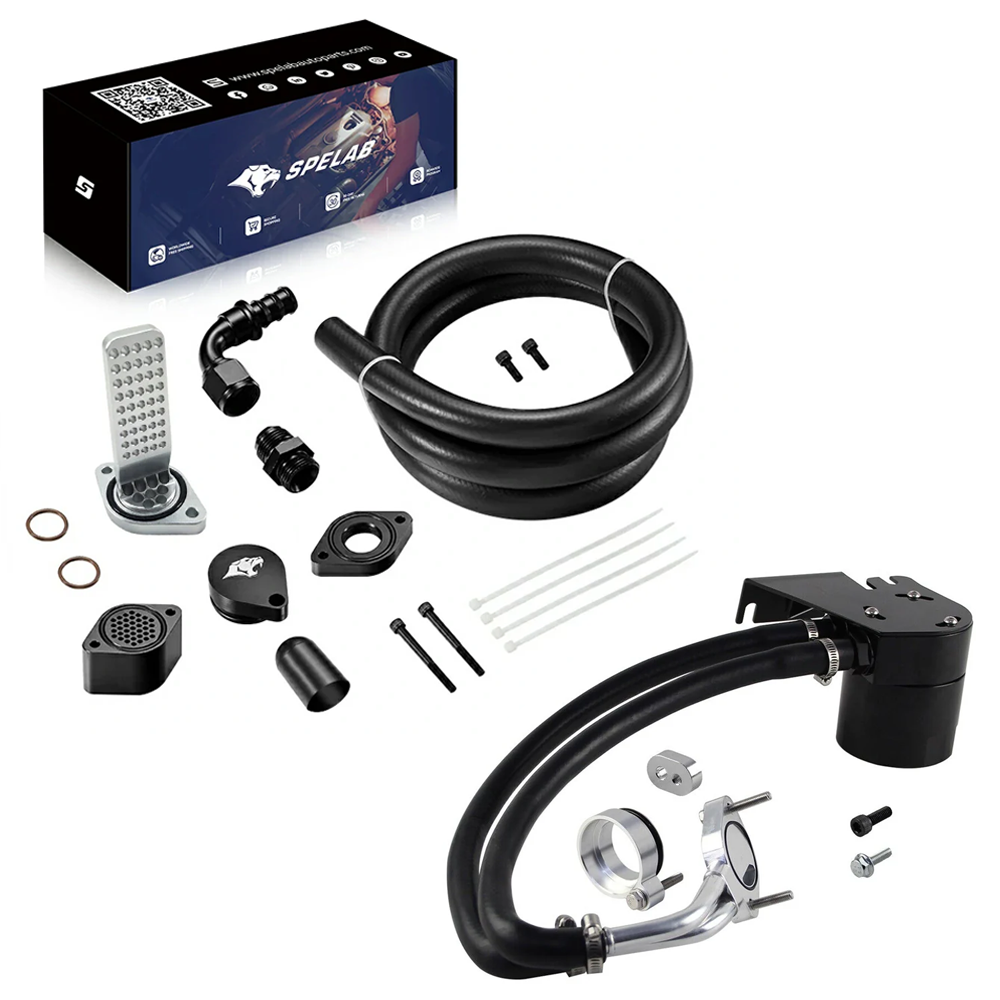
SPELAB's 6.7 Powerstroke CCV reroute/delete kit is offered in four configurations, and in two year splits (2011-16 and 2017+) that use different fittings - confirm the correct one for your truck before ordering:
- CCV (base configuration)
- CCV + Internal Catch Can
- CCV + Internal & External Catch Can
- Gen-2 Integrated Filtered CCV Reroute (rear-exit, filtered)
SPELAB markets the higher tiers as capturing progressively more oil mist with each added stage - the listing describes the fullest configuration as capturing effectively all oil molecules from the vented gases. Treat that as the manufacturer's stated design intent rather than independently audited test data; no real-world filtration system removes every trace of oil vapor at every operating condition.
Don't Blame The CCV System Too Fast
Some oil mist in a closed crankcase system is normal - it's not automatically a sign the factory system has failed. Before assuming you need a reroute, rule out other causes if you're seeing heavy oil in the intercooler piping or noticeable oil consumption: overfilled oil level, a clogged factory oil separator, excessive blow-by, worn piston rings, a failing turbo seal, a restricted or kinked CCV hose, or extended idling time. A reroute kit manages symptoms of oil mist reaching the intake; it doesn't fix a mechanical problem causing excessive blow-by in the first place.
Crankcase pressure matters as much as oil mist. A hose that's too narrow, kinked, restricted, or iced up in cold weather can raise crankcase pressure, which shows up as increased oil consumption or oil weeping from seals and gaskets. After installing any reroute kit, check for smooth hose routing with no sharp bends, and in cold climates, watch for condensation or ice buildup in the vent line during winter.
Legal And Compliance Notes
Crankcase ventilation is part of the factory emissions control design, not a separate system unrelated to compliance. This kit is an open-vent design that releases crankcase gases externally rather than returning them to the intake, which is a more significant deviation from the factory closed-loop design than a simple filter upgrade. The EPA states that the Clean Air Act prohibits tampering with emissions controls and manufacturing, selling, or installing aftermarket devices intended to defeat those controls, and this applies broadly to elements of a vehicle's original emissions design, not only to DPF and EGR hardware. See the related guides below for a fuller breakdown of the compliance trade-offs between different CCV modification approaches.
What The Kit Includes And Who It's For
For First-Time Installers
- Comes with the hardware for the configuration you choose, rather than requiring separate part sourcing.
- Generally a garage-level DIY install with basic hand tools, though difficulty and included instructions can vary by year and configuration - don't assume every kit version is equally beginner-friendly.
- Covered by SPELAB's standard refund policy if there's an issue with the product itself.
Fitment
- This kit is split into 2011-16 and 2017+ fitment groups with different fittings - confirm your exact model year, and for later model years, verify whether any sensor retention or modification is needed for your specific truck against the current listing before ordering.
- Installation difficulty and included instructions can vary by configuration and model year - if you're not confident working from general instructions, ask for the specific instructions for your exact kit before you buy, and confirm the return policy in case fitment doesn't work out for your configuration.
FAQ
Q: What are the practical benefits of a CCV delete/reroute for my Powerstroke?
A: It keeps oil mist and blow-by gases from fouling the intake tract, charge pipes, intercooler, and intake sensors the way the factory closed system can over time - which can mean less carbon/oil buildup to clean and more consistent sensor readings.
Q: How long does installation take, and do I need professional skills?
A: It's a garage-level DIY job for most owners with basic hand tools, typically completed in a few hours. The kit includes hardware and instructions, but if you're not comfortable working under the hood, a shop install is a reasonable option.
Q: Will a CCV delete affect the legal compliance of my vehicle?
A: It can. Crankcase ventilation is part of the factory emissions design, and modifying it on a public-road truck carries real compliance considerations under the Clean Air Act - it is not automatically a non-issue. See the legal section above before deciding between a closed reroute and a full delete.
Q: Will using a CCV delete kit affect my engine warranty?
A: A dealer generally can't void your entire warranty just for having aftermarket parts installed, but they can decline to cover a specific failure they can show was caused by that part - and the federal rules behind this (Magnuson-Moss) have more limited application on commercial-use trucks like F-450/F-550. Confirm with your engine manufacturer or dealer before installing any aftermarket parts, especially on a commercial-titled truck.
Q: What support does SPELAB offer if there's an issue with the kit?
A: SPELAB's standard refund policy applies - check the policy page for current terms and timeframes.
Q: I see oil in my intercooler pipes - do I automatically need a CCV reroute?
A: Not necessarily. Some oil mist in a closed system is normal. Heavy oil buildup or noticeable oil consumption can also point to an overfilled oil level, a clogged factory separator, excessive blow-by, worn rings, or a failing turbo seal - rule those out before assuming a reroute kit is the fix.
Q: Can this kit cause high crankcase pressure or oil consumption?
A: It can, if the vent hose is restricted, kinked, too narrow, or ices up in cold weather. Check for smooth, unrestricted hose routing after install, and watch for condensation or ice buildup in freezing conditions.

About the Author
John Lee
Mechanical Engineer | 10+ Years Experience
John has spent the last decade engineering and testing high-performance automotive components. Specializing in drivetrain durability and thermal management across Powerstroke, Cummins, and Duramax applications, he bridges the gap between OEM limitations and aftermarket performance. His philosophy: "Factory parts are just a starting point."