
What is an EGR Valve? (And Why It Might Be Choking Your Engine)
Updated on January 25, 2026.
⚡ Quick Summary (TL;DR)
For the mechanics and truck owners in a hurry:
- What it does: The EGR Valve recirculates exhaust gas back into your engine to lower Nitrogen Oxide (NOx) emissions. Great for the environment, tough on your engine.
- The Problem: Over time, diesel soot clogs the valve and intake manifold. This leads to black smoke, power loss, poor MPG, and the dreaded Check Engine Light.
- The Fix: You can clean or replace the valve (for street legality) or install an EGR Delete Kit (for off-road/competition reliability).
- Expert Tip: On engines like the Ford 6.0L Powerstroke, the EGR system is a known failure point that can blow head gaskets. Deleting it is a standard reliability mod for dedicated trail rigs.
1. The Trade-Off: Clean Air vs. Engine Health
Let's be real for a second. If you drive a modern diesel—whether it's a Duramax, Cummins, or Powerstroke—you know the struggle. The government and the EPA have cracked down hard on emissions over the last decade. They want what comes out of your tailpipe to be cleaner than the air that went in.
To make that happen, automakers had to bolt on a lot of complex hardware. One of the biggest culprits affecting your engine's longevity is the Exhaust Gas Recirculation (EGR) system.
Ideally, it saves the planet. Realistically? It can make a mess of your intake manifold. That's why so many enthusiasts look into Exhaust Gas Recirculation (EGR) delete kits for their off-road rigs. But before you start wrenching, you need to understand exactly what this valve does and why it fails.

2. How the EGR System Actually Works (The Mechanic's View)
2.1 What is EGR?
Think of the EGR system like asking a marathon runner to inhale their own exhale while sprinting. Exhaust Gas Recirculation (EGR) takes a portion of the hot, dirty exhaust gas from your exhaust manifold and routes it back into the intake to be burned again.
2.2 Why do they do this? (NOx reduction)
It’s all about heat. When your combustion chamber gets too hot (over 2,500°F), nitrogen and oxygen bond to create Nitrogen Oxide (NOx)—that’s the stuff that creates smog. By dumping inert exhaust gas back into the cylinder, it actually lowers the combustion temperature, which reduces NOx.
2.3 The Role of the EGR Valve
The EGR valve is the gatekeeper. It decides when to let that dirty exhaust back into your clean engine.
Normally, the valve is closed at idle (so your truck doesn't stall). Once you’re cruising down the highway and the engine is warm, the valve opens up, allowing exhaust soot to mix with the fresh air entering your engine. When you stomp on the gas pedal for passing power, it usually shuts again to give you full oxygen.
3. Problems: When the EGR Valve Goes Bad
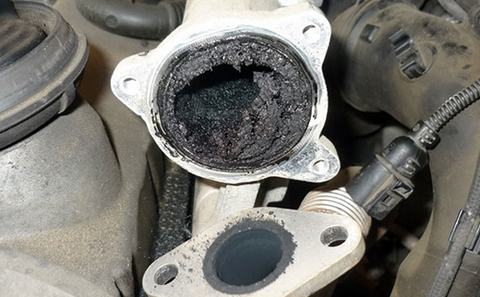
Here is where things get messy. Diesel exhaust is full of soot, unburnt fuel, and oil vapor. When you route that sticky mess back into the intake manifold, it doesn't just flow through—it sticks.
A Real-World Example:
"I had a guy bring in a 2008 Ford 6.4L Powerstroke last month. He complained the truck felt like it was towing a phantom trailer—zero power and terrible fuel mileage. When I pulled the intake elbow off, I was shocked. The carbon buildup was so thick and hard, I couldn't even fit a pencil through the ports. The EGR valve had stuck open, constantly feeding exhaust into the engine until it literally choked itself out."
3.1 Common Failure Symptoms:
- Stuck Open: Acts like a massive vacuum leak. Your truck will idle roughly, stall, or hesitate when you try to accelerate.
- Stuck Closed: You might hear "pinging" or knocking from the engine due to high cylinder temps, and you'll definitely trigger a Check Engine Light (P0401 code).
3.2 The Warning Signs:
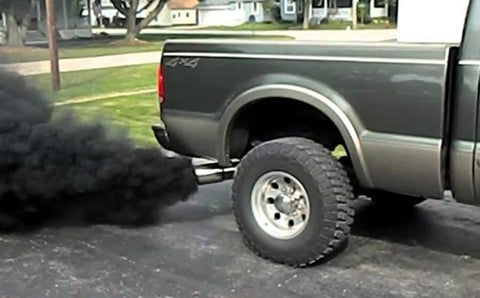
- Black Smoke: If you aren't tuned and you're rolling coal, your EGR might be stuck, starving the engine of oxygen.
- The "Soot Smell": A strong smell of raw diesel or exhaust inside the cab often means the EGR cooler or valve seals have failed.
- Loss of MPG: Your engine is working harder to breathe through a straw.
4. The Legal Side: Smog Checks and Deletes
Back in the day, the first thing we’d do with a farm truck was rip the EGR off. Many owners also looked at Diesel Particulate Filters (DPFs) as another restriction to eliminate.
But here is the reality check:
If you drive your truck on public highways in the US, the EPA requires your emissions systems to be intact. If you live in a state with strict emissions testing (like California, Colorado, or parts of New York), removing the EGR valve will cause you to fail your Smog Check instantly.
However, for off-road rigs, competition trucks, and dedicated farm vehicles, removing the EGR is often standard procedure to ensure reliability. The EGR valve replacement cost can be upwards of $300-$600 for the part alone, plus labor. For a truck that never sees the highway, deleting the failure point often makes more sense than constantly fixing it.
5. Mechanic’s Tips: How to Test Your EGR Valve
Before you throw money at parts, verify the problem. Here is how we do it in the shop:
1. The "Click" Test (Electronic Valves)
On many modern trucks, when you turn the key to the "On" position (engine off), you should hear the EGR valve cycle (a series of clicks) as it does a self-check. Silence often means a dead motor.
2. The Vacuum Test (Older Models)
If you have an older vacuum-operated valve, grab a hand vacuum pump. Apply suction. If the diaphragm doesn't hold vacuum, it’s toast.
3. The Visual Check
Pull the valve out. If it looks like a charcoal briquette, it’s clogged. Sometimes you can clean it, but usually, the damage is done.
6. Repair or Replace?
If you are committed to keeping the emissions system stock, you have two choices: clean it or replace it.
I’ve seen plenty of "mechanic in a bottle" additives claim to clean EGR valves. Honest opinion? They rarely work on diesels. The soot in a diesel engine turns into a tar-like sludge that fuel additives just can't touch. If you catch it very early, maybe. But if your truck is already stumbling, you need to pull the valve and clean it manually with carb cleaner and a wire brush, or just buy a new one.
7. Why People Delete the EGR (Off-Road Use)
Why do people go through the trouble of installing an EGR delete kit on their competition trucks? It’s not just for power—it’s for survival.
By blocking off the EGR:
- You stop feeding soot into your engine: Your intake manifold stays clean, ensuring maximum airflow.
- Lower Coolant Temps: The EGR cooler superheats your engine coolant. Removing it lowers the strain on your cooling system.
- No More Sticky Valves: You eliminate a mechanical failure point that could leave you stranded.
8. The 6.0L Powerstroke Scenario
If you own a Ford 6.0L Powerstroke, you know the nightmare. The EGR cooler on these engines is notorious for cracking. When it cracks, it allows coolant to leak into the cylinders (white smoke) or over-pressurize the cooling system (puking coolant).
Installing an EGR delete kit on a 6.0L isn't just a performance mod; for many off-road builds, it's considered mandatory "bulletproofing" to prevent a blown head gasket. Just remember, once you delete it, that truck is a dedicated off-road machine.
9. FAQ - Straight Answers
Q: What does EGR stand for?
A: Exhaust Gas Recirculation. It recycles exhaust back into the engine to cool combustion and lower emissions.
Q: Is it illegal to delete my EGR valve?
A: If you drive on public roads in the US, yes. It is a violation of the Clean Air Act. Delete kits are sold strictly for off-road and competition race vehicles.
Q: Will an EGR delete add horsepower?
A: On its own? A little. But the real gain is reliability and cleaner air for your engine. You will typically see better throttle response and lower exhaust gas temperatures (EGTs).
Q: Can I just unplug the EGR valve?
A: No. The computer (ECU) will freak out, throw codes, and likely put your truck into "Limp Mode," limiting your speed. You need a proper tuner/programmer to handle the electronic side of things.
Q: How much does a replacement EGR valve cost?
A: Expect to pay anywhere from $150 to $500 for the part, depending on if it's a Ford, Chevy, or Dodge. Labor can add another $200+ because they are often buried deep in the engine bay.

John Lee
Mechanical Engineer | 10+ Years Experience
John has spent the last decade engineering and testing high-performance automotive components. Specializing in drivetrain durability and thermal management across Powerstroke, Cummins, and Duramax applications, he bridges the gap between OEM limitations and aftermarket performance. His philosophy: "Factory parts are just a starting point."


