Updated on June 21, 2026.
Quick Answer: Is a 6.7 Powerstroke CCV Reroute Worth It?
A 6.7 Powerstroke CCV reroute can reduce oil mist in the intake, but the right setup depends on whether your Ford Super Duty is a daily F-250, towing F-350, high-mileage work truck, or off-road-only build.
The factory CCV system manages crankcase vapor and pressure. The tradeoff is oil mist. Over time, that vapor can leave oily film inside the turbo inlet, intake tube, charge piping, and intercooler boots. A light film is normal on many diesel trucks. Pooled oil, heavy smoke, dipstick pressure, or oil dripping from boots is not something to hide with a hose.
Use a CCV reroute, closed catch can, or oil separator for the right job: cleaner intake plumbing and better oil mist control. Do not use it as a bandage for worn rings, bad turbo seals, crankcase pressure problems, or emissions compliance shortcuts.
Key Takeaways
- A 6.7 Powerstroke CCV reroute mainly reduces oil mist entering the intake path; it does not add real horsepower by itself.
- A closed catch can or oil separator is usually the cleaner route for a street-driven F-250 or F-350 because it controls oil vapor without open-vent smell or drip.
- Oil film in the intake tube can be normal, but pooled oil, dipstick puffing, smoke, or wet intercooler boots means you need diagnosis first.
- Street trucks should keep required emissions equipment intact and should not disable sensors or monitoring systems to hide diagnostic trouble codes.
- Fitment, hose diameter, drain access, cold-weather condensation, and service routine matter more than a shiny can mounted in a bad spot.
What the Factory CCV System Does on a 6.7 Power Stroke
The factory CCV system on a 6.7 Power Stroke routes crankcase vapor back toward the intake so the crankcase can breathe while the truck stays within factory emissions design.
Crankcase vapor carries air, moisture, combustion blow-by, and oil mist. The system keeps that vapor moving so pressure does not build inside the crankcase. That pressure control matters because excess crankcase pressure can push oil past seals, increase seepage, and turn a small leak into a driveway mess.
The tradeoff shows up on higher-mileage Super Duty trucks. Pull the intake tube, turbo inlet boot, or charge pipe after years of towing and heat cycles, and you may see oily residue. A light film is not rare. The question is whether the oil is normal vapor carryover or a sign of a deeper engine problem.
For a full background on crankcase ventilation terms before you compare parts, see our guide on what a CCV system does.
Why 6.7 Powerstroke Owners See Oil in the Intake
Oil in the intake on a 6.7 Powerstroke usually comes from crankcase vapor, turbo-side oil leakage, overfilled oil, heavy blow-by, or years of normal oil mist collecting in boots and piping.
Start with the amount. A light oil film inside the intake tube or charge pipe is different from oil dripping out of an intercooler boot. A tow rig that runs hot, pulls heavy, idles on a jobsite, or racks up long highway miles can collect more residue than a lightly used daily driver.
Check the turbo inlet, intake boot, charge pipe couplers, intercooler boots, and CCV connection point. Wipe the area clean, drive the truck, then inspect again. That tells you if the oil is old residue or active carryover.
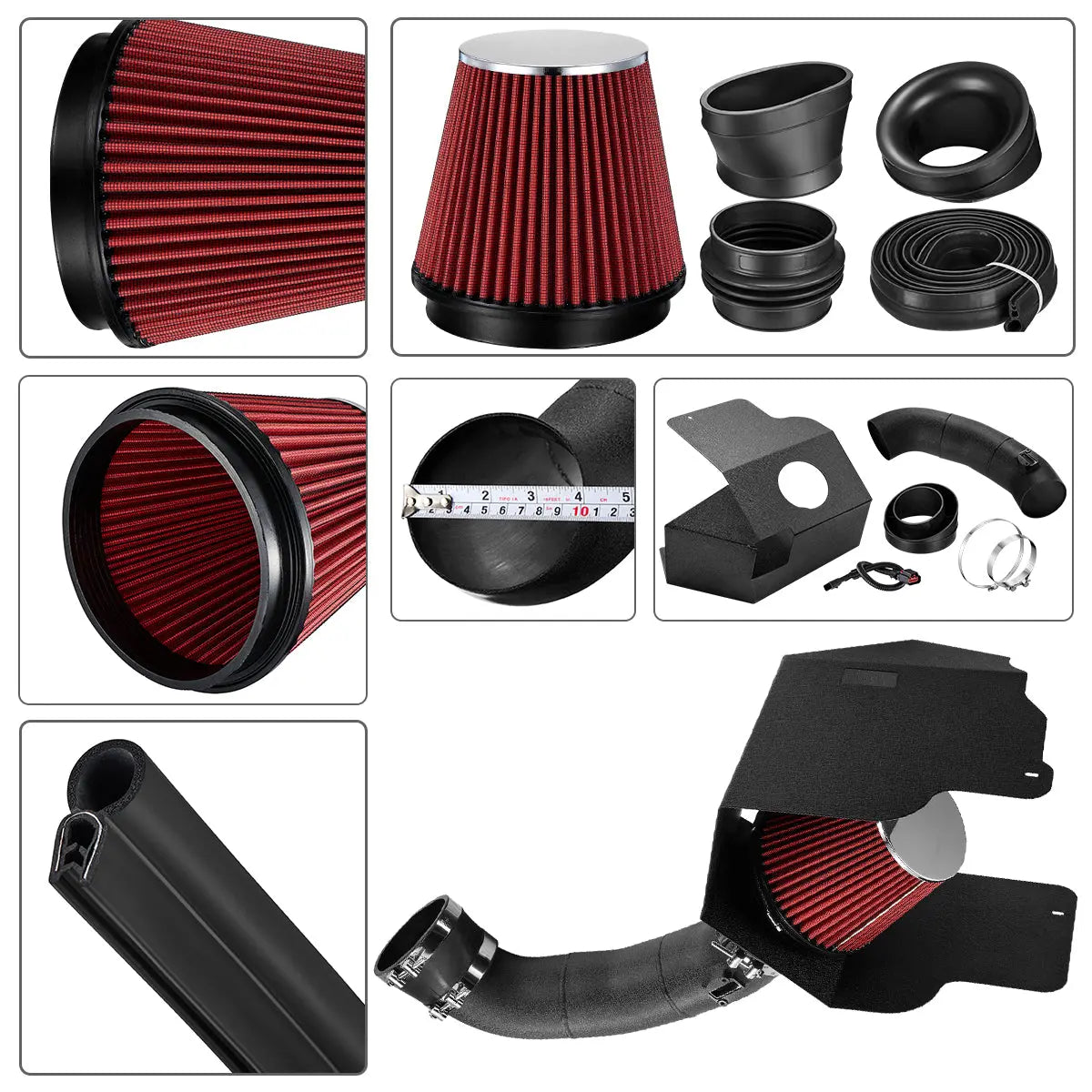
Inspect the intake tube, turbo inlet, and boot area before assuming a CCV reroute kit is the fix.
| What You See | Likely Cause | First Check | Does a CCV Mod Help? |
|---|---|---|---|
| Light oil film inside intake tube | Normal CCV oil mist over time | Clean and monitor after driving | Yes, a catch can or separator can reduce future film |
| Oil residue around charge pipe boots | Oil mist plus boot seepage under boost | Inspect boots, clamps, and boost leaks | Helps oil source, not a loose boot |
| Pooled oil in piping | Heavy blow-by, turbo seal concern, or excessive oil carryover | Check crankcase pressure and turbo condition | Not by itself |
| Oil smell after parking | Vent routing, drip, overfilled can, or hose issue | Inspect hose end and catch can drain level | Only if routed and maintained correctly |
| Oil leaks after a CCV change | Restriction, poor hose routing, frozen line, or wrong fitting size | Check hose diameter, routing, and pressure | No, fix the routing first |
When Oil in the Intake Is Normal vs When It Is a Problem
Light oil film in a diesel intake can be normal, but pooled oil, wet boots, dipstick pressure, smoke, or repeated seal seepage means the truck needs diagnosis before a CCV reroute kit.
Use your eyes before your wallet. A thin coat inside the intake tube after 80,000 miles is not the same as oil dripping from the lower intercooler boot. If the oil cap dances, the dipstick puffs, or the charge pipe has oil pooling, test crankcase pressure and check turbo condition before buying parts.
| Condition | Normal or Problem? | What to Do Next |
|---|---|---|
| Thin oil film in intake tube | Often normal on a used diesel | Clean, monitor, and consider a closed catch can if it keeps returning |
| Oily residue at one boot clamp | Could be boot seep or boost leak | Inspect clamp tension, boot condition, and charge pipe fitment |
| Oil pooling in charge piping | Problem | Check turbo seals, blow-by, overfilled oil, and crankcase pressure |
| Smoke plus heavy crankcase vapor | Problem | Test engine condition before any CCV mod |
| Oil leak starts after reroute install | Problem caused by setup | Look for restriction, kinked hose, frozen line, or poor routing |
CCV Reroute vs Catch Can vs Stock Filter
A stock CCV system is the safest baseline for street use, a closed catch can targets oil mist control, and an open reroute should be treated as an off-road-only choice with smell, drip, and compliance concerns.
Truck owners use the word “delete” loosely, but most are really choosing between stock routing, a closed catch can, an oil separator, or an open reroute. Those choices are not the same.
A closed catch can or oil separator is usually the cleaner path for a street truck because it keeps vapor managed while trapping some oil mist. An open vent can smell, drip, collect condensation, and create inspection problems. Stock still makes sense for a new truck under warranty, a strict emissions area, or an owner who does not want extra maintenance.
| Setup | Best For | Strength | Tradeoff | Street Truck Fit? |
|---|---|---|---|---|
| Stock CCV | Daily drivers, warranty-sensitive trucks, emissions inspection areas | Factory pressure control and factory routing | Oil mist can return to the intake | Yes |
| Closed catch can or oil separator | Tow rigs, high-mileage trucks, owners seeing oil film in the intake | Traps oil mist while keeping a cleaner routed system | Needs draining and winter checks | Usually the most practical path when configured legally |
| Open CCV reroute | Off-road-only or competition use where legal | Keeps oil mist out of the intake path | Smell, oil drip, condensation, inspection, and emissions concerns | Not recommended for street-driven trucks |
| Cheap DIY hose-only setup | Temporary testing only | Low cost | Poor fittings, kinks, freezing, and pressure risk | No |
What a 6.7 Powerstroke CCV Reroute Helps — and What It Does Not Fix
A 6.7 Powerstroke CCV reroute or catch can helps control oil mist entering the intake, but it does not fix worn engine internals, excessive blow-by, turbo seal failure, or bad crankcase pressure routing.
Use this as the decision filter. If the only complaint is light oil film in the intake, a quality separator may be worth it. If the truck has heavy blow-by, oil dripping from multiple seals, smoke, or pressure pushing the dipstick, test the engine before you mod the hose routing.
| Problem | Does a CCV Mod Help? | Why |
|---|---|---|
| Oil mist in the intake tube | Yes | A catch can or separator can trap part of the oil mist before it reaches the intake |
| Oil film in charge piping | Yes, if CCV oil carryover is the source | Less oil vapor upstream can mean less residue downstream |
| Intercooler boot oil seep | Partly | It can reduce oil source, but boots and clamps still need repair if leaking |
| Excessive blow-by | No | Blow-by is an engine condition, not a hose-routing issue |
| Turbo seal failure | No | The turbo still needs diagnosis if oil is coming from the compressor side |
| Crankcase pressure from restriction | No | A bad reroute can make pressure worse if hose size, fittings, or routing are wrong |
| Check engine light after modification | No | Do not disable sensors or monitoring systems; inspect the setup and stay compliant |
Street Truck, Tow Rig, or Off-Road Build: Which Setup Makes Sense?
A street-driven 6.7 Powerstroke usually needs a compliant closed setup, a tow rig needs easy maintenance and oil control, and an off-road-only build still needs proper crankcase pressure management.
A daily-driven F-250 in a county with emissions checks is not the same truck as a farm-only rig or a trailer queen. A hotshot F-350 that pulls every week also has different needs than a weekend Super Duty with 8,000 miles a year.
Build around the job. The setup should handle vibration, heat, drain access, hose routing, freezing weather, and inspection rules. A shiny can mounted where you cannot drain it is not a good mod. A hose that sags, kinks, or freezes is worse than stock.
| Truck Use | Best Direction | What to Watch | Shop Advice |
|---|---|---|---|
| Daily street F-250/F-350 | Stock system or compliant closed separator | Emissions compliance, warranty, DTC monitoring | Do not vent to atmosphere or disable monitoring |
| Towing and payload truck | Closed catch can with easy drain access | Oil collection rate, hose heat, clamp security | Check the can after the first 500 miles, then at each oil change |
| High-mileage work truck | Test blow-by first, then decide | Crankcase pressure, seal seepage, turbo condition | Do not use a can to hide a tired engine |
| Cold-weather truck | Short, protected, well-drained routing | Condensation, freezing, restriction | Long low spots in hoses are trouble |
| Off-road-only build | Legal-use-specific reroute or separator | Odor, oil drip, pressure control, catch capacity | Keep the crankcase breathing freely without making a mess |
Model-Year Fitment: 2011–2016, 2017–2019, 2020+ Super Duty
6.7 Powerstroke CCV reroute fitment should be checked by model year, F-250/F-350 engine-bay layout, hose routing, sensor layout, and whether the kit is built for that exact Super Duty generation.
Do not assume every 6.7 Power Stroke engine bay is identical. The 2011–2016 trucks, 2017–2019 trucks, and 2020+ Super Duty applications may differ in packaging, bracket location, hose routing, and available space around the intake and battery tray.
Before buying a 6.7 Powerstroke CCV reroute kit, match the product application to your truck year, cab/chassis layout, engine bay accessories, and preferred catch can location. Fitment beats guessing every time.
| Truck Group | What to Verify | Why It Matters |
|---|---|---|
| 2011–2016 F-250/F-350 6.7 Powerstroke | Hose path, bracket clearance, intake tube routing | Early Super Duty packaging can make service access tight |
| 2017–2019 Ford Super Duty 6.7 Power Stroke | Battery tray area, intake routing, mounting room | Newer body/engine bay packaging can change install space |
| 2020+ F-250/F-350/F-450/F-550 | Product application range, sensors, routing, emissions status | Later trucks need exact fitment confirmation before any CCV change |
Before You Buy a 6.7 Powerstroke CCV Reroute Kit
A good 6.7 Powerstroke CCV reroute kit should fit the truck, keep crankcase flow unrestricted, control oil mist, allow easy draining, and avoid sensor or emissions shortcuts.
We build and test parts around real engine-bay constraints: hose angle, drain access, vibration, heat soak, and bracket strength. A clean install matters more than a fancy-looking can. If the can is buried where you cannot drain it, the system will get neglected. If the hose kinks or freezes, it can create pressure trouble.
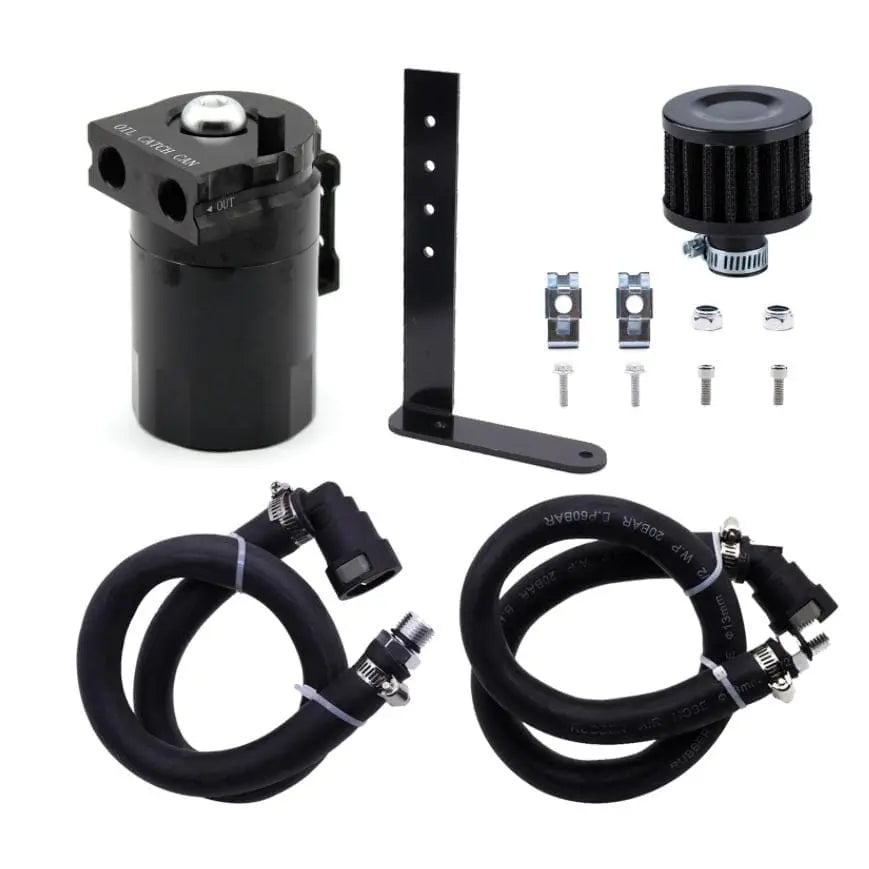
A catch can only works well when the routing, drain access, and service routine are right.
| Buyer Type | Recommended Setup | Avoid |
|---|---|---|
| Daily-driven F-250/F-350 | Stock or closed catch can | Open vent and sensor shortcuts |
| Tow rig | Closed catch can with easy drain access | Hard-to-service can mounted near hot parts |
| Cold-weather truck | Short, protected routing with no low traps | Long low hose runs that collect condensation |
| High-mileage truck | Diagnose blow-by first | Using a CCV mod to hide engine wear |
| Off-road-only build | Legal-use-specific reroute with proper pressure control | Restricted hose routing or uncontrolled oil drip |
Legal, Warranty, and Emissions Considerations
Any CCV-related change on a street-driven diesel truck should be checked for emissions compliance, warranty impact, diagnostic monitoring, and local inspection rules before installation.
The EPA states that motor vehicle engines and trucks must meet Clean Air Act emissions standards, and it identifies defeat devices and tampering as violations when parts bypass, defeat, or render emission controls inoperative. Read the official EPA Air Enforcement page here: EPA Air Enforcement.
Keep the street-truck rule simple. Do not disable sensors. Do not hide diagnostic trouble codes. Do not vent oil vapor in a way that violates local law. If the truck is still under warranty, ask how a CCV change affects coverage before cutting hoses or changing routing.
Installation Checklist: Hose Routing, Drain Access, and First 500 Miles
A safe CCV setup needs correct hose diameter, unrestricted flow, heat-safe routing, secure clamps, drain access, cold-weather moisture control, and a post-install check after the first 300–500 miles.
Check the truck first. Pull the intake tube and inspect the oil film. Check for boost leaks at oily boots. Look for oil seepage around seals. Watch for smoke, crankcase puffing, and pressure signs. A healthy 6.7 Powerstroke with normal vapor is a different job than a tired work truck with heavy blow-by.
Route the system like a mechanic, not a parts-store experiment. Keep hoses away from sharp edges, exhaust heat, steering shafts, belt paths, and spots that sag. Use fittings that match the hose. Leave room to drain the can. Check it after the first 300–500 miles, then build a service interval based on how much oil the truck actually collects.
| Check Point | Good Setup | Bad Setup |
|---|---|---|
| Hose routing | Short, smooth, protected, no low traps | Kinked, sagging, rubbing, heat-soaked |
| Crankcase flow | No restriction, correct fitting size | Small fittings, sharp bends, clogged media |
| Drain access | Reachable during oil service | Buried behind brackets or hot parts |
| Cold weather | Moisture can drain and hoses stay clear | Condensation pools and freezes |
| Service routine | Checked after 300–500 miles and at oil changes | Installed once and forgotten |
CCV Setup Reference After Diagnosis
A CCV reroute kit or catch can should be selected after you inspect oil residue, crankcase pressure behavior, truck use, emissions needs, and fitment on the exact 6.7 Powerstroke application.
Owners chasing oil film around the turbo inlet should inspect the intake tube, boots, and diesel air intake kit area while the system is apart. Oil control and air leaks often show up together on hard-used trucks.
For owners comparing kit types, the CCV reroute kit category is the better starting point than a universal hose-only setup. For oil vapor control, a drainable diesel oil catch can keeps the decision focused on serviceability instead of guesswork.
For a deeper comparison of catch can basics, read our guide on how an oil catch can works. If you want the 6.7-specific routing breakdown, compare it with our guide on how to reroute 6.7 Powerstroke CCV.
Final Recommendation: Do the Mod for the Right Reason
A 6.7 Powerstroke CCV mod is worth considering when oil mist is dirtying the intake path, but it should be done with pressure control, legality, maintenance, and fitment in mind.
Leave a healthy stock street truck alone if you do not want extra service work. Use a closed catch can or separator when you want cleaner intake plumbing without creating smell, drip, or inspection problems. Treat open venting as an off-road-only route where legal, and do not use a reroute to cover up heavy blow-by or a tired engine.
Build it like a truck part. Rigid mounting, clean hose routing, serviceable drain access, and no restriction. That is the difference between a useful mod and a problem that shows up on the side of the interstate with a trailer behind you.
FAQ
Q: What does a 6.7 Powerstroke CCV reroute do?
A: A 6.7 Powerstroke CCV reroute changes where crankcase vapor and oil mist go. A good setup reduces oil entering the intake path while keeping crankcase pressure under control.
Q: Is a CCV reroute the same as a CCV delete?
A: Not exactly. “Delete” is common slang, but most owners are choosing between stock routing, a closed catch can, an oil separator, or an open reroute. Those setups have different legal, smell, maintenance, and pressure-control tradeoffs.
Q: Does a CCV reroute add horsepower?
A: No direct horsepower gain should be expected. The real goal is reducing oil mist in the intake path and keeping boots, charge piping, and the turbo inlet cleaner over time.
Q: Will a CCV reroute stop blow-by?
A: No. Blow-by comes from combustion pressure passing the piston rings. A CCV setup can manage vapor routing, but it cannot repair worn rings or a tired engine.
Q: Is a 6.7 Powerstroke CCV reroute legal on a street truck?
A: It depends on configuration and local law. Street-driven trucks should retain required emissions equipment, should not disable sensors, and should avoid open venting that creates emissions or inspection problems.
Q: Is a catch can better than venting to atmosphere?
A: For most street-driven trucks, a closed catch can or separator is the cleaner choice because it controls oil mist without adding open-vent smell, oil drip, or inspection trouble.
Q: How often should I drain a diesel catch can?
A: Check it after the first 300–500 miles, then at every oil change until you know the truck’s collection rate. Tow rigs, high-idle work trucks, and cold-weather trucks may need more frequent checks.

About the Author
John Lee
Mechanical Engineer | 10+ Years Experience
John has spent the last decade engineering and testing high-performance automotive components. Specializing in drivetrain durability and thermal management across Powerstroke, Cummins, and Duramax applications, he bridges the gap between OEM limitations and aftermarket performance. His philosophy: "Factory parts are just a starting point."