
Updated July 14, 2026.
A DPF, or diesel particulate filter, is the soot trap in a modern diesel exhaust system. It helps catch diesel particulate matter before it leaves the tailpipe, but when it clogs, fails regeneration, or gets misdiagnosed, it can turn a normal work truck into a slow, warning-light-filled headache.
For a diesel pickup owner, the real question is usually not "what does DPF stand for?" It is more like this: "Can I keep driving?", "Why does my truck keep regenerating?", "Is the filter actually clogged?", or "Am I about to spend money on the wrong repair?" This guide answers those questions in plain shop language.
Key takeaway: A DPF catches soot, burns it during regeneration, and eventually holds non-burnable ash. Do not jump straight to replacement or delete hardware until you confirm soot load, ash load, differential pressure, failed regen history, sensor health, and the driving pattern that caused the problem.

What Does a DPF Do?
A diesel particulate filter sits in the exhaust stream and captures soot produced during diesel combustion. Most modern pickup systems work with a diesel oxidation catalyst (DOC), exhaust temperature sensors, differential pressure sensors, and on many newer trucks, SCR and DEF systems downstream.
The DPF is not a muffler and it is not a magic cleaner. It is a filter that has to manage two different materials:
- Soot: carbon-rich material that can be burned during regeneration.
- Ash: non-burnable residue from oil additives and long-term use that eventually requires cleaning or replacement.
That soot-versus-ash difference matters. A truck with high soot may need a successful regeneration and a root-cause diagnosis. A high-ash filter may be at the end of its useful service life even if the engine is running correctly.

The 5-Second Tailpipe Test for a Cracked Filter
Before you plug in a scan tool, walk to the back of the truck and wipe a finger inside the tailpipe tip. On a healthy emissions-equipped 6.7 Cummins, Powerstroke, or Duramax, the outlet should be surprisingly clean because the filter is trapping soot upstream.
If your finger comes out coated in thick, dry black soot, that is a red flag. It can mean the substrate is cracked, melted, or letting soot bypass the trap. No amount of forced regeneration will repair a mechanically broken filter. At that point, the conversation moves toward inspection, cleaning only if the core is intact, or replacement.
This quick check is not a full diagnosis. A clean tailpipe does not prove everything is perfect, and a dirty tip can be influenced by prior exhaust work. But for a truck owner standing in a driveway, it is a useful first clue before spending money.
How DPF Regeneration Works
Regeneration is the burn-off process that turns trapped soot into a smaller amount of ash. If the system gets hot enough during normal driving, passive regeneration can happen in the background. If the truck needs help, the ECM may command active regeneration by raising exhaust temperature.
Where owners get into trouble is the short-trip cycle. A diesel pickup that idles for long periods, drives five minutes to work, or shuts down during active regen may never complete the burn. The soot load climbs, the filter gets more restricted, and the truck starts asking for regen more often. This short-trip idle cycle is one of the biggest reasons a healthy-looking truck develops exhaust-filter complaints.
Frequent regen is not always a filter problem by itself. It can be a symptom of an injector issue, boost leak, bad thermostat, EGR problem, failed sensor, or a driving pattern that never lets the exhaust stay hot long enough. If your truck keeps asking for regen every 50-100 miles, this frequent regeneration pattern is worth checking before blaming the filter.
Blocked DPF Symptoms That Real Truck Owners Notice
A blocked DPF usually shows up under load first. Around town, the truck may feel acceptable. Hook up a trailer, climb a grade, or merge onto the highway, and the restriction becomes obvious.
| Symptom | What It Can Mean | First Check |
|---|---|---|
| Reduced fuel economy | The truck is burning more fuel to manage the exhaust system | Record MPG change and miles between regen events |
| Weak power or derate | The ECM is protecting the truck from a restriction or emissions fault | Note road speed, trailer load, RPM, and warning message |
| Check engine light | The truck has stored emissions or airflow data it wants you to read | Scan exact codes such as P2002, P242F, or P2463 before guessing |
| Frequent regeneration | The system is asking for burn cycles too often | Track miles or engine hours between events |
| Hard starting or rough cold operation | Usually not caused by the exhaust filter alone | Treat it as a cold-start, fuel, or electrical problem until data says otherwise |
| Louder exhaust or unusual smell | Possible leak, failed burn cycle, or damaged substrate | Inspect tailpipe cleanliness, joints, sensor bungs, and clamps |
If the truck is already in derate, do not try to "drive it clean" while towing heavy. That is how a manageable DPF complaint becomes a tow bill with a trailer attached.
Do Not Blame the DPF Too Fast
A clogged exhaust filter is often the result, not the original cause. Think of it like a trash can: if it keeps filling too fast, the problem may be what is being thrown into it.
- Bad injector: over-fueling can create excess soot.
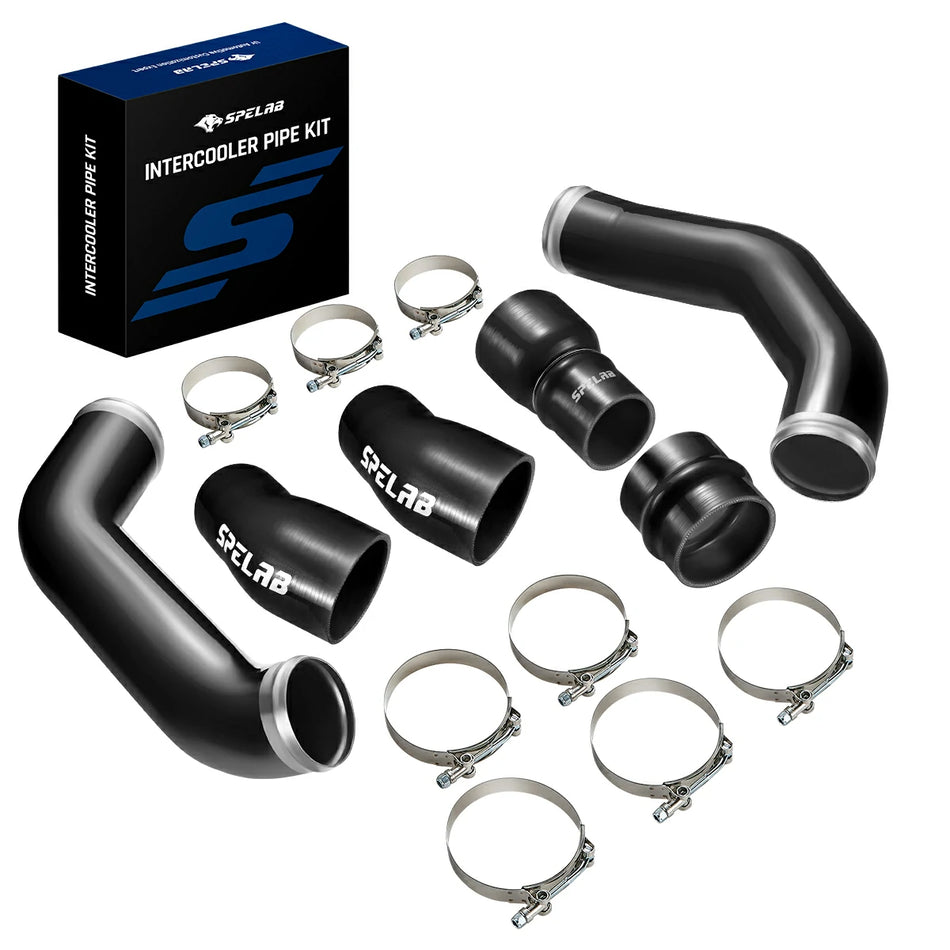
- Boost leak: low air under load can create smoke and soot. A torn boot or leaking intercooler pipe can make the DPF work harder.
- Stuck-open thermostat: low coolant temperature may prevent normal regen conditions.
- Dirty or failing EGR system: poor EGR control can increase soot production.
- Bad differential pressure sensor or hoses: wrong pressure data can trigger false conclusions.
- Wrong oil: high-ash oil can shorten DPF life over time.
- Short trips and idling: the exhaust never stays hot enough to complete regen.
If you need a deeper step-by-step path after warning lights appear, use this clogging diagnosis before deciding whether the filter needs cleaning, replacement, or a different repair.

What to Check Before Repair, Replacement, or Delete Talk
Before you spend money, collect the facts. A parts decision without data is how owners replace the same emissions components twice.
- Scan for codes. Do not stop at the generic OBD message. Record DPF, EGR, boost, temperature, NOx, SCR, and DEF-related codes.
- Check DPF differential pressure. Compare readings at idle, steady cruise, and load if possible. A pressure number without engine speed and load context is weak evidence.
- Separate soot load from ash load. Soot may burn off during regen. Ash does not.
- Review regeneration history. Failed, interrupted, or too-frequent regens point toward a root-cause problem.
- Inspect pressure sensor hoses. Melted, cracked, plugged, or loose hoses can imitate a bad filter.
- Confirm engine temperature. A diesel running too cool may never complete regen properly.
- Look for air and fuel problems. Boost leaks, injector issues, dirty MAF/MAP readings, and EGR faults can all overload the DPF.
For a working truck, the best repair is the one that solves the reason the DPF loaded up in the first place. Replacing or deleting a filter without fixing the smoke source just moves the problem somewhere else.
DPF Repair, DPF-Back Exhaust, or DPF Delete: Which Path Fits?
There are several routes, and they do not serve the same owner. A street-driven emissions-equipped truck should stay compliant. A closed-course competition truck or off-road-only build has different parts needs, but it still needs correct tuning and fitment.
| Option | Best For | What to Watch |
|---|---|---|
| Complete a normal service regen | High soot load with working sensors and no major root-cause fault | Do not force regen if the truck has fuel, oil, coolant, or safety-related faults |
| Forced regeneration with a scan tool | High soot load after basic causes are checked | Do not use forced regeneration as a bandage for over-fueling, coolant leaks, or unsafe exhaust temperatures |
| DPF bake and blow cleaning | Ash-loaded filters that are otherwise physically intact | Cleaning cannot repair a melted, cracked, or soot-bypassing substrate |
| OEM or aftermarket DPF replacement | Street trucks with failed, cracked, or end-of-life filters | Find and fix the soot source first |
| DPF-back exhaust pipe | Owners who want sound or rear-section changes while keeping the DPF in place | It does not remove a clogged DPF or stop regeneration |
| DPF delete kits | Closed-course, competition, export, or off-road-only applications where legal | Requires correct tuning, fitment, and compliance awareness |
Compliance note: In the United States and many other regions, removing or disabling emissions equipment on public-road vehicles can violate emissions laws. DPF delete pipes, delete tuners, and related hardware should be discussed only for legal off-road, competition, export, or non-road applications. Always confirm local rules before modifying any emissions system.
Platform Notes: Cummins, Powerstroke, and Duramax
The DPF job is similar across modern diesel trucks, but the repair path changes by platform, year, cab configuration, and whether the truck is still emissions-equipped.
6.7 Cummins
Ram 2500 and 3500 owners often notice frequent regen, soot-related codes, or exhaust restriction after short-trip use or heavy idling. If the truck is legally dedicated to off-road or competition use, fitment is year-sensitive: a 2013-2018 6.7 Cummins DPF delete race pipe is not the same decision as a 2019+ truck or a cab-and-chassis setup.
6.7 Powerstroke
Powerstroke owners should separate DPF restriction from DEF/SCR and NOx sensor faults. A truck asking for DEF, setting SCR efficiency codes, or showing countdown warnings may not be fixed by DPF hardware. For legal race-only exhaust builds, a 6.7 Powerstroke DPF delete race pipe needs matching year fitment and tuning support.
6.6 Duramax
Duramax owners need to watch generation differences. LML and L5P trucks use different emissions, tuning, and exhaust layouts. A LML Duramax DPF delete race pipe and a L5P Duramax DPF delete race pipe belong to different truck generations, so do not order from engine displacement alone.
Real-World Owner Scenarios
The Short-Trip Commuter
This owner drives a diesel like a gas car: short trips, long idle time, low exhaust temperature, and frequent shutdowns. The truck may never complete active regen. The fix is often driving pattern, sensor diagnosis, thermostat health, or proper service regen, not automatically a new filter.
The Towing Owner
A tow rig may keep the exhaust hot enough for regen, but it also exposes boost leaks, bad sensors, high soot production, and weak engine cooling. If EGT climbs, power drops, and regen frequency increases while towing, inspect air, fuel, and exhaust data together.
If you tow fifth-wheels or equipment trailers and want a cleaner rear-section exhaust change without removing factory emissions hardware, a high-flow DPF-back exhaust pipe is the more sensible lane than delete hardware. It keeps the filter in place while improving the pipe section after the emissions hardware for sound, appearance, and rear-section flow.
The Used Deleted Truck Buyer
This is the scary one. A used truck may have missing DPF, unplugged sensors, incomplete tuning, readiness monitors that never set, or DEF/SCR hardware still half-connected. If you bought one and the dash still asks for DEF, that is not a DPF mystery. It is a system mismatch.
Before buying or repairing a modified truck, read the legal risk breakdown so you understand inspection, resale, tuning, and return-to-stock costs.

Product Direction for Legal Off-Road or Race Builds
If the truck is a legal closed-course, off-road, export, or competition-only build, choose parts by platform, year range, pipe diameter, cab configuration, and tuning support. Universal guesses create exhaust leaks, fitment problems, and angry weekends under the truck.
SPELAB Fitment Picks for Race-Only DPF Exhaust Builds
Ford Super Duty owners can start with a year-matched Ford Super Duty DPF race pipe. Ram owners should match engine year and chassis style before choosing a late-model Cummins DPF race pipe. Duramax owners need to separate LML and L5P fitment before ordering.
For public-road trucks, the smarter first move is diagnosis, cleaning, repair, or a compliant DPF-back setup rather than emissions removal.
FAQ
What does DPF stand for?
DPF stands for diesel particulate filter. It traps soot from diesel exhaust and burns much of that soot during regeneration.
Can I drive with a clogged DPF?
Light warning stages may allow limited driving, but a severe restriction, derate, high exhaust temperature, or repeated failed regen should be handled quickly. Avoid towing hard until the cause is diagnosed.
Does DPF delete stop DEF problems?
Not by itself. DEF belongs to the SCR side of the emissions system. A truck can have DPF hardware removed and still have DEF, NOx sensor, SCR, or calibration problems if the system is mismatched.
Why does my diesel keep regenerating?
Common causes include short trips, excessive idling, low coolant temperature, bad sensors, boost leaks, injector problems, EGR faults, or a DPF that is ash-loaded and near the end of service life.
Can a DPF be cleaned instead of replaced?
Sometimes. Professional cleaning may help an ash-loaded but physically intact filter. It will not fix a melted substrate, cracked filter, broken sensor system, or engine problem that keeps making excess soot.
Is a DPF-back exhaust the same as a DPF delete?
No. A DPF-back exhaust changes the exhaust section after the DPF and keeps the filter in place. A DPF delete removes or bypasses emissions hardware and is not legal for public-road use in many places.
Practical Takeaway
A DPF is not the enemy. It is a filter doing a difficult job in a hot, dirty, sensor-driven exhaust system. When it works, you barely notice it. When something upstream goes wrong, it becomes the warning sign everyone blames.
For a street truck, diagnose first and keep the emissions system legal. For a race-only or off-road build where emissions changes are allowed, choose year-correct hardware, proper tuning, and a complete plan. Either way, the right answer starts with data, not panic.

About the Author
John Lee
Mechanical Engineer | 10+ Years Experience
John has spent the last decade engineering and testing high-performance automotive components. Specializing in drivetrain durability and thermal management across Powerstroke, Cummins, and Duramax applications, he bridges the gap between OEM limitations and aftermarket performance. His philosophy: "Factory parts are just a starting point."





1 comment
Do you have a delete system for the Duramax 2019 with a muffler, thanks Doc