Updated on August 12, 2026.
The air intake system supplies the engine with the air it needs for combustion. Factory intake systems are engineered to balance filtration, noise, emissions compliance, weather protection, packaging, and consistent airflow - and some only become genuinely restrictive once airflow demand exceeds that original design target, such as with towing, higher elevation, or added power elsewhere in the build. Upgrading to a cold air intake is one of the more common first steps drivers take to address that. Here's what it actually changes, what to look for, and what to check before you buy.
Don't Blame The Intake Too Fast
Reduced power or a rougher-feeling engine isn't automatically an intake problem. Before spending money on an upgrade, rule out a dirty stock filter, a boost leak, a dirty or failing MAF sensor, a damaged turbo inlet hose, an intercooler pipe leak, or a tuning issue - all of these can mimic what feels like a "restrictive intake."
OEM Plastic Vs. Aluminum: An Honest Comparison
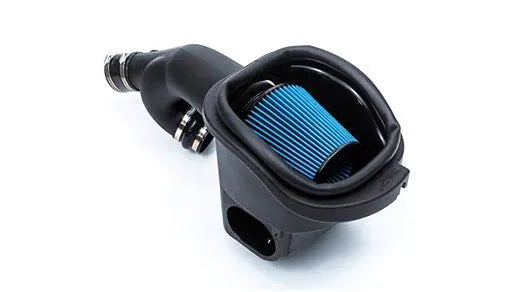
Aftermarket aluminum tubing isn't automatically better than the factory plastic intake tube - each material has real trade-offs. Factory plastic has genuine advantages: it insulates against underhood heat far better than aluminum (which readily absorbs and conducts engine bay heat), it can be molded into smooth, complex one-piece shapes that are hard to replicate with metal tubing, it doesn't corrode, it's lighter, and the factory MAF section is already precisely calibrated for that exact geometry. Aluminum's real advantages are rigidity, resistance to certain kinds of mechanical damage, appearance, and ease of custom fabrication - not automatically lower intake air temperature or better sealing. Sealing quality actually comes down to coupler design, clamps, and silicone boot fitment, not the tubing material itself.
What A Cold Air Intake Upgrade Actually Changes
An upgraded intake can improve airflow and intake air temperature versus a genuinely restrictive stock setup. How much of a real difference that makes varies significantly by platform, how restrictive your factory setup already was, and whether you're comparing dyno numbers or seat-of-the-pants feel - there's no single percentage that applies across every engine and every intake design. On diesel trucks specifically, be cautious with "throttle response" language - diesels don't work like a traditional gas-engine throttle body, and what owners usually notice is turbo sound, a subjective sense of spool, and torque delivery under load rather than classic throttle response. For real, platform-specific expectations and testing considerations instead of a generic estimate, see our how much horsepower does a cold air intake add guide and our do cold air intakes really help trucks guide.

Filtration Matters As Much As Airflow
A higher-flow filter isn't automatically a better filter. For work trucks, farm use, and dusty or jobsite environments, filtration efficiency and dust capacity matter more than a theoretical maximum airflow number - a system that flows more air but lets fine dust past the media and into the turbo isn't a real upgrade, it's a slow-motion problem. If you're in that category, ask about initial filtration efficiency, fine-dust capture, dust holding capacity, and whether the filter has independent testing (such as ISO 5011) before choosing based on flow numbers alone. Dry filters and oiled filters also have different maintenance routines and different over-oiling risks - know which one you're buying.
Choosing An Intake: What Actually Matters
Cold air intakes are available for a wide range of engines, including Cummins, Duramax, Powerstroke, EcoDiesel, and common gas platforms - but "fits my engine" isn't the whole story. When comparing options, look at construction quality and finish, tube diameter matched to your engine, filter type and maintenance needs, sealing and shielding design, and whether the specific kit requires a tune. If your truck is registered in California, also check whether the specific part has an applicable CARB Executive Order for your application - not just whether a tune is needed.
Construction
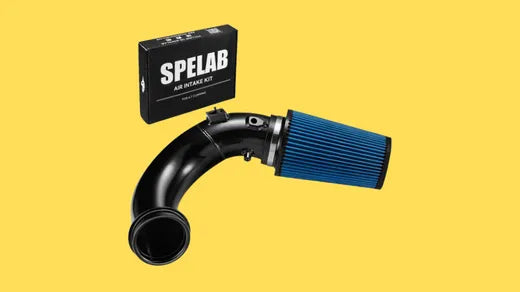
SPELAB's intake lineup is aluminum-based, though finish varies by kit - polished, powder-coated, and black anodized options exist across different SKUs, so check the specific listing rather than assuming one finish applies to every kit.
Filter And Airflow
Most kits use a washable, reusable cone-style filter designed for high flow. Reusable filters need periodic cleaning and re-oiling per the manufacturer's instructions - a neglected filter can actually restrict airflow, and on oiled cotton designs, over-oiling during a cleaning cycle risks excess oil reaching the mass airflow sensor over time.
Cold Air Positioning
"Cold air" is really about air source, heat isolation, and actual intake air temperature at speed - not simply whether the filter sits outside the engine bay. A well-sealed airbox drawing from the fender or front of the vehicle, even while mounted in the engine bay, can outperform an open cone filter that's only loosely shielded - a poorly shielded open element can actually pull hotter underhood air than a sealed factory box at idle and low speed. Check the actual shielding and air source design, not just the filter's physical location.
Tuning Considerations
Whether you need a tune depends on your engine and the specific intake. On modern vehicles with a mass airflow sensor, a significant change in tube diameter or filter design can affect how that sensor reads airflow - check whether your intended kit is tune-required before you buy, not after installation.
Towing, Jobsite, And Wet-Weather Use
If you tow, keep a rough log of intake air temperature, MAF readings, boost, EGT, and filter condition on the same route and similar conditions before and after a change - that's the only way to know if an upgrade is actually helping versus just sounding different. In heavy rain or snow, an intake with limited weather protection can let a filter get soaked or partially blocked, which can reduce power or, in extreme cases, contribute to a stall - check how your specific intake handles water and snow exposure before relying on it in bad weather.
Common Intake Pipe Problems
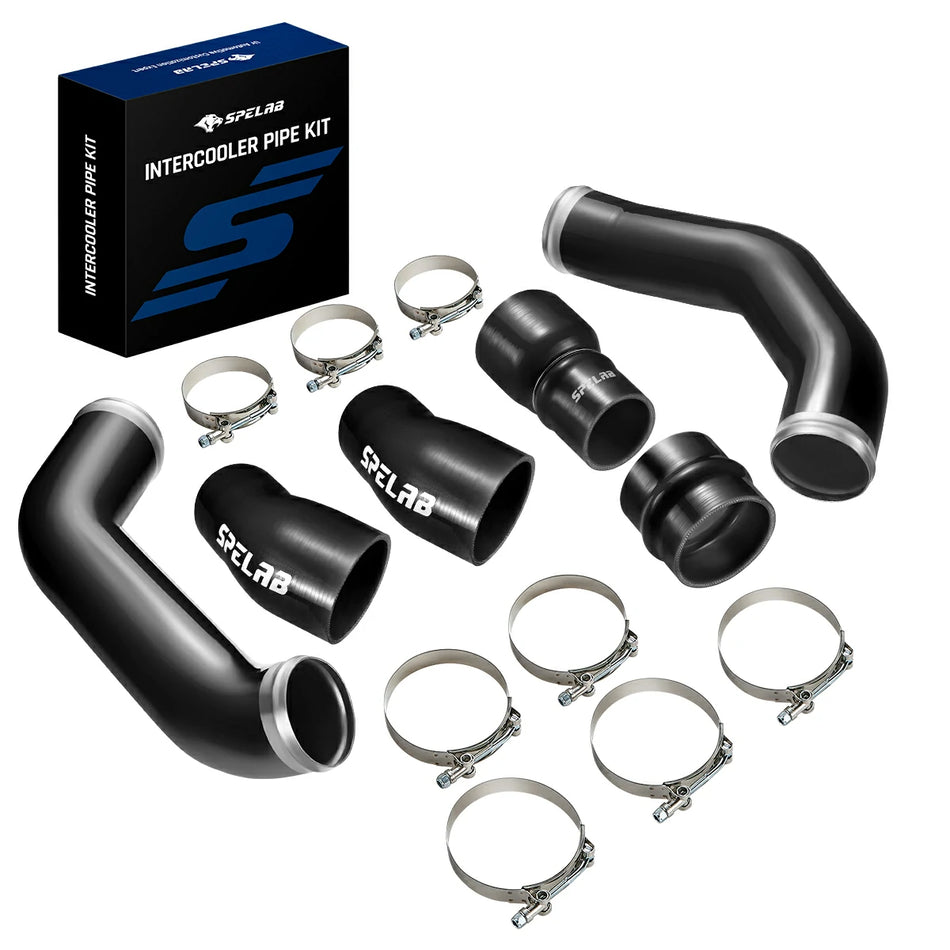
Beyond the upgrade decision itself, intake pipes - factory or aftermarket - can develop air leaks, blockages, loose connections, or vibration over time. Regular inspection catches these before they affect drivability or set a code.
FAQ
Q: My truck feels weaker - is that automatically an intake problem?
A: Not necessarily. A dirty filter, boost leak, failing MAF sensor, damaged turbo inlet hose, or a tuning issue can all cause similar symptoms. Rule those out before assuming the intake itself is the cause.
Q: Is aluminum intake tubing always better than factory plastic?
A: No. Plastic insulates against underhood heat better than aluminum and doesn't corrode; aluminum's advantages are mainly rigidity, damage resistance, and appearance. Sealing quality depends on the couplers and clamps, not the tubing material.
Q: Do I need a tune before installing a cold air intake?
A: It depends on the specific kit and your engine. Larger tube diameters and different filter designs can affect mass airflow sensor readings on modern vehicles - confirm tune requirements for your specific kit before ordering, and check for an applicable CARB EO if your truck is registered in California.
Q: What matters more for a work truck - airflow or filtration?
A: Filtration. A higher-flow filter that lets more fine dust through isn't a real upgrade for jobsite, farm, or dusty-road use - prioritize filtration efficiency and dust capacity over a maximum airflow number.
Q: Can certain cold air intake filters damage my engine long-term?
A: Oiled cotton-gauze filters are common and generally safe, but over-oiling during cleaning can allow excess oil to reach the mass airflow sensor over time and cause inaccurate readings. Follow the cleaning and re-oiling instructions for your specific filter.
Q: Does filter location outside the engine bay guarantee cooler air?
A: Not by itself. What matters is the air source and how well it's shielded from underhood heat - a poorly shielded open filter can pull hotter air than a well-sealed factory airbox, especially at idle and low speed.
Q: What should I check before installing a cold air intake for towing?
A: Confirm exact fitment, tune requirements, and weather protection for rain and snow exposure. Log IAT, MAF, boost, and EGT on the same route before and after the change so you can actually verify it helped rather than just assuming.

About the Author
John Lee
Mechanical Engineer | 10+ Years Experience
John has spent the last decade engineering and testing high-performance automotive components. Specializing in drivetrain durability and thermal management across Powerstroke, Cummins, and Duramax applications, he bridges the gap between OEM limitations and aftermarket performance. His philosophy: "Factory parts are just a starting point."