Diesel delete kits are sold to remove or bypass emissions-control hardware, but the hardware itself does not establish a horsepower gain, a fuel-economy improvement, or longer engine life. Ram Cummins, Ford Power Stroke, and GM Duramax owners should separate the advertised kit, any calibration changes, and the actual fault before making a purchase decision.
Key Takeaways
A useful diesel repair or upgrade starts with a confirmed problem, a compatible part, and a clear understanding of emissions requirements.
- EGR, DOC, DPF, and SCR perform different jobs; an EGR kit is not a complete aftertreatment kit.
- Compare hardware and tuning separately when evaluating horsepower, torque, fuel economy, or exhaust temperature claims.
- Investigate frequent regeneration, coolant loss, and derate warnings before replacing parts.
- Check the exact engine, model year, chassis configuration, and existing modifications before ordering.
- Retain required emissions controls on road vehicles; an off-road label does not automatically establish an exemption.
Last updated:
What Does Each Diesel Emissions System Actually Do?
EGR controls combustion-related NOx, the DPF captures particulate matter, the DOC supports oxidation reactions, and SCR uses DEF-derived ammonia to reduce NOx in the exhaust.
| System | Primary function | Useful evidence when a fault is suspected |
|---|---|---|
| EGR valve and cooler | Recirculate a controlled amount of exhaust to help reduce NOx formation | Commanded versus actual EGR behavior, related fault codes, and cooler leak testing where indicated |
| DOC | Oxidize pollutants and support aftertreatment operation | Temperature-sensor plausibility and the manufacturer's aftertreatment diagnostic procedure |
| DPF | Capture soot; regeneration oxidizes accumulated soot | Differential pressure, estimated soot load, regeneration history, and sensor-hose condition |
| SCR and DEF dosing | Reduce exhaust NOx using a catalyst and controlled reductant dosing | DEF condition, dosing operation, NOx-sensor data, and relevant fault codes |
Regeneration addresses soot, not the noncombustible ash that can accumulate with service hours. A filter with excessive ash or physical damage requires a different decision from a filter with a manageable soot load.

Can a Delete Kit Deliver the Advertised Horsepower or MPG?
A credible performance claim identifies the vehicle, hardware, calibration, test method, and operating conditions; an advertised kit name alone cannot establish the result.
The earlier horsepower, torque, and mileage claims lacked supporting test records and have been removed as purchase expectations. A comparison that changes both hardware and tuning cannot isolate the contribution of the hardware.
Evaluate fuel economy with fuel added and distance traveled across comparable trips. Trailer weight, speed, wind, terrain, tire size, idling, and regeneration activity can change the result. A dashboard MPG reading from one unloaded drive is weak evidence for a truck that normally pulls a fifth-wheel.
Compare exhaust-temperature trends under towing load at the same sensor location and similar load. A pre-turbo EGT reading and an aftertreatment temperature reading describe different locations; neither is a universal measure of engine durability.
What Should You Check Before Blaming the Emissions Hardware?
Frequent regeneration, poor pulling power, coolant loss, and derate warnings require different diagnostic paths; replacing or removing one system will not establish the cause of another system's fault.
| Owner's complaint | Evidence to collect | Next decision |
|---|---|---|
| Regeneration occurs unusually often | Trip pattern, completed versus interrupted events, coolant-temperature behavior, soot estimate, and differential-pressure data | Distinguish operating conditions from sensor, combustion, or filter problems |
| Truck feels weak while towing | Fault codes, freeze-frame data, commanded versus actual boost, and charge-air leakage | Repair a confirmed air, fuel, turbo-control, or derate fault |
| Coolant level keeps dropping | Cold pressure test, external leak inspection, and engine-specific cooler tests where indicated | Locate the leak rather than assuming the EGR cooler is responsible |
| DEF or SCR warning appears | Warning text, fault codes, DEF condition, dosing checks, and NOx-sensor plausibility | Follow the vehicle's SCR diagnostic procedure |
| DPF warning remains after normal driving | Manufacturer instructions, soot and ash assessment, filter condition, and regeneration eligibility | Determine whether approved regeneration, cleaning, or replacement is appropriate |
Record frequent regeneration alongside actual driving conditions. A truck making repeated short trips and a highway truck with a defective pressure sensor may present a similar complaint but need different repairs.
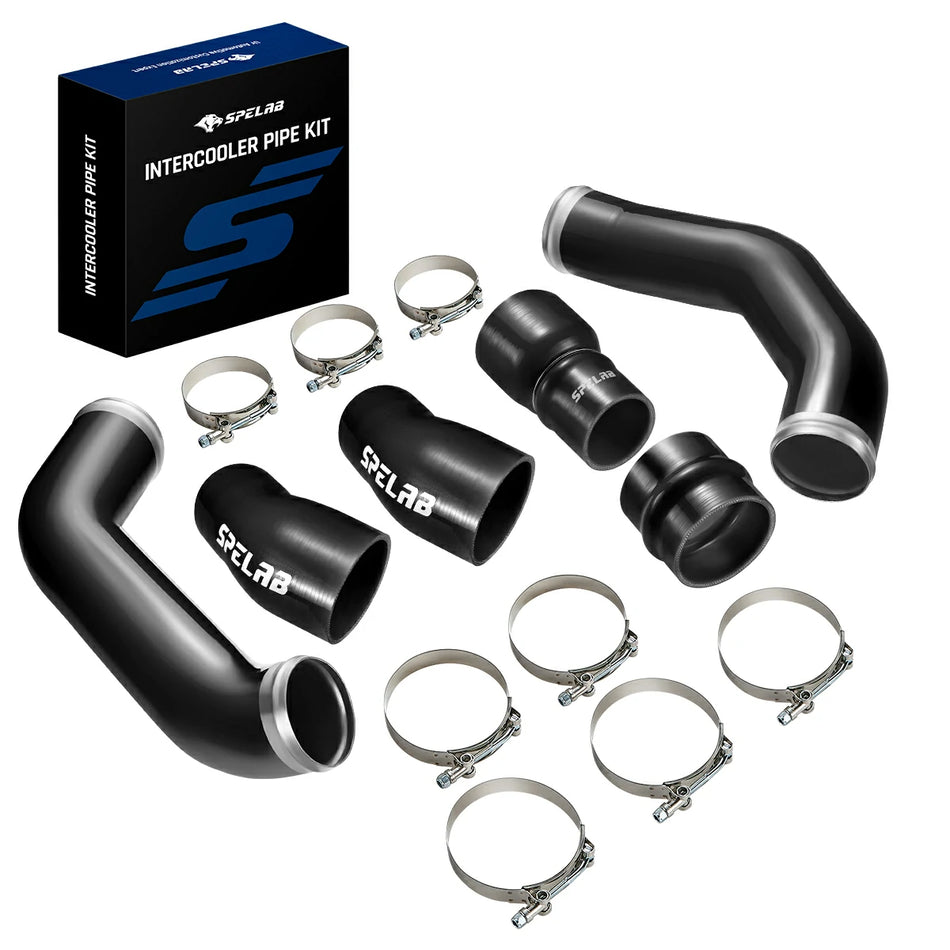
Replace a damaged LML Duramax intercooler pipe kit only when testing identifies a pipe fault and the kit matches the vehicle. A loose clamp or failed boot may need a smaller repair; a charge-air pipe cannot repair a damaged DPF or an SCR dosing fault.
How Do You Confirm Fitment and What the Package Includes?
Diesel-part fitment depends on the exact engine, model year, emissions configuration, chassis, and installed hardware, not just a Cummins, Power Stroke, or Duramax badge.
- Identify the platform. Record the VIN, model year, engine identifier, and pickup versus cab-and-chassis configuration. For GM trucks, confirm the engine RPO rather than treating every 6.6L Duramax as identical.
- Inspect the existing configuration. Document previous pipe changes, sensor locations, cooler connections, and current calibration information.
- Check the contents list. Verify supplied gaskets, fasteners, hoses, brackets, and installation documentation. Software and installation labor are separate unless explicitly included.
- Confirm service requirements. Obtain the part-specific sealing and tightening instructions. A colored finish does not establish alloy grade, gasket durability, or easier restoration to stock.

Which Repair or Upgrade Matches the Actual Goal?
Repair a confirmed fault with an appropriate replacement or approved service procedure; use a separate upgrade decision for exhaust appearance, pipe condition, or other non-fault-related goals.
Compare cleaning and replacement costs after assessing the filter's condition. Request a quote that separates diagnosis, labor, related sensor or hose repairs, and the filter service itself. A parts-only price does not represent a completed repair.
A DPF-back exhaust changes the downstream exhaust section while retaining the filter. A correctly matched system may suit tailpipe replacement or appearance preferences, but it is not a remedy for regeneration faults and should not be sold as a guaranteed horsepower increase. Retained aftertreatment can limit sound changes.
For towing, compare loaded vehicle and trailer weights with the truck's GVWR, GAWR, GCWR, and applicable towing limits. A tune or hardware change does not by itself raise those ratings. A long grade also tests coolant control, transmission condition, and braking, not just peak dyno horsepower.

What Are the Road-Use Limits?
U.S. federal law prohibits emissions-control tampering and prohibited defeat devices; a product's availability or an off-road label does not establish permission to remove required controls from a road vehicle.
Keep required EGR, DOC, DPF, SCR, and monitoring functions intact on road vehicles. State inspection requirements are an additional consideration, not a substitute for federal requirements. Evaluate a claimed competition exemption on the actual vehicle and applicable rules rather than a seller's label.
What Information Should You Send Before Ordering?
A useful fitment inquiry includes the VIN, engine identifier, fault codes, photos of the installed components, and the exact part number being considered.
Contact SPELAB with that information when asking about a catalog listing for EGR delete kits. Request written clarification of package contents and application limits; catalog support is not emissions approval or evidence of a performance gain.
Diesel Delete Kit Claims and Repair FAQ
Separate hardware, software, fault diagnosis, and operating requirements when comparing diesel parts.
Does an EGR kit include DPF and SCR components?
An EGR kit does not establish that DPF, SCR, or software components are included. Verify the exact contents list and part numbers instead of relying on an all-in-one label.
Can a dashboard MPG change prove a fuel-economy gain?
A dashboard MPG change alone cannot isolate a modification's effect. Use fuel added and distance traveled over comparable trips, accounting for load, speed, idling, tire-size calibration, and regeneration activity.
Does regeneration remove DPF ash?
Regeneration oxidizes soot but does not remove noncombustible ash. Assess ash accumulation and filter condition before selecting professional cleaning or replacement.
Can I keep driving with a derate or DPF warning?
Follow the specific warning and the vehicle's owner manual. Reduced-power, stop-engine, overheating, or severe filter-loading warnings can require prompt service; repeated highway driving or forced regeneration is not appropriate for every fault.
Can I use one repair quote to compare every truck?
A repair quote applies to its stated vehicle, diagnosed fault, parts, labor, and service scope. Corroded fasteners, filter damage, related sensor faults, and chassis access can change the completed cost.
Will restoring normal boost fix every regeneration complaint?
Repairing a confirmed boost leak can address abnormal combustion associated with that leak, but regeneration complaints can also involve operating conditions, sensors, ash loading, and other engine faults. Verify the complaint after repair using the appropriate scan data.