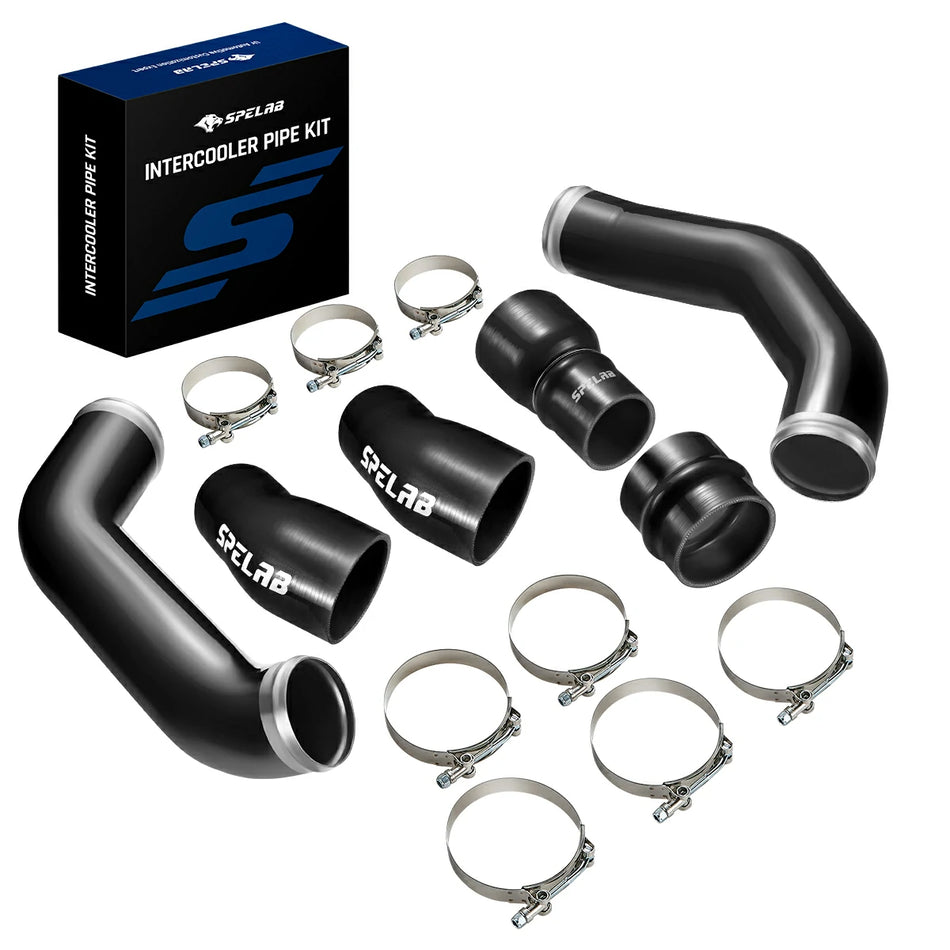
Quick Answer: What Makes a Good LMM EGR Delete Kit?
A good LMM EGR delete kit fits 2007.5–2010 Chevy Silverado 2500HD/3500HD and GMC Sierra 2500HD/3500HD 6.6L Duramax trucks, uses flat billet aluminum or stainless steel block-off plates, includes a high-temperature coolant bypass hose, and is intended only for off-road, race, or competition builds where emissions equipment removal is allowed.
Key Takeaways
- LMM Duramax means 2007.5–2010 GM 6.6L diesel trucks with DPF equipment but no DEF/SCR system.
- A proper kit must seal the EGR path, reroute coolant cleanly, and match the LMM Y-bridge, intake elbow, and passenger-side up-pipe layout.
- Coolant loss, white smoke, P0401/P0402 codes, high EGT, and soot sludge in the intake bridge should be diagnosed before buying parts.
- Hardware changes usually need the right off-road tuning strategy because the ECM still monitors airflow, EGR behavior, and sensor feedback.
- Street use is not the target. EGR delete hardware is for off-road, race, or competition use only.
Will It Fit Your 2007.5–2010 LMM Duramax?
Fitment starts with confirming the truck is a 2007.5–2010 LMM 6.6L Duramax, because LBZ, LMM, LML, and L5P trucks use different emissions hardware, intake plumbing, coolant routing, and ECM logic.
Check the VIN, RPO information, engine bay layout, EGR cooler plumbing, and intake bridge before ordering. A 2008 Silverado 2500HD 6.6L Duramax and a 2012 Silverado 2500HD 6.6L Duramax may look close from ten feet away, but the emissions system and parts fitment are not the same job.
Use a dedicated Duramax EGR delete kit only after confirming the truck generation. A kit that almost fits can leave the truck stuck with coolant leaks, exhaust leaks, loose hardware, and a half-finished weekend install.

| Duramax Platform | Model Years | Common Trucks | Emissions Layout | EGR Kit Fitment Note |
|---|---|---|---|---|
| LBZ 6.6L Duramax | 2006–2007 Classic | Silverado/Sierra 2500HD and 3500HD | EGR active, no DPF | Not the LMM target; check passenger-side up-pipe and intake layout. |
| LMM 6.6L Duramax | 2007.5–2010 | Silverado/Sierra 2500HD and 3500HD | EGR active, DPF equipped, no DEF | Target platform for this guide; confirm LMM-specific block-off and coolant routing. |
| LML 6.6L Duramax | 2011–2016 | Silverado/Sierra 2500HD and 3500HD | EGR with DEF/SCR system | Different cooling circuit, sensors, and tuning path. |
| L5P 6.6L Duramax | 2017+ | Silverado/Sierra 2500HD and 3500HD | Updated EGR and tighter sensor strategy | Different electronics, casting points, and delete hardware. |
What Problems Push LMM Owners Toward EGR Hardware?
LMM owners usually start looking at EGR hardware when the truck shows coolant loss, sweet white smoke, P0401/P0402 EGR flow codes, high EGT under tow, soot sludge in the intake bridge, or repeated limp-mode behavior on an off-road build.
Do not buy parts just because a forum thread said “delete it.” Pressure-test the cooling system first. A leaking EGR cooler can push coolant into the intake or exhaust stream, but coolant loss can also come from hoses, the reservoir cap, water pump seepage, radiator issues, or head gasket failure.
Inspect the intake bridge and Y-bridge area if the truck feels lazy under load. On older LMM trucks, soot from EGR flow can mix with crankcase oil vapor and turn into thick black sludge inside the intake tract. That sludge hurts airflow, throttle feel, and towing response long before the truck feels completely broken.
If the symptom looks like an EGR coolant leak, verify the leak path before pulling the cooler. Guessing wrong can turn a simple diagnosis into a pile of parts on the shop floor.
| Symptom | Possible Cause | First Check | What Not to Assume |
|---|---|---|---|
| Coolant loss | EGR cooler leak, hose leak, cap issue, water pump seepage, or head gasket concern | Pressure-test the cooling system cold and hot | Do not blame the EGR cooler without testing. |
| Sweet white smoke | Coolant entering exhaust or intake path | Check coolant level, smell, residue, and tailpipe vapor | Do not ignore possible head gasket failure. |
| P0401/P0402-style behavior | EGR flow restriction, sticking valve, soot buildup, or calibration mismatch | Scan codes and freeze-frame data | Do not clear codes before reading stored data. |
| High EGT while towing | Load, tune, airflow restriction, boost issue, or exhaust restriction | Watch EGT, boost pressure, intake restriction, and tune settings | Do not assume EGR is the only cause. |
| Coolant pushed from reservoir | Overpressure, cap failure, combustion gas intrusion, or cooling-system stress | Check cap, pressure, coolant condition, and combustion-gas signs | Do not skip head gasket diagnosis. |
What Should Be Included in a Quality LMM EGR Delete Kit?
A quality LMM EGR delete kit should include the hardware needed to seal the exhaust and intake-side EGR ports, reroute coolant safely, and survive heat cycling on a 6.6L Duramax work truck.
Cheap kits usually fail in the boring places: thin plates, poor gasket surfaces, weak clamps, wrong hose bends, missing bolts, and unclear routing. Those small problems matter when the truck is pulling a trailer, idling on a jobsite, or running hot in summer traffic.
A dedicated LMM EGR cooler delete kit should be judged by plate flatness, port alignment, coolant bypass quality, gasket support, and hardware completeness. Billet aluminum and stainless steel components usually handle repeated heat cycles better than thin, poorly cut hardware.

| Kit Part | Job on the LMM | Quality Check |
|---|---|---|
| Block-off plates | Seal removed EGR passages at intake and exhaust locations | Flat sealing face, clean CNC edges, correct bolt-hole alignment |
| Coolant bypass hose | Maintains coolant routing after EGR cooler removal | High-temperature silicone, proper U-bend shape, no kink near firewall |
| Gaskets and seals | Prevent exhaust, coolant, and pressure leaks | Correct port shape and material thickness |
| Clamps and fittings | Hold hose routing under heat and vibration | Stainless or coated hardware with proper clamp range |
| Install hardware | Completes the job without reusing tired factory fasteners | Bolts, washers, brackets, and clear routing instructions included |
Basic Kit or High-Flow Intake Elbow Setup?
A basic LMM EGR delete kit handles the EGR cooler and block-off work, while a high-flow intake elbow setup also targets the restrictive intake-side path near the factory intake bridge.
Choose a basic kit when the truck only needs the off-road EGR hardware removed and the intake side is staying mostly stock. Choose a high-flow intake elbow setup when the owner wants cleaner routing, less intake-side restriction, and fewer factory choke points near the Y-bridge.
We see better build planning when owners decide the airflow goal before the truck is torn apart. A LMM EGR delete kit with high-flow intake pipe makes more sense for an off-road truck where intake restriction, soot sludge, and airflow cleanup are already part of the job.
| Buyer Need | Better Choice | Reason |
|---|---|---|
| Simple off-road EGR hardware removal | Basic EGR cooler delete kit | Focuses on block-off plates, coolant reroute, and hardware completion |
| Cleaner intake routing | Kit with high-flow intake elbow | Reduces restriction around the factory intake bridge area |
| Old truck with heavy soot sludge | Inspect intake bridge and elbow before choosing | Carbon/oil sludge can choke airflow and hide deeper intake issues |
| Work truck that needs quick service | Choose the most complete direct-fit package | Missing hardware costs time when the truck earns money |
Do You Need Tuning After an LMM EGR Delete?
An LMM EGR delete usually requires correct off-road tuning strategy because the ECM still watches EGR flow, mass airflow behavior, sensor feedback, and emissions-related logic.
Hardware changes do not explain themselves to the ECM. The truck may start and idle, then throw codes, derate power, or act wrong once load and temperature change. The problem gets worse when the EGR system is changed but the DPF strategy, regen behavior, and sensor logic are not planned as a system.
Study the truck as a full emissions and airflow package before ordering. The LMM has DPF equipment but no DEF, and that matters. Our guide on LMM EGR and DPF trade-offs goes deeper into the way EGR flow, soot loading, regen behavior, and drivability overlap.
Buyers planning a complete off-road setup may also compare a Duramax DPF delete pipe with the EGR hardware plan, but that decision needs legal review, proper tune support, and a clear understanding of where the truck will be used.
Coolant Routing, Dex-Cool, and Heat-Cycle Checks
Coolant routing after EGR cooler removal must be clean, kink-free, and heat-safe because the LMM cooling system sees repeated thermal cycling during towing, idle time, and heavy payload work.
Use the correct coolant plan before startup. Many GM trucks of this era use Dex-Cool-style coolant, and mixing coolant types or leaving air trapped in the system can create problems that look like bad parts. Top off the system correctly, bleed air, and check the expansion tank after the first heat cycle.
Owners replacing brittle hoses during the same job should compare a coolant hose kit before reusing old rubber around fresh hardware. A new plate and old hose can still leave the truck leaking in the driveway.
- Cold check: Verify plate alignment, gasket position, hose routing, and clamp bite before startup.
- Idle heat cycle: Bring the truck to normal operating temperature and watch for hose swell, seepage, or kinked coolant bypass routing.
- Pressure review: Check the expansion tank, cap behavior, and any sweet coolant smell near the firewall or passenger-side up-pipe area.
- Cool-down retorque: Let the engine cool fully, then recheck accessible fasteners and clamps after the first heat cycle.
EGR Delete vs EGR Cooler Replacement
An LMM EGR delete and an EGR cooler replacement solve different problems, and the right choice depends on use case, legal requirements, inspection needs, and whether the truck must stay emissions-compliant on public roads.
Choose compliant repair when the truck is street-driven, inspected, registered for highway use, or used commercially on public roads. Choose off-road EGR delete hardware only for race, competition, or off-road builds where emissions-system removal is allowed.
Think like a mechanic before thinking like a buyer. A daily-driven Silverado 2500HD with coolant loss may need a legal cooler replacement. A closed-course competition truck may use delete hardware as part of a larger off-road setup with tuning, exhaust changes, coolant rerouting, and monitoring.
| Situation | Better Direction | Why |
|---|---|---|
| Street-driven truck that must pass inspection | EGR cooler replacement or compliant repair | Keeps required emissions hardware in place |
| Closed-course race or off-road build | Off-road EGR delete hardware with proper tuning | Matches non-street-use build planning |
| Coolant loss with unknown source | Pressure test before buying parts | Prevents misdiagnosing head gasket, hose, cap, or reservoir issues |
| CEL after partial emissions changes | Scan and verify ECM/tune strategy | Prevents chasing hardware when calibration is the real issue |
Common Buying Mistakes With LMM EGR Delete Kits
The biggest LMM EGR delete mistake is buying by price instead of fitment, hardware completeness, material quality, coolant routing, and tuning plan.
Do not buy LBZ parts for an LMM truck. Do not assume LML parts will fit because both engines are 6.6L Duramax. Do not ignore the DPF. Do not reuse cracked hoses just because the new block-off plates look good. Do not trust “universal” wording when the job involves an LMM intake bridge, passenger-side up-pipe, coolant crossover, and ECM logic.
- Wrong generation: LBZ, LMM, LML, and L5P hardware should not be treated as interchangeable.
- Missing parts: Incomplete kits create coolant leaks, exhaust leaks, and extra parts runs.
- No tuning plan: Hardware changes can trigger CEL, derate, or poor drivability.
- Skipped coolant diagnosis: EGR cooler leaks are possible, but coolant loss needs testing.
- Ignoring DPF status: EGR and DPF behavior can overlap in regen, soot loading, and drivability complaints.
Post-Install Checks for an Off-Road LMM Build
Post-install checks should focus on coolant leaks, exhaust sealing, hose clearance, tune behavior, pending codes, and test-drive data under load.
Start boring and stay methodical. Check coolant level cold and hot. Look for seepage around block-off plates and hose ends. Watch for exhaust smell near the firewall. Verify clamps after the first heat cycle. Scan for pending codes. Road-test only where the truck is legal to operate.
Monitor the truck like a work rig, not a showpiece. Watch EGT under tow, throttle response, coolant temp, boost pressure, and unusual smoke. A clean install should feel boring. Rattles, sweet smell, low coolant, fresh codes, or lazy power mean the job needs another look.

Use basic system knowledge before blaming parts. The guide on EGR valve function can help separate valve behavior, cooler issues, and airflow symptoms before the wrong component gets blamed.
Off-Road Use and Emissions Compliance Notice
LMM EGR delete hardware is intended for off-road, race, or competition use only and is not legal for use on public roads or emissions-controlled vehicles where EGR equipment is required.
The “gray area” sales pitch does not belong in a serious diesel article. EPA states that the Clean Air Act prohibits manufacturing, selling, or installing a part that bypasses, defeats, or renders inoperative an emission control device, and EPA also states that tampering by removing or making an emission control device inoperable is prohibited.
Check federal, state, and local rules before ordering emissions-related hardware. A truck used for public-road towing, inspection, registration, or commercial work may need a compliant repair path instead of delete hardware. Review EPA Air Enforcement guidance before changing emissions-related parts.
FAQ
Q: What years are LMM Duramax trucks?
A: LMM Duramax trucks are generally 2007.5–2010 Chevy Silverado HD and GMC Sierra HD 6.6L Duramax diesel models. Confirm the VIN, RPO details, engine bay hardware, and emissions layout before ordering parts.
Q: Does the LMM Duramax have DEF?
A: No. The LMM Duramax has DPF equipment but does not use a DEF/SCR system. DEF came later on LML-era GM HD diesel trucks.
Q: Does an LMM EGR delete require a tuner?
A: Most LMM EGR delete setups require proper off-road tuning strategy because the ECM monitors EGR flow, mass airflow behavior, and emissions-related feedback. Hardware-only changes can trigger CEL, limp mode, or drivability issues.
Q: Will an EGR delete fix coolant loss?
A: An EGR delete may remove a leaking EGR cooler from an off-road build, but coolant loss should be pressure-tested first. Hoses, caps, reservoirs, water pumps, radiator leaks, and head gaskets can also cause coolant loss.
Q: Can I delete only the EGR and keep the DPF?
A: Partial changes can create tuning and regen behavior problems because EGR flow, soot loading, DPF operation, and ECM logic interact. Confirm the tune plan and remaining emissions hardware before mixing systems.
Q: What comes in a good LMM EGR delete kit?
A: A good kit should include block-off plates, coolant bypass hardware, gaskets, clamps, fittings, bolts, and clear install guidance for 2007.5–2010 LMM 6.6L Duramax trucks.
Q: Is an LMM EGR delete legal for street use?
A: No. EGR delete hardware is intended for off-road, race, or competition use only and is not legal for public-road vehicles where emissions equipment is required.

About the Author
John Lee
Mechanical Engineer | 10+ Years Experience
John has spent the last decade engineering and testing high-performance automotive components. Specializing in drivetrain durability and thermal management across Powerstroke, Cummins, and Duramax applications, he bridges the gap between OEM limitations and aftermarket performance. His philosophy: "Factory parts are just a starting point."