Updated on July 1, 2026.
A stock LBZ Duramax usually has EGR-related emissions hardware, but it normally does not have a factory DPF. That means “LBZ EGR delete” is the real fitment topic for most 2006–2007 Classic LBZ owners, while “LBZ DPF delete” is usually a wrong search term caused by confusing the LBZ with the later LMM Duramax.
The LBZ Duramax showed up in 2006–2007 Chevrolet Silverado HD and GMC Sierra HD Classic trucks. Truck guys still chase it because it has strong factory torque, a tough 6.6L Duramax platform, and no modern DEF/SCR system. But that does not make every delete-related search accurate. The LBZ has EGR hardware to inspect before buying parts. It usually does not have the factory diesel particulate filter that later Duramax owners deal with.

Key Takeaways
The right answer starts with the engine generation: LBZ is usually an EGR-equipped, pre-DPF Duramax pickup platform.
- A stock 2006–2007 Classic LBZ Duramax normally has EGR hardware but usually does not have a factory DPF.
- “LBZ DPF delete” is usually a mistaken phrase; DPF, regen, and DPF pressure sensor issues fit the later LMM generation better.
- Possible EGR-delete pros include less intake-side soot exposure, fewer old EGR failure points, and cleaner service access on off-road or competition builds.
- Major cons include street-use legal risk, inspection problems, tuning responsibility, resale headaches, and wrong-diagnosis risk.
- EGR delete will not fix white smoke, hard starts, low rail pressure, injector problems, turbo vane issues, boost leaks, or transmission behavior.
LBZ Duramax Emissions Equipment at a Glance
The LBZ is best treated as an EGR-equipped, pre-DPF Duramax generation for most 2006–2007 Classic pickup owners.
Most confusion starts with the 2007 model year. A 2007 Classic-body Silverado HD or Sierra HD may be an LBZ. A later 2007.5 new-body truck is commonly tied to the LMM generation, where factory DPF equipment becomes the bigger conversation. That half-year split is where wrong-part orders happen.
| Engine | Common Pickup Years | EGR? | Factory DPF? | Owner Takeaway |
|---|---|---|---|---|
| LLY | 2004.5–2005 | Yes | Usually no | EGR is relevant; DPF is not the main issue on most pickup applications. |
| LBZ | 2006–2007 Classic | Yes | Usually no | Focus on EGR hardware, fitment, tuning needs, and legal use. |
| LMM | 2007.5–2010 | Yes | Yes | This is the generation tied to DPF, regen, and DPF pressure sensor issues. |
| LML | 2011–2016 | Yes | Yes | DPF, SCR, and DEF systems all become part of the emissions package. |
We see the same mistake in customer fitment photos: the owner searches “2007 Duramax delete kit” without checking whether the truck is a Classic LBZ or a new-body LMM. If the truck is confirmed as a Classic LBZ with the right hardware and legal use case, a model-specific 2006-2007 LBZ Duramax EGR delete kit belongs in a different conversation than any LMM DPF part.
Why “LBZ DPF Delete” Is Usually the Wrong Search Term
“LBZ DPF delete” is usually wrong because a stock LBZ pickup normally does not have a factory diesel particulate filter to remove.
Most owners using that phrase are dealing with one of three things: the truck is actually an LMM, an exhaust canister is being mistaken for a DPF, or the truck has been modified by a previous owner. If the truck has regen behavior, DPF pressure lines, DPF temperature sensors, or DPF-specific codes, step back and verify the engine generation before buying anything.
| Search Phrase | Better Interpretation | Next Move |
|---|---|---|
| LBZ DPF delete | Usually a mistaken search term | Confirm whether the truck is really an LBZ. |
| LBZ EGR delete | More relevant to LBZ emissions hardware | Inspect the EGR valve, cooler, gaskets, and routing. |
| LBZ cat delete or front pipe | May refer to exhaust-side parts, not a DPF | Inspect the exhaust layout before ordering. |
| LMM DPF delete | More likely the true DPF-related topic | Confirm 2007.5–2010 LMM fitment and legal limits. |
If you want a clean breakdown of how the systems differ, use our guide to system differences before matching parts to the truck.
LBZ is not just an LLY with a different badge. Compared with the earlier LLY package, LBZ brought higher fuel-system pressure, revised injector and rail hardware, and the 32-bit Bosch E35 ECM. In the shop, that means you do not guess across generations. A 2006 VIN 2 transition truck, a 2006–2007 VIN D LBZ, and a 2007.5 LMM need their own fitment checks, diagnostic path, and calibration logic.
How to Confirm Your Truck Is LBZ, Not LMM
The fastest way to avoid wrong parts is to confirm whether the truck is a 2006–2007 Classic LBZ or a 2007.5–2010 LMM before ordering anything.
| Check Point | What to Look For | Why It Matters |
|---|---|---|
| Body style | 2007 Classic body vs 2007.5 new body style | The 2007 split is the biggest source of LBZ/LMM confusion. |
| VIN / engine code | LBZ pickup engines are commonly associated with VIN code D | VIN helps verify engine generation before ordering parts. |
| Under-hood emissions label | Engine family and emissions wording | The label tells you what the truck was built to comply with. |
| EGR hardware | EGR valve, cooler, gaskets, hoses, and intake-side routing | Confirms the LBZ-related hardware being discussed. |
| Exhaust layout | DPF pressure lines, temperature sensors, or regen-related hardware | If these are present, verify whether the truck is actually an LMM or modified. |
Take photos before ordering: engine bay from both sides, EGR cooler area, intake bridge area, emissions label, and the exhaust from downpipe to tailpipe. Those five photos prevent a lot of wrong-box frustration.
LBZ EGR Delete Pros and Cons
An LBZ EGR delete can make sense only for a confirmed LBZ used in off-road, race, or competition applications where permitted; it is not a guaranteed horsepower mod or a shortcut for bad diagnosis.
As a parts manufacturer, we look at this from fitment, sealing, hardware access, heat exposure, and real truck use. An older LBZ that tows a gooseneck, hauls jobsite payload, or idles on a ranch can collect soot and grime around the intake-side system over time. Removing old EGR hardware on a permitted build may simplify that area, but it will not fix every smoke, fuel, or boost complaint.

| Potential Result | What It Means in the Garage | Hard Limit |
|---|---|---|
| Cleaner intake path | Less hot exhaust gas and soot routed back into the intake on a permitted off-road build. | It does not repair injector smoke or fuel dilution. |
| Fewer old failure points | Valve, cooler, gasket, and plumbing issues can be removed from the equation. | It does not make a high-mileage engine fresh again. |
| Cleaner service access | Less intake-side clutter can make inspection and wrenching easier. | Fitment still needs to match the exact 2006–2007 Classic truck. |
| Possible response improvement | Some owners notice cleaner response with proper calibration and a healthy truck. | No fixed horsepower number is guaranteed. |
| Legal and inspection risk | Removing required emissions equipment can create public-road compliance problems. | Street trucks should keep required systems functional. |
For a more complete hardware layout, some owners compare a standard kit against the LBZ EGR Delete Kit w/High Flow Intake Elbow. If you are still comparing generations or broad Duramax options, start from the Duramax EGR Delete Kits collection and filter by engine.
Symptoms an EGR Delete Will Not Fix
Do not use an EGR delete to cover up weak injectors, low rail pressure, boost leaks, turbo vane issues, cooling problems, or transmission behavior.
| Symptom | Is EGR Delete the First Fix? | Better First Check |
|---|---|---|
| White smoke or fuel smell | No | Injector balance rates, return rates, oil level, and coolant signs. |
| Low power while towing | Not first | Fuel filter, rail pressure, boost leaks, turbo vane control, and exhaust leaks. |
| Coolant loss | Diagnose first | Pressure test, EGR cooler check, head gasket indicators, and hose condition. |
| Check engine light | Depends on codes | Pull codes before buying parts; P0401, P0404, or P0405 can point toward flow or control issues. |
| Poor fuel economy | Not enough information | Tire size, gearing, driving cycle, injectors, boost, and brake drag. |
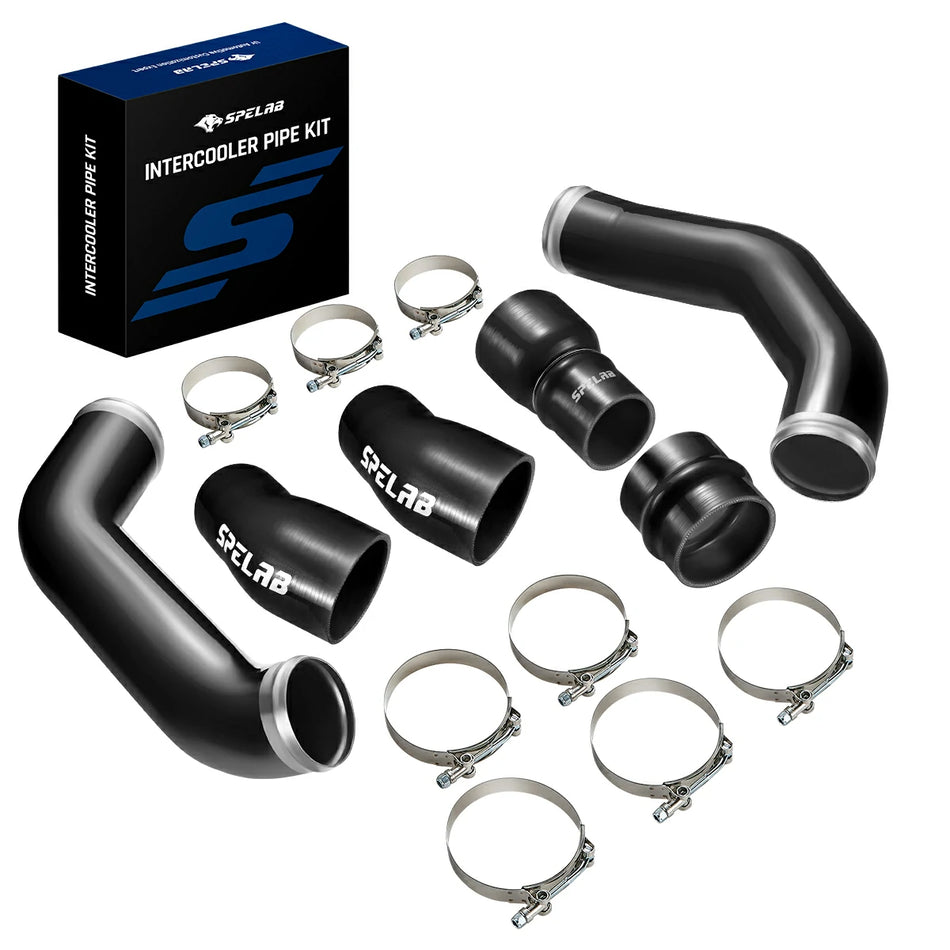
Charge-air leaks are common enough on older tow rigs that they deserve their own check. If the truck shows oily boots, soft throttle response, or high intake air temps, look at the LBZ/LMM Duramax 3" Y-Bridge & Cold Side Pipe Kit and the 2006-2010 LBZ/LMM 6.6 Duramax Cold Side Intercooler Pipe Kit as separate airflow-support parts, not as emissions fixes.
LBZ EGR Delete vs DPF Delete vs Cat Delete vs CCV Reroute
EGR, DPF, cat delete, and CCV reroute are different jobs, and mixing those names is one of the fastest ways to buy the wrong LBZ parts.
| Term | What It Deals With | Stock LBZ Relevance | Common Mistake |
|---|---|---|---|
| EGR delete | EGR valve, cooler, and recirculation hardware | Relevant to LBZ | Thinking it fixes every smoke or power complaint. |
| DPF delete | Diesel particulate filter and related sensors | Usually not stock LBZ | Confusing LBZ with LMM or newer Duramax trucks. |
| Cat delete / front pipe | Catalytic converter or front exhaust section | More relevant than DPF for many LBZ exhaust discussions | Calling any exhaust canister a DPF. |
| CCV reroute | Crankcase vapor and oil mist routing | Separate from EGR and DPF | Blaming oily intake residue on the wrong system. |
Oil vapor in the intake is a different diagnosis than soot recirculation. For crankcase vapor routing on 2004–2010 Duramax platforms, the Duramax CCV Reroute/Delete kits collection belongs in a separate maintenance conversation.
Legal Note for U.S. Street Trucks
Public-road diesel trucks must keep required emissions controls functional, and removing or disabling those controls can create federal, state, inspection, registration, resale, and enforcement problems.
The EPA states that the Clean Air Act prohibits tampering with emissions controls and also prohibits manufacturing, selling, or installing aftermarket devices intended to defeat those controls. Owners should read current EPA guidance at EPA.gov before treating any emissions-related part like a normal street-truck repair.
For a daily-driven Silverado HD or Sierra HD, the safer path is simple: identify the failed part, repair the required system, and keep the truck compliant. If you need a dedicated legal-risk breakdown, read our guide on street-use legal risks.

What to Check Before Buying LBZ Parts
Good fitment starts before the wrench comes out: confirm engine generation, emissions label, hardware, exhaust layout, intended use, and calibration needs.
- Confirm the truck: 2006–2007 Classic LBZ vs 2007.5 LMM.
- Read the emissions label: check under-hood wording and engine-family information.
- Inspect EGR hardware: valve, cooler, gaskets, hoses, and intake-side routing.
- Inspect the exhaust: look for catalyst, previous-owner exhaust work, or DPF-like canisters.
- Pull codes: P0401, P0404, P0405, boost codes, fuel-pressure codes, and MAF/MAP readings matter.
- Match the use case: street truck, off-road build, race truck, ranch unit, and jobsite truck are not the same decision.
If the owner wants a broader fitment path after diagnosis, the 2006-2007 LBZ 6.6L Duramax Applicable Products collection is the cleaner place to start than a generic delete search. For cooling and charge-air support, a 2006-2010 LBZ/LMM Duramax Bar-and-Plate Intercooler Kit is a separate upgrade path for towing heat and high IAT concerns.
Final Recommendation for LBZ Owners
Most LBZ owners should stop asking “Should I do an EGR and DPF delete?” and start asking “Do I actually have an LBZ, what hardware is on my truck, and is an EGR-related change legal and useful for my use case?”
The LBZ is a great platform because it is strong, simple compared with newer emissions-heavy trucks, and still capable of real work. Treat it like a truck, not a search term. Confirm the engine generation, check the emissions label, inspect the EGR and exhaust hardware, diagnose the symptoms, and only then decide whether an EGR-related change belongs on that build. For later DPF-equipped trucks, use our 2007.5–2010 comparison instead of applying LBZ advice to an LMM.
FAQ
Q: Does the LBZ Duramax have a DPF?
A: A stock LBZ Duramax pickup usually does not have a factory DPF. If your truck has regen behavior, DPF pressure lines, or DPF-related codes, confirm whether it is actually an LMM or a modified truck.
Q: Does the LBZ Duramax have EGR?
A: Yes. LBZ trucks are commonly equipped with EGR-related emissions hardware, including an EGR valve and EGR cooler. That is why LBZ EGR delete is a real fitment topic while LBZ DPF delete is usually a mistaken phrase.
Q: Is the LBZ Duramax pre-DPF?
A: Yes, the LBZ is generally treated as a pre-DPF Duramax generation in pickup applications. The LMM generation that followed is the one more commonly tied to factory DPF equipment.
Q: How do I confirm LBZ vs LMM?
A: Check whether it is a 2006–2007 Classic or 2007.5 new-body truck, verify VIN/engine code, read the emissions label, and inspect for DPF pressure lines, temperature sensors, and regen-related hardware.
Q: Will an LBZ EGR delete add horsepower?
A: Do not count on a fixed horsepower gain. Response can improve on some setups, but the result depends on tuning, turbo health, injector condition, boost control, fuel supply, exhaust layout, and overall truck condition.
Q: Is LBZ EGR delete legal for street use?
A: Removing or disabling emissions equipment on public-road emissions-controlled vehicles can create legal and inspection risk under federal, state, and local rules. Check current EPA guidance and local regulations before considering any delete-related part.
Q: What should I check before ordering LBZ parts?
A: Confirm the truck is a 2006–2007 Classic LBZ, read the emissions label, inspect the EGR valve and cooler, photograph the exhaust layout, check for previous-owner modifications, and verify the truck’s intended legal use.

About the Author
John Lee
Mechanical Engineer | 10+ Years Experience
John has spent the last decade engineering and testing high-performance automotive components. Specializing in drivetrain durability and thermal management across Powerstroke, Cummins, and Duramax applications, he bridges the gap between OEM limitations and aftermarket performance. His philosophy: "Factory parts are just a starting point."