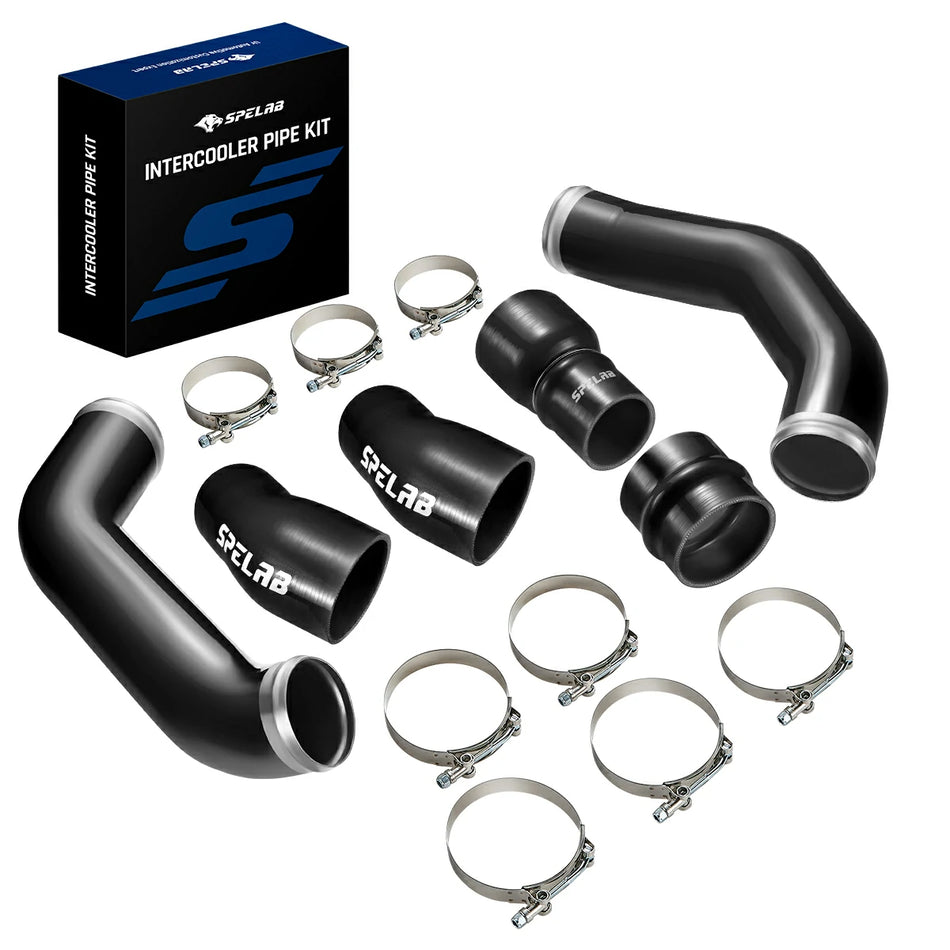
A diesel PCV/CCV reroute kit changes the path of crankcase gases, while an oil separator removes part of the oil mist carried by piston-ring blow-by. For an L5P Duramax, Power Stroke, or Ram Cummins owner dealing with recurring intake oil deposits, a leaking ventilation housing, or difficult separator service, the buying decision is straightforward: identify the oil source, choose the right engine-specific layout, and make sure the replacement keeps ventilation flowing under load.
Key Takeaways
Choose a replacement for a leaking component, a separator for oil carryover, or a complete routing change according to the truck's actual problem and service needs.
- A light intake oil film is different from recurring pooled oil or measurable oil consumption.
- Crankcase pressure and blow-by flow are different measurements; a restriction and engine wear can require different repairs.
- A closed-loop separator returns gases to the intake; a drainable can needs accessible, regular service.
- A hose, fitting, or filter that restricts flow can create a problem even when the housing looks heavy-duty.
- L5P, LML, 6.4L Power Stroke, and 6.7L Power Stroke kits are not interchangeable.
Last updated:
How Is Diesel CCV Different from a Gasoline PCV Valve?
A turbo-diesel ventilation system must be identified by its separator, pressure-control arrangement, and intake connection; a gasoline-engine PCV vacuum-leak diagnosis cannot be applied unchanged to every diesel truck.
PCV and CCV labels are often used together in aftermarket catalogs, but the labels do not describe the complete plumbing. Ford's 6.7L technical material, for example, shows separated oil returning through the valve cover while vapors enter the intake ducting before the turbo. The return location matters when evaluating a hose replacement or separator upgrade.
Effective oil-mist separation depends on the separator design, gas flow, temperature, and drain arrangement. Compare the separating media and oil-management path alongside housing construction.

Does Oil in the Intake Mean You Need a Reroute Kit?
A thin oil film in a closed ventilation system does not by itself establish a failure; recurring pooled oil, increasing oil consumption, or abnormal crankcase pressure warrants diagnosis.
| Observed condition | Evidence to gather | Next decision |
|---|---|---|
| Light oil film with stable oil consumption | Cleaned inspection point, oil-level trend, and manufacturer guidance. | Monitor the condition and maintain the existing system. |
| Oil repeatedly pools in charge-air piping | Oil level, separator condition, drain path, turbo condition, and crankcase pressure. | Locate the source before selecting additional separation. |
| New oil leaks or pressure above specification | Restricted hoses or filters, separator drain blockage, and the specified pressure test. | Correct the restriction; investigate engine condition if pressure remains abnormal. |
| Oil mist or odor after a reroute | Outlet location, loose fittings, oil collection, and vapor entry near the cab. | Review the routing and separation design rather than adding an arbitrary hose extension. |
| A cold-weather issue appeared after adding a can | Collected liquid, frozen condensate, blocked media, and low spots in hoses. | Restore unrestricted ventilation and correct the cold-weather maintenance plan. |
Use the manufacturer's test conditions and limits when investigating restricted crankcase ventilation. A low-range pressure instrument may display inches of water or kPa; roughly 1 inch of water equals 0.249 kPa. That conversion is a unit reference, not a pass/fail limit.
An oil-fill-cap check is not a calibrated pressure or blow-by test. A ventilation reroute cannot repair worn piston rings, damaged cylinders, or a verified turbocharger fault. Rapid oil loss, heavy blue exhaust, or unexpected engine acceleration needs prompt professional attention rather than a test drive with a trailer.
Should You Repair the Factory System, Add Separation, or Reroute?
Choose the least complicated system that addresses the confirmed problem while preserving the required gas-flow capacity and a serviceable oil-management path.
| Option | Useful when | Tradeoff to check |
|---|---|---|
| Factory-style repair | A hose, seal, separator, or serviceable filter has a confirmed failure. | Use the correct assembly and service procedure for the engine generation. |
| Closed-loop separator upgrade | The owner wants improved service access or oil separation while retaining intake return. | Check flow restriction, oil drain-back, filter service, and application approval. |
| Drainable catch can | An application-specific installation has provision for liquid collection and regular service. | Can capacity, media condition, condensation, drain access, and the actual outlet route. |
| Reroute away from the intake | The complete proposed configuration has been evaluated for the vehicle and intended use. | Vapor discharge, odor, oil handling, restriction, installation requirements, and emissions compliance. |
Compare CCV/PCV reroute kits by the inlet, outlet, separator, and drain layout. A catch can may be part of a closed-loop system or an open setup, so the presence of a can alone does not establish where the gases exit.
A serviceable collection vessel can make removed oil easier to inspect and drain. An intake-return separator can preserve the closed routing while managing oil upstream of the turbo. Compare drain access and the expected service workload before choosing either arrangement.

Which Platform-Specific Details Should You Check Before Ordering?
Match the engine generation and installed ventilation layout before ordering; the same displacement or a similar-looking fitting does not establish compatibility.
2011-2024 Ford 6.7L Power Stroke
The listed 6.7L Power Stroke CCV recirculating kit uses an intake-return layout and oil drain-back rather than an atmospheric outlet. The product description specifies an aluminum housing with stainless steel mesh; choose between the base kit and optional internal-can package using the actual variant contents. Check the stated fuel-filter-housing clearance concern on some 2016 F-350 applications.
2017-2024 GM 6.6L L5P Duramax
Fresh oil around an L5P ventilation housing, seal, or hose connection calls for a source check after cleaning the area. A confirmed housing crack is a replacement decision; oil arriving from a neighboring gasket or connection needs a different repair. Replacing the cracked component addresses that leak, not every future source of engine-top oil.
The listed L5P Duramax CCV reroute kit covers the stated Silverado/Sierra 2500HD and 3500HD applications and includes a relocated oil-fill arrangement. The detailed listing specifies crew-cab short-bed and long-bed configurations and excludes the stated cab-and-chassis applications. The parts list does not establish that a separate drainable catch can is included.
2008-2010 Ford 6.4L Power Stroke
The 6.4L Power Stroke CCV/PCV reroute kit is a separate application from the 6.7L Ford and L5P GM products. Confirm the exact truck configuration, supplied fittings, hose path, and any separately required oil collection before installation.

Ram 6.7L Cummins: CCV Service and the Dashboard Reminder
The Ram Cummins "Perform Service" message is a scheduled emissions-maintenance reminder, not a measurement of CCV restriction. Check the truck's maintenance history and year-specific filter schedule before deciding between routine service and a ventilation upgrade.
The 2018 Ram diesel supplement provides the CCV replacement schedule associated with the commonly cited 67,500-mile service point. Later schedules and truck configurations must be checked separately. The 2019 Ram diesel supplement explains that the reminder can include CCV filter maintenance. Replacing a filter and resetting a reminder are maintenance tasks; a routing change is a separate system-design decision.
What Changes When You Tow, Idle for Long Periods, or Drive in Winter?
Towing and modified-engine operation can increase ventilation demand, while short trips and cold weather make liquid collection and hose restriction especially important to inspect.
A truck pulling a fifth-wheel up a long grade needs ventilation that remains adequate under load, not just a clean-looking breather at idle. Record oil consumption and any repeated oil accumulation under comparable use before judging the result of a separator change.
Extended idling is relevant to specific service concerns. Ford TSB 19-2053 discusses oil consumption associated with restricted ventilation on certain 2017-2019 F-Super Duty chassis-cab/dual-rear-wheel trucks and 2016-2019 F-650/F-750 vehicles with the 6.7L engine. That bulletin is not a universal filter replacement rule for every Ford pickup.
Water-rich condensate in a can or hose can freeze in subfreezing weather, commonly below 32 degrees F (0 degrees C), depending on the liquid mixture. Inspect a newly installed collection system frequently during cold short-trip use, and set the drain schedule from actual accumulation and the supplier's instructions.
What Makes a Ventilation Installation Reliable?
A reliable installation maintains the specified flow path, protects hoses from damage, manages collected oil, and leaves service points accessible.
- Document the baseline. Record oil level, consumption, visible leaks, and any applicable pressure-test results.
- Verify the complete package. Check fittings, seals, brackets, hose requirements, and whether the selected variant includes the separator or collection vessel.
- Follow the application-specific instructions. Keep the intended hose bore and bend radius; avoid kinks, rubbing points, and low spots that trap liquid.
- Protect the routing. Secure hoses away from exhaust heat, belts, steering components, and moving driveline parts.
- Check the oil-management path. Confirm drain-back or collection requirements and make service access practical.
- Inspect after installation. Check leaks, hose security, collected liquid, and crankcase pressure when the procedure calls for measurement.
Do not cap an operating crankcase ventilation outlet or reduce the hose bore just to make a universal fitting work. Additional media or a small breather can raise restriction. Include bracket access, hose protection, and the final leak check in the installation plan.
A replacement or upgrade does not remove oil already pooled in charge-air piping. Existing contamination needs separate inspection and service using the engine manufacturer's procedure.
How Do You Judge the Result and Budget the Installation?
Judge a ventilation upgrade by recurring oil accumulation, leak control, service access, and crankcase pressure under comparable operating conditions.
Clean the same accessible inspection point before comparing deposits, record miles driven and oil added, and include towing or idle time in the notes. For a drainable can, record the collected liquid and weather conditions so the drain interval follows actual use.
Budget for the complete installed system: the selected kit, any required hoses or collection hardware, labor, diagnostic checks, and future service. A base-kit price and a kit-plus-can price represent different purchases, and access difficulty changes labor cost.
Emissions and Performance Notice
A routing change needs application-specific emissions review, and horsepower, MPG, or separation-efficiency claims need comparable test evidence; a cleaner intake alone establishes neither legal compliance nor a performance gain.
EPA's tampering policy addresses modifications to emissions-control systems. A catch can, clean intake tube, or "off-road" label alone does not establish legal road use. Confirm the applicable requirements for the actual installation before changing a daily-driven truck's vapor route.
Frequently Asked Questions
PCV/CCV buying questions center on oil collection, engine-specific connections, cold-weather service, and the difference between scheduled maintenance and a measured fault.
Is a PCV reroute kit necessary if my intake has an oil film?
A light oil film with stable oil consumption does not by itself justify a reroute. Repeated pooled oil, increasing consumption, or pressure outside the manufacturer's specification calls for investigation of the separator, drain path, turbo, and engine condition.
Are a catch can and a PCV reroute kit the same thing?
A catch can collects liquid from a gas stream, while a reroute changes the ventilation plumbing. Some installations combine both functions; confirm whether the outlet returns to the intake or follows another route and whether the can is included.
Will a reroute fix excessive engine blow-by?
A reroute does not repair worn rings or damaged cylinders. Clearing a ventilation restriction can reduce pressure caused by that restriction, but continuing abnormal pressure or oil loss requires engine-condition testing.
Can a catch can freeze in winter?
Water-rich condensate can freeze during subfreezing use and restrict ventilation. Drain and inspect the system according to actual accumulation, temperature, and the supplier's instructions; short trips may require closer attention.
Does every PCV/CCV kit include a catch can?
PCV/CCV kit contents vary by product and selected variant. A hose-and-fitting kit, an internal separator, and a drainable external can are different configurations, so verify the parts list before ordering.
Can I use one kit across L5P Duramax and Power Stroke trucks?
L5P Duramax, 6.4L Power Stroke, and 6.7L Power Stroke kits use application-specific connections and layouts. Match the engine generation and the listing's configuration restrictions; similar displacement or hose size does not establish compatibility.
Does "Perform Service" mean my Cummins CCV filter is blocked?
Ram's "Perform Service" message is a scheduled emissions-maintenance reminder, which can include CCV filter replacement. The message alone does not diagnose a blocked filter. Check the year-specific maintenance schedule and service history; use the specified pressure test when symptoms suggest restricted ventilation.