Updated on August 09, 2026.
An EGR delete kit is not the first repair for low power, coolant loss, black smoke, poor fuel economy, or a check-engine light. On a Power Stroke, Cummins, or Duramax, those symptoms can come from an EGR valve or cooler, but they can also come from boost leaks, fuel-pressure loss, a dirty sensor, cooling-system faults, turbo control, injector problems, or calibration.
The practical order is simple: identify the engine and emissions configuration, save the codes and freeze-frame data, test the failed system, price a legal repair, and check current federal, state, and local requirements. Only then can an owner judge what hardware belongs on a dedicated competition or other lawful nonroad build.
What Does a Diesel EGR System Actually Do?
Exhaust gas recirculation sends a controlled amount of exhaust back into the intake stream. That gas displaces some oxygen and absorbs heat, reducing peak combustion temperature and nitrogen oxides, commonly called NOx. Many diesel applications cool the recirculated gas through an engine-coolant-fed EGR cooler before the valve meters it into the intake.
The engine control module does not treat EGR as a loose mechanical add-on. Depending on platform, it compares commanded valve position, actual position, mass-airflow change, manifold pressure, exhaust temperature, coolant temperature, and other modeled values. Removing or blocking hardware can therefore trigger diagnostic trouble codes, change regeneration behavior, alter warm-up and drivability, and require calibration changes that may themselves affect emissions compliance.
For a deeper explanation of function and realistic power expectations, read the EGR function and performance guide.

Why the Original Power and MPG Claims Need Caution
An EGR delete does not create a fixed amount of horsepower or fuel economy. If a valve is stuck open, a cooler is restricted, or the intake is packed with deposits, repairing the fault can restore lost performance. That is different from proving that a healthy stock system is a major airflow restriction.
Fuel economy can move either direction because duty cycle, calibration, tire size, idle time, regeneration history, Payload, trailer weight, weather, and driving style all matter. A hand-calculated tank result before and after repair is still noisy unless the route, load, speed, fuel fill, and ambient conditions are comparable.
The same caution applies to engine temperature. An EGR cooler transfers heat into the cooling system, but removing it does not fix a weak fan clutch, plugged radiator, failed thermostat, combustion-gas leak, low coolant, collapsed hose, dirty cooling stack, or overloaded truck. A towing overheat needs loaded scan data and pressure testing, not a blanket parts claim.
Symptoms and Codes: What They Mean and What They Do Not
| Symptom or DTC | Possible EGR-side cause | Other causes to check | Useful next test |
|---|---|---|---|
| P0401 or low EGR flow | Restricted cooler or passage, valve not opening, position fault | MAF error, exhaust leak, wiring, calibration, intake deposits | Save freeze-frame data, run the OEM self-test, compare commanded flow with sensor response |
| P0402 or excessive EGR flow | Valve stuck open, seat contamination, control fault | MAF or MAP error, wiring short, incorrect calibration | Command the valve closed and verify position, airflow, and idle response |
| P0404 or range/performance | Sticky valve, position sensor mismatch, carbon interference | Connector damage, low voltage, harness rub, PCM update | Graph commanded versus actual position through a controlled sweep |
| P2457 or EGR cooler efficiency | Restricted cooler, poor heat transfer, flow problem | Temperature sensor fault, coolant issue, wiring, exhaust leak | Follow the engine-specific pinpoint test and check applicable service information |
| Coolant loss, white vapor, sweet odor | Internal EGR cooler leak | Head gasket, injector cup where applicable, turbo coolant circuit, external leak | Cold pressure test, cooling-system inspection, then isolate and pressure-test the cooler if directed |
| Low boost, smoke, weak towing power | EGR valve stuck open or intake restriction | Charge-air leak, turbo actuator, exhaust leak, fuel restriction, dirty MAP/MAF, DPF restriction | Smoke-test or pressure-test the charge-air path and log boost, airflow, and fuel pressure under controlled load |
Code definitions and enable criteria vary by manufacturer and model year. Ford's published procedure for certain 2011-2012 6.7L Super Duty trucks did not replace an EGR cooler for P0401 alone. It first checked for other EGR codes and then required a key-on, engine-running test for P2457 before cooler replacement. That is what disciplined diagnosis looks like.
A Garage Diagnostic Sequence Before Parts
- Identify the truck: Record VIN, engine code, model year, build date, cab/chassis or pickup configuration, emissions label, calibration history, and existing Mods.
- Save evidence: Capture current, pending, and permanent DTCs, freeze-frame data, readiness monitors, and the conditions when the fault appears. Do not clear codes before recording them.
- Inspect cold: Check coolant level and contamination, connector locks, harness rub, hoses, clamps, exhaust soot tracks, intake deposits, and charge-air boots.
- Run OEM tests: Use the manufacturer scan routine to compare commanded and actual EGR behavior. Generic code readers often cannot command the valve or run diesel-specific self-tests.
- Separate restriction from leakage: A plugged cooler and an internally leaking cooler are different failures. Test coolant and charge-air systems with the correct regulated equipment.
- Check adjacent systems: Verify MAF/MAP/IAT readings, turbo control, exhaust leaks, DPF differential pressure where equipped, fuel supply, and cooling performance.
- Confirm the repair: After an emissions-compliant repair, rerun the same self-test and road conditions, then verify no leaks, no returning codes, normal temperatures, and completed readiness monitors.
GM's service bulletin for EGR-equipped Duramax engines describes isolating and pressure-testing the EGR cooler when coolant may be entering the right-bank cylinders. It specifically warns that skipping the cooler test can lead to a wrong engine diagnosis. The adapter set includes 19 mm (3/4-inch), 15.9 mm (5/8-inch), and other application-specific connections, which is another reminder that a universal hose-and-plug guess is not a professional test.
Fitment Is Engine-Code Specific
Do not order by the words "6.7 diesel" or "Duramax" alone. Hardware, cooler layout, sensors, coolant routing, intake castings, turbo arrangement, cab/chassis calibration, and aftertreatment strategy change across generations.
| Platform | Common generation split | Fitment checks | Frequent mistake |
|---|---|---|---|
| Ford Power Stroke | 6.0L 2003-2007; 6.4L 2008-2010; 6.7L 2011-up with important sub-generation changes | Engine family, build date, cooler style, up-pipe, coolant routing, sensors, F-Series versus E-Series | Assuming all 6.7L kits fit 2011 through current trucks the same way |
| Ram Cummins | 6.7L 2007.5-2009; 2010-2012; 2013-2018; 2019-up | Pickup versus cab/chassis, valve and cooler arrangement, throttle valve, coolant line, calibration | Buying a pickup kit for a cab/chassis truck because the engine displacement matches |
| GM Duramax | LLY 2004.5-2005; LBZ 2006-2007; LMM 2007.5-2010; LML 2011-2016; L5P 2017-up | RPO code, federal or California emissions label, intake elbow, cooler ports, model and chassis | Calling every 2004 truck an LLY or assuming the VIN year proves engine code |
For Ram owners, the 6.7L Cummins EGR fitment and diagnostic guide breaks the model-year issue down further. Ford owners can compare platform-specific consequences in the Power Stroke modification tradeoff review.
Repair Options Before Permanent Removal
Restore the Existing System
Repair damaged wiring, connectors, coolant hoses, exhaust leaks, sensor faults, and software issues first. If testing identifies a failed valve or cooler, use the current OEM service procedure and verified replacement parts. A Rigid new block-off plate does nothing for a chafed signal wire or inaccurate MAF sensor.
Clean Only When the Part Is Serviceable
Some removable passages and sensors can be cleaned when manufacturer guidance allows it. Do not scrape a coated sensor, force a motorized valve, or flush debris into an intake runner. A cracked cooler, failed position sensor, worn geartrain, or corroded electrical terminal needs repair or replacement, not solvent.
Use Emissions-Compliant Aftermarket Parts
EPA's July 2026 guidance expanded recognized paths for demonstrating that aftermarket parts meet federal emissions requirements. That does not mean every aftermarket component is automatically compliant. Ask for the certification or test basis that covers the exact part, engine, and configuration, and verify state requirements separately.
Choose a Different Mod for the Actual Goal
If the truck needs steadier Towing power, first repair boost leaks, fuel-pressure loss, cooling problems, worn driveline parts, and transmission heat. If it needs better Jobsite reliability, invest in filtration, batteries, grounds, cooling-stack cleaning, and documented service. If Off-roading exposes the truck to dust or mud, protect the air inlet and connectors. None of those jobs requires treating EGR removal as the universal first move.
How EGR Changes Can Affect DPF Operation
EGR, the diesel oxidation catalyst, DPF, exhaust-temperature sensors, differential-pressure sensor, and SCR/DEF system operate under one engine and aftertreatment calibration. EGR flow affects oxygen concentration, combustion temperature, engine-out NOx and particulate production, while the control module uses sensor data and operating models to estimate soot loading and decide when regeneration conditions are met.
Blocking EGR while leaving the DPF and stock calibration in place is not a reliable way to reduce regeneration. It can set EGR-flow or position codes, leave readiness monitors incomplete, change modeled airflow, and create operating data that no longer matches the certified strategy. The exact DPF response varies by engine family, model year, calibration, sensor condition, and duty cycle; a claim that regeneration will always become more or less frequent is not technically honest.
Frequent regeneration needs its own diagnosis. Check actual versus modeled soot load where available, DPF differential pressure at known engine speeds, exhaust-temperature sensor plausibility, thermostat and coolant temperature, injector or fuel-system faults, intake and exhaust leaks, idle hours, and drive cycle. A cracked pressure hose or engine that never reaches normal temperature can cause repeat regen complaints without an EGR hardware failure.
Repair Cost: Compare the Whole Job
There is no useful nationwide flat price for EGR work. Labor access, rust, engine family, cab configuration, coolant service, intake cleaning, broken fasteners, software, and related damage can move the bill sharply. Use these relative cost levels when comparing written estimates:
| Repair path | Typical cost level | Main cost drivers | Decision caution |
|---|---|---|---|
| Connector, harness, hose, sensor cleaning, or software update | Lower | Diagnostic time, access, connector repair, scan-tool programming | Cheap only when testing proves the small fault |
| EGR valve service or replacement | Low to moderate | Valve price, intake access, deposits, relearn or self-test | A new valve will not clear a restricted cooler or bad MAF signal |
| EGR cooler replacement | Moderate to high | Labor access, coolant, gaskets, intake cleaning, broken fasteners | Pressure-test a suspected leak before approving the job |
| Related engine, turbo, DPF, or cooling-system repair | High | Root-cause damage, contamination, machine work, aftertreatment parts | Do not hide a major fault behind removal hardware |
| Delete hardware and calibration | Not comparable as a repair | Hardware, software, labor, inspection, legal exposure, resale and warranty impact | A lower parts quote does not make the road-use configuration compliant |
Legal Reality in the United States
EPA states that aftermarket parts cannot bypass, tamper with, or remove emissions controls from Clean Air Act-certified motor vehicles. A seller's "off-road use only" label does not by itself determine that installing the part is lawful. A pickup driven on public roads does not become exempt because it occasionally enters a ranch, Jobsite, trail, drag strip, or private property.
EPA also recognizes the right to diagnose and repair emissions systems. Its July 2026 Freedom to Fix guidance says temporary disablement for repair can be allowed and confirms access to service information, OBD data, training materials, tools, and passthrough reprogramming. Repair access is not the same as permanent deletion.
State inspection, opacity, noise, registration, warranty, resale, and insurance consequences can be stricter or separate. Get written guidance for the vehicle and location before buying hardware or calibration. This article is not a legal determination.
Hardware Examples for Verified Lawful Applications
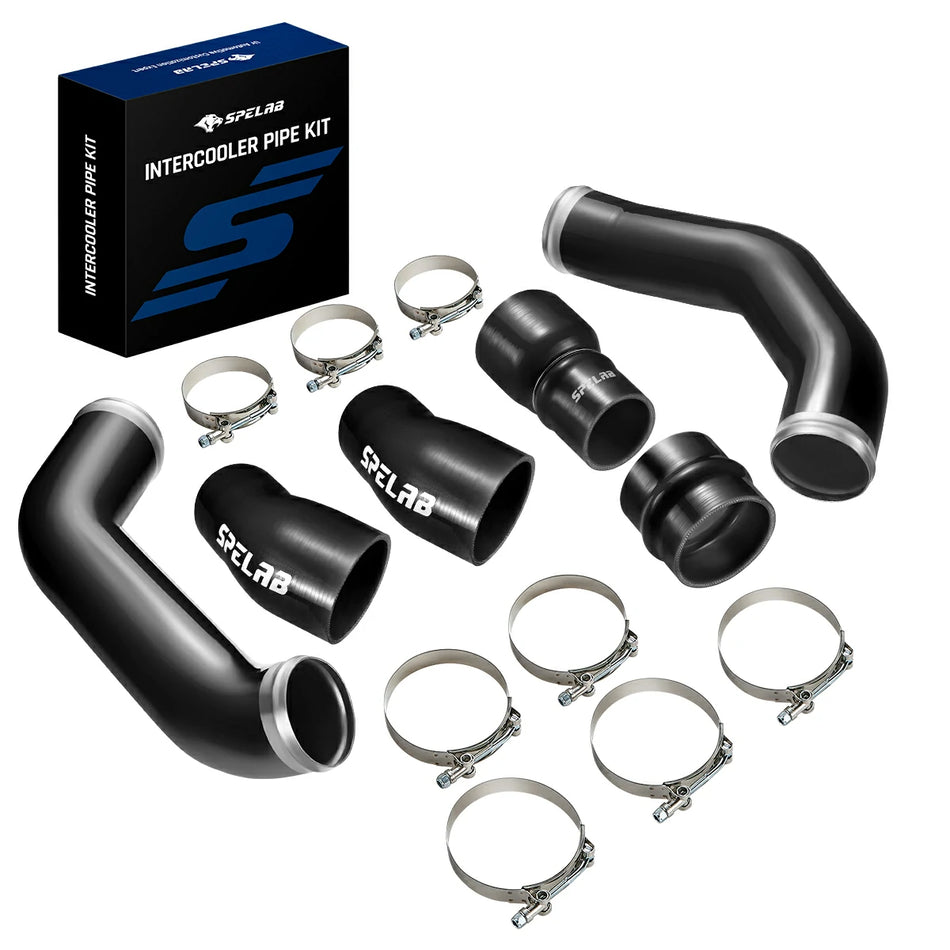
The three examples below show why engine code and narrow year ranges matter. They are not recommendations for an emissions-certified road truck. Confirm the vehicle's legal classification, permanent use, current product contents, tuning requirements, and applicable rules before considering any delete hardware.
What to Inspect in EGR-Related Hardware
For any lawful repair or dedicated-build component, inspect material claims and manufacturing details. T304 is a stainless-steel grade; 6061 is an aluminum alloy designation. A listing that says "T304 aluminum" has mixed two different material systems and needs clarification.
- Hot-side parts: Check stainless grade, wall thickness, weld penetration, flange flatness, heat cycling, and clearance from wiring, brake lines, and the firewall.
- Block-off or adapter plates: Check alloy, thickness, machining, sealing surface, fastener engagement, and thermal expansion against the mating casting.
- Coolant components: Check hose temperature and coolant compatibility, bead retention, clamp type, routing, abrasion protection, and service access.
- Gaskets and fasteners: Use the part-specific gasket stack and current torque sequence. There is no honest universal EGR-delete torque value across Power Stroke, Cummins, and Duramax platforms.
- Calibration: Confirm whether any software change is required, who supports it, how stock files are preserved, and what emissions certification covers that exact calibration.
Real-World Use-Case Decisions
| Use case | What matters most | First diagnostic priority | Poor assumption |
|---|---|---|---|
| Towing or high Payload | Coolant, EGT, transmission heat, boost sealing, legal roadside operation | Loaded scan log and cooling/charge-air pressure checks | Every high-temperature event is caused by EGR |
| Jobsite idle and dust | Idle hours, fan operation, air filtration, connector contamination, regeneration history | Service-hour review, filter inspection, code and soot-load data | Deleting one system replaces maintenance |
| Off-roading | Water, mud, vibration, sensor and harness protection, lawful transport to the trail | Inspect wiring, boots, filters, exhaust clearance, and splash exposure | Private-trail use automatically makes a road-registered truck exempt |
| Extreme cold | Warm-up strategy, winter fuel, batteries, grid or glow system, cabin heat | Cold-start voltage, heater operation, fuel quality, thermostat performance | An EGR-related code explains every cold-start complaint |
| Dedicated competition vehicle | Documented classification, transport method, rules, calibration, fire and heat protection | Confirm sanctioning rules and legal status before hardware | A product disclaimer alone establishes compliance |
Owners comparing hardware by platform can review the EGR delete hardware collection, but collection placement is not a legal-use determination and does not replace VIN, engine-code, emissions-label, or physical Fitment checks.
Official Sources
- EPA July 2026 aftermarket certification announcement
- EPA Freedom to Fix guidance
- EPA aftermarket defeat-device enforcement alert
- Ford TSB 13-6-5 through NHTSA
- Ford Program 21M04 through NHTSA
- GM Duramax EGR cooler test bulletin through NHTSA
FAQ
Q: Does an EGR delete add horsepower?
A: It does not provide a guaranteed horsepower gain. Removing a genuine restriction may restore lost output, but boost leaks, fuel pressure, turbo condition, exhaust restriction, calibration, and transmission limits still control usable power.
Q: Does an EGR delete improve fuel economy?
A: Results vary and should not be promised. Route, Payload, towing weight, idle time, tire size, regeneration, weather, calibration, and driving style can move MPG more than the hardware change.
Q: Does P0401 mean I need an EGR delete kit?
A: No. P0401 indicates an EGR-flow problem under the vehicle's diagnostic logic. It can result from a restricted cooler or passage, valve fault, sensor error, wiring, exhaust leakage, deposits, or calibration. Follow the engine-specific pinpoint test.
Q: Can a leaking EGR cooler cause coolant in a cylinder?
A: Yes, on some engines. GM's Duramax bulletin warns that an EGR cooler leak may allow coolant through the exhaust path into right-bank cylinders. Isolate and pressure-test the cooler as directed before assuming a head-gasket or engine failure.
Q: Is an "off-road use only" EGR delete automatically legal?
A: No. A label is not a legal determination. Vehicle certification, permanent use, public-road operation, transport, federal law, state rules, and local inspection requirements all matter.
Q: How do I verify EGR kit Fitment?
A: Confirm VIN, engine or RPO code, model year and build date, federal or California emissions label, pickup or cab/chassis configuration, cooler layout, coolant ports, intake and up-pipe design, sensors, and existing Mods.
Q: What happens if EGR is blocked but the DPF stays installed?
A: The result varies by platform and calibration, but hardware-only EGR blocking can set flow or position codes, leave readiness monitors incomplete, and change airflow or soot-model inputs used by the aftertreatment strategy. It is not a dependable cure for frequent regeneration. Diagnose DPF pressure, temperature sensors, coolant temperature, fuel faults, leaks, soot load, and duty cycle separately.