How to Choose a Trusted DPF Delete Shop: Diagnosis, Fitment, and Legal-Use Risks

Don't get left behind! Catch up on the latest product information, installation explanations, news, events, new technologies, and more exciting content through Spelab's blogs.

Updated on August 11, 2026.

A trusted DPF delete shop is not the place that promises the fastest delete on a street truck; it is the diesel shop that starts with aftertreatment diagnosis, explains legal-use limits, verifies fitment, and proves it understands calibration, sensors, towing load, EGT, and exhaust clearance before any hardware conversation. If your truck runs on public roads, the first stop should be a proper diesel repair diagnosis. If the truck was never certified for street use, or is dedicated strictly to a closed-course, competition, or off-road application, the shop still needs to treat the job as a full system plan, not a quick pipe swap - and it should be upfront that "off-road" is not an automatic legal exemption (more on that below).

Key Takeaways

  • A reputable shop should diagnose the DPF system before discussing delete hardware, especially on public-road trucks.
  • Shop selection should cover legal-use limits, fitment, ECM/TCM calibration support, SOTF strategy, sensor handling, EGT control, and transmission behavior.
  • Red flags include skipping diagnosis, promising road-use deletes, refusing a written scope, and treating every platform the same.
  • Ford Powerstroke, Ram Cummins, and GM Duramax trucks need different pipe sections, hanger layouts, sensor strategies, and calibration support.
  • For towing, payload, off-roading, or jobsite use, a rigid, bolt-on install with the right pipe size, clamps, hangers, and tune support matters more than a loud sales pitch.

What Should A DPF Delete Shop Do First?

A real diesel shop should inspect and diagnose the truck before recommending any DPF delete kit, race pipe, tuner, or exhaust change.

Trusted DPF delete shop decision guide for diesel truck owners

If a truck rolls in with a DPF light, reduced power, frequent regen, or a speed-limited countdown, the smart play is not to erase codes and sell parts. A clogged DPF may be the symptom, while the root cause is a cracked intercooler boot, stuck-open thermostat, injector over-fueling, plugged pressure tube, bad MAP sensor, or failed regen logic - the specific checks a shop should run are covered in the diagnosis section below. It's one of the most common false alarms shops report to us: the rubber differential-pressure hoses running back from the DPF melt against a frame rail or heat shield, so the sensor reads a false high-restriction number and trips a P242F or P2463 with a perfectly good filter still bolted underneath.

For a truck that is still street-driven, diagnosis, cleaning, repair, or replacement is the compliant path. For a truck genuinely dedicated to off-road, race, or competition use, hardware choices such as DPF Delete Kits should come after the owner and shop understand the truck's use case, fitment, tuning support, and the legal limits covered next.

DPF Delete Shop Vetting Checklist

The right shop should ask more questions than a parts counter, because the wrong answer can create codes, limp mode, drone, heat issues, inspection trouble, or a truck that tows worse than before.

Question To Ask Good Shop Answer Red Flag Answer Why It Matters
Will you diagnose the DPF system first? Yes, with codes, live data, pressure, regen history, and upstream checks. "No need. Just delete it." A repairable sensor or boost leak can mimic a failed filter.
How do you handle road-use legality? They explain compliance limits and separate street repair from non-road builds. They promise it is fine for public roads without checking rules. Legal, inspection, registration, and warranty risk can be bigger than the parts bill.
How do you confirm fitment? They ask year, engine, cab, bed, pickup vs cab-chassis, pipe section, and hanger layout. They only ask "Ford, Ram, or Chevy?" Wrong length, clamp size, or hanger position ruins a bolt-on job.
How do you handle locked controllers, ECM strategy, and SOTF tuning? They explain encrypted or locked controllers, security gateways, ECM unlocks, bench flashing, controller-specific calibration, SOTF files, and TCM support where applicable. They say any cheap handheld tuner works on every truck. Some late-model platforms need VIN, controller, and ECM strategy verified before parts are bought.
What about EGT, smoke, and towing behavior? They discuss fuel, air, load, boost leaks, gauges, torque management, and trans tuning. They claim every truck gains power with no trade-offs. A tow rig needs controlled heat and drivability more than a loud idle.
Will I get a written scope? Parts, labor, calibration, use limits, warranty boundaries, and customer responsibilities are listed. Cash quote only, vague parts list, no documentation. Written scope prevents ugly surprises when the truck is apart.

Diagnosis Before Parts: What A Good Shop Checks

A proper DPF diagnosis proves whether the filter is actually restricted or whether the truck is being misled by bad data or upstream mechanical faults.

A shop should check P2463 soot accumulation, P242F ash accumulation, P2002 efficiency faults, MAF/MAP plausibility, EGT sensor data, NOx sensor data, and DPF differential pressure. As a rough field reference that varies by engine and scan tool, a healthy hot-idle DPF often reads under 0.2 to 0.5 psi, while hard acceleration or towing load should rise smoothly. A loaded pull above 3.5 to 4.0+ psi can point toward serious restriction, while a flat 0 psi under load can point toward melted, disconnected, plugged pressure tubes or a sensor problem.

We hear the same story from shops all the time: the owner asks for a pipe, but the real issue is a lazy thermostat, cracked boost boot, injector over-fueling, bad EGT probe, or interrupted regen cycle. Active regen generally pushes DPF inlet temps well past 1,000°F to burn soot off, though the exact target and how it's controlled varies by platform and calibration - a truck that never holds highway speed long enough to finish that cycle will keep stacking soot no matter how many times the dash light gets cleared. Ash is a different story - it does not burn off, and factory filters are typically rated for a six-figure mileage interval before a professional cleaning or replacement is due, though the exact number depends on the manufacturer's duty-cycle rating, not just how clean the truck runs. Dry EGR soot mixed with CCV oil vapor can turn into black peanut butter inside the intake horn, Y-bridge, and MAP sensor pocket. That tar-like sludge can distort airflow or boost readings, cause lazy throttle response, smoke under load, and contribute to aborted regen. Not every warning light is even a DPF problem in the first place - a shop that can't tell a soot-load fault from a DEF/SCR or EGR-side fault on sight is a shop that needs more diagnostic time, not more parts; the DPF vs DEF vs EGR system differences guide is a quick way to keep those three straight. If your dash is already flashing a "DPF Full See Dealer" style warning, this DPF Full See Dealer code guide helps sort a live fault from a filter that just needs a clean or a straightforward swap. Before you spend money, use a budget and labor planning guide and make sure the diagnostic work is included, not skipped.

Fitment And Hardware: What The Shop Must Verify

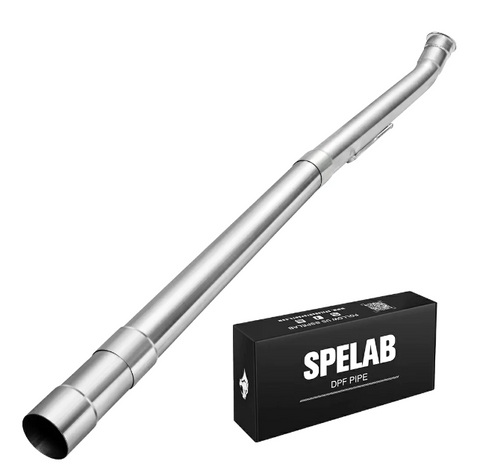
DPF delete hardware is not universal; correct fitment depends on platform, year range, cab and bed, chassis layout, exhaust section, pipe diameter, and hanger position.

DPF delete pipe hardware image for diesel truck fitment planning

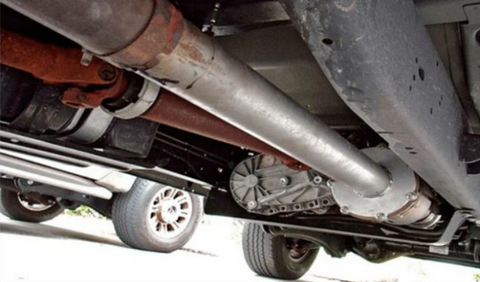
A Ford Super Duty, Ram 2500/3500, and Chevy/GMC HD do not route exhaust the same way. A pickup is not always the same as a cab-and-chassis truck. A 4 inch pipe is usually easier to fit and quieter on tow rigs, while a 5 inch pipe needs more clearance around the frame, spare tire, axle, crossmember, heat shields, and lines. For deeper buyer context, read the diameter decision notes before assuming bigger tubing is better. A true bolt-on kit should line up on the factory hanger points without a cutting torch or a trip to a muffler shop for a custom bend; if a shop is grinding and re-welding hangers to force a "universal" pipe into place, that is a fitment problem, not a normal install.

Platform-specific hardware examples include a 2011-2024 Ford 6.7 Powerstroke DPF delete race pipe, a 2013-2018 Dodge Ram 6.7 Cummins DPF delete race pipe, and a 2011-2016 LML 6.6 Duramax DPF delete race pipe. Those are not interchangeable parts, even when the product category sounds similar. Duramax owners in particular should confirm generation before ordering, since LB7, LLY, LBZ, LMM, LML, and L5P engines share a family name but not always a pipe diameter or hanger spacing - the Duramax generation fitment differences breakdown is a fast way to double-check before checkout.

Tuning, ECM Support, And Sensor Strategy

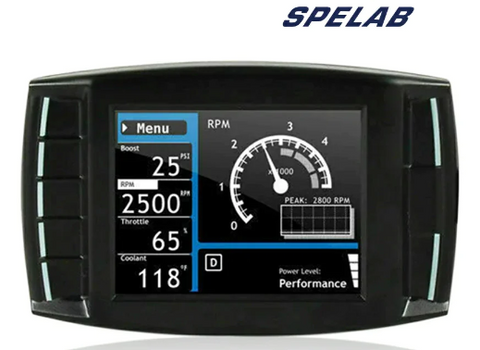
The tuning side is often the biggest risk in a delete discussion because modern diesel trucks need the controller, sensors, and calibration to agree with the hardware.

Diesel tuner image for ECM calibration and sensor strategy discussion

Some older platforms may support OBD-II flashing with the right tool and file. Some late-model Ford, Ram, and GM platforms can involve encrypted or locked controllers, security gateways, ECM unlocks, bench flashing, controller-specific calibration, and TCM support. A shop that treats every truck like it only needs a cheap handheld tuner is not being serious. Verify by VIN, controller family, ECM strategy, model year, and legal-use status before buying parts.

Ask how they handle SOTF files, tow files, off-road files, transmission tuning, torque management, EGT control, smoke control, limp mode, readiness behavior, and code handling. None of this should be sold as a road-use workaround. It is about knowing whether the shop understands the entire system before any dedicated off-road or competition project starts. If you are not sure whether this path is even appropriate, read this emissions decision guide first.

Owners comparing tuning categories can review Delete Tuners for Dodge Ram, Duramax & Powerstroke, but compatibility, legal-use limits, and controller support must be verified before purchase.

Real Owner Scenarios: Towing, Jobsite, Off-Road, And Cold Weather

The right shop recommendation changes when the truck's job changes.

A hot-shot Ram pulling a 14,000-lb trailer needs controlled EGT, clean torque management, and transmission behavior. A Powerstroke contractor truck idling on a cold jobsite needs diagnosis for incomplete regen and low operating temperature - short-trip, low-RPM driving in freezing weather is one of the fastest ways to stack soot faster than the truck can burn it off, and plenty of "DPF failure" calls in January turn out to be a driving-cycle problem, not a bad filter. A Duramax farm truck running gravel roads needs rigid, secure hangers, clearance, and heat protection so nothing gets knocked loose by washboard roads or a stray rock. A weekend off-road truck may tolerate more sound and less comfort, but still needs safe routing and a clear legal-use boundary.

These use cases should come up during the first phone call. If a shop does not ask how the truck is used, what it tows, where it drives, how often it idles, and whether it must pass inspection, the shop is not gathering enough information. Inspection rules also vary a lot by state - California and other CARB-aligned states run stricter smog and visual-tampering checks than most, so a shop working on a street-plated truck in one of those states should be even more upfront about what stays compliant.

Repair, Clean, Replace, Or Delete?

A clogged DPF does not automatically mean the truck needs delete hardware; the right path depends on soot load, ash load, filter damage, sensor data, legal-use limits, and repair cost.

Situation Better First Step Why
Moderate soot load, sensors working, no substrate damage Service regen or professional cleaning Soot can often be burned off or cleaned when the root cause is fixed.
High ash load on a high-mileage street truck Professional cleaning or replacement Ash is mineral residue; it does not burn away like soot.
Pressure data flatlines or reads impossible values Sensor and pressure tube diagnosis The filter may be blamed when the truck is reading bad data.
Public-road daily driver Compliant repair path Inspection, registration, warranty, and emissions laws matter.
Dedicated non-road or competition build Complete hardware and calibration plan Pipe, tune, sensors, EGT, transmission, and use case must match.

If you want a broader pros-and-cons view before making the call, our DPF delete pros and cons breakdown walks through cost, truck use, inspection risk, and whether the filter can still be cleaned or replaced in more depth.

What A Written Quote Should Include

A written quote should define the truck, the work scope, the parts, the calibration support, and the legal-use boundary before the truck is taken apart.

  • Year, make, model, engine, cab, bed, pickup or cab-chassis layout.
  • Current codes, soot load, ash load, pressure readings, and regen history.
  • Exact hardware section: downpipe-back, filter-back, race pipe, or full exhaust section.
  • Pipe diameter, clamp style, hanger requirements, heat shield and spare tire clearance.
  • Clamp torque spec and hardware grade - a good shop torques to the clamp manufacturer's spec for that exact kit rather than a generic number, since under-torquing is a top comeback for exhaust leaks after a delete install.
  • ECM/TCM support, unlock or flashing requirements, and SOTF/tow file strategy if applicable.
  • Post-install verification: a fresh code scan, a leak check on every joint, and a road test before the truck leaves the lot.
  • What is included, what is not included, and what happens if sensors or upstream faults are found.
  • Legal-use notice, inspection risk, warranty coverage, labor turnaround time, and whether removed factory parts are returned to you.
DPF delete shop image for written quote and work scope checklist

Red Flags When Choosing A Shop

The wrong shop usually reveals itself before the truck is ever on a lift. Beyond the vetting questions above, watch for these patterns:

  • They sell the same answer for every Powerstroke, Cummins, and Duramax, without asking the platform-specific questions covered above.
  • They ignore towing, payload, EGT, transmission behavior, and smoke control entirely.
  • They call a delete a cure for every DPF, EGR, turbo, fuel, and sensor issue - a real diagnosis sometimes ends with "you don't need this."

Parts Planning After Diagnosis

Once the truck's diagnosis, fitment, and legal-use status are clear, parts planning gets easier.

For owners comparing off-road or competition-use hardware after proper diagnosis, SPELAB provides platform-specific diesel exhaust and tuning categories, along with product pages that list fitment details by engine and year range.

SPELAB discount image from original DPF delete shop article

FAQ

Q: What makes a DPF delete shop trustworthy?

A: A trustworthy shop diagnoses the truck first, explains legal-use limits, verifies fitment, documents the work scope, and understands calibration, sensors, EGT, towing behavior, and transmission support.

Q: Should a street-driven truck go straight to a delete shop?

A: No. A street-driven truck should start with compliant diesel repair diagnosis, cleaning, sensor testing, or replacement options. Public-road emissions removal can create legal and inspection risk.

Q: What should a shop check before blaming the DPF?

A: Codes like P2463, P242F, and P2002, plus differential pressure, EGT and NOx sensor data, and upstream mechanical causes such as boost leaks, injector balance, or a bad thermostat - the full breakdown is in the diagnosis section above.

Q: Can a local diesel shop legally delete my truck if I sign an "Off-Road Use Only" waiver?

A: No. A waiver or disclaimer does not create a legal exemption. EPA has stated there is no carve-out in the Clean Air Act for converting a street-certified vehicle into a competition or off-road build, and manufacturers, sellers, and installers remain subject to the tampering prohibition no matter how the paperwork is labeled. A reputable shop should verify the vehicle's original certification and legal-use status, explain those limits clearly, and steer street-driven trucks toward compliant diagnosis, cleaning, repair, or replacement.

Q: What is SOTF tuning and why does a shop mention it?

A: SOTF means Shift-on-the-Fly. A shop may discuss tow, street/off-road, or power files, but the important part is calibration quality: EGT control, smoke control, torque management, transmission behavior, and fault handling must match the build.

Q: What does diagnosis and shop labor typically cost, and how long does the truck stay there?

A: A standalone DPF diagnosis or professional cleaning is usually a same-day or overnight job at most shops; a full hardware and calibration project takes longer and costs more, and both vary widely by region, platform, and scope. Get a written estimate with a time frame before the truck goes on the lift, and treat any shop that won't put a number and a timeline in writing as a red flag.

Q: What paperwork should I ask for before approving the job, and what should happen after?

A: Ask for a written quote with vehicle details, parts list, labor scope, diagnostic findings, tuning or controller requirements, legal-use notice, warranty coverage, and turnaround time. After the work, ask for a fresh code scan, a leak check, and a road test before you drive off, and confirm whether removed factory parts are returned to you.


John Lee

About the Author

John Lee

Mechanical Engineer | 10+ Years Experience

John has spent the last decade engineering and testing high-performance automotive components. Specializing in drivetrain durability and thermal management across Powerstroke, Cummins, and Duramax applications, he bridges the gap between OEM limitations and aftermarket performance. His philosophy: "Factory parts are just a starting point."

Leave a comment

Please note, comments need to be approved before they are published.

Buy one, get one free Buy one, get one free
Upgrade Match

Ready to upgrade?

More Vehicles & Years
Ready to Upgrade? Get the Parts